
Solutions to the Rebound of High-speed Stamping and Punching Waste in Precision Stamping Parts Processing Factory
In a precision stamping parts processing factory, high-speed stamping is widely used to produce metal components with high efficiency and accuracy. However, the rebound of stamped parts and punching waste is a common problem that can affect production stability. When metal materials or punching waste spring back after processing, it may cause incorrect dimensions, unstable product quality, increased material waste, and even damage to stamping equipment.
Understanding the Solutions to the Rebound of High-speed Stamping and Punching Waste in Precision Stamping Parts Processing Factory helps manufacturers improve production efficiency and reduce unnecessary costs. By analyzing the causes and applying effective process improvements, factories can achieve more stable stamping results.
Impact of High-speed Stamping and Punching Waste Rebound on Production
The rebound problem happens when a stamped metal part or punching waste does not keep its designed shape after the stamping force is removed. This happens because metal has certain elasticity and internal stress.
In a precision stamping factory, excessive rebound can create several production problems:
- Lower product accuracy: The final stamped parts may not meet drawing requirements because their shape changes after forming.
- Higher scrap rates: Parts with incorrect dimensions may need to be discarded, increasing material costs.
- Equipment problems: Rebounding punching waste may block the die area or interfere with automatic production lines.
- Reduced production efficiency: Workers may need extra time to remove waste or adjust machines.
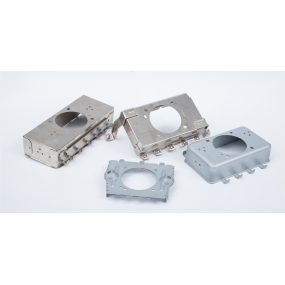
For example, when producing small electronic brackets, if the metal bracket rebounds after stamping, the mounting holes and bending angles may become inaccurate. This can affect the final assembly process.
Understanding the Causes of High-speed Stamping Rebound
Finding the real reason behind rebound is the first step in solving the problem. The main causes of high-speed stamping rebound usually come from material properties and incorrect stamping conditions.
Material Elasticity Creates Springback
Metal materials naturally have elastic properties. During stamping, the punch applies strong pressure and forces the sheet metal to change shape. Most of the deformation is permanent, but part of the material tries to return to its original condition after the pressure disappears.
For example, when a stainless steel sheet is stamped into a curved component, the material may slightly return toward its original flat shape. As a result, the final curve may be different from the required design.
Materials with higher strength usually have stronger rebound because they store more internal energy during deformation. Choosing a material with better formability can help reduce this issue.
Incorrect Stamping Parameters Increase Rebound
Stamping conditions have a direct effect on rebound. If machine settings are not suitable, the metal may not fully complete plastic deformation.
Common parameter-related problems include:
- Excessive punch speed: Very high speed may reduce the time available for stable material deformation.
- Incorrect die clearance: A clearance that is too large allows more material movement and increases rebound.
- Improper stamping force: Too little or unstable force can prevent accurate forming.
For example, during the production of small metal clips, a die clearance that is too wide may allow the clip shape to recover after stamping, causing size differences between batches.
Understanding the Causes of Punching Waste Rebound
Punching waste rebound is another common issue in precision stamping production. After a punch cuts the material, the waste piece may jump, rotate, or deform because of internal stress.
The main causes of punching waste rebound include shearing stress and tool condition.
Shearing Forces and Residual Stress
During punching, the punch and die create strong shearing forces to separate the metal. These forces generate internal stress inside the material.
When the waste piece separates from the sheet, the stored stress is released. The waste may bend, twist, or rebound away from the cutting area.
For example, when punching round holes in stainless steel sheets, the circular waste pieces may become slightly curved after separation because of uneven stress release.
Punch and Die Wear Affect Waste Rebound
Punch and die sharpness directly affects cutting quality. After long production periods, cutting edges become worn and cannot cut the material smoothly.
Worn tools can cause:
- Rough cutting surfaces
- Higher cutting resistance
- More internal stress in punching waste
- Greater waste rebound problems
For example, in a factory producing thousands of small stamped parts every day, ignoring tool wear may gradually increase waste rebound and reduce production stability.
Effective Solutions to High-speed Stamping Rebound
Material Solutions for Stamping Rebound
Choosing the right material is an important way to control rebound. Different metals have different elasticity and forming behavior.
Effective material solutions for stamping rebound include:
- Select materials with better ductility and lower springback characteristics.
- Use annealing or other pre-treatment methods to reduce internal stress.
- Test material performance before mass production.
For example, if a component requires complex bending and high dimensional accuracy, selecting a softer and more formable metal grade may achieve better results than using a high-strength material.
Optimizing Stamping Parameters
Proper machine settings can significantly reduce rebound. Factories should adjust parameters based on material thickness, hardness, and product design.
Important improvements include:
- Reducing punch speed when necessary to allow better material deformation.
- Adjusting die clearance according to material specifications.
- Using multi-step stamping processes for complex parts.
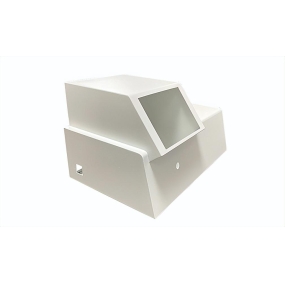
For example, when producing a deep-drawn metal housing, a two-step stamping process can be used. The first step creates the basic shape, and the second step corrects the final dimensions to reduce springback.
Solutions to Reduce Punching Waste Rebound
Reducing Residual Stress During Punching
Reducing internal stress is an effective method for controlling waste rebound. Manufacturers can improve the punching process through several methods.
- Apply controlled back-pressure during punching to balance cutting forces.
- Use suitable punching speeds to avoid excessive stress concentration.
- Apply heat treatment after punching when necessary to release residual stress.
For example, a hydraulic support system can apply back-pressure during punching operations. This helps keep the material stable and reduces waste deformation.
Regular Punch and Die Maintenance
Good tool maintenance is essential for stable production. A worn punch or die will increase cutting stress and make rebound problems worse.
A proper maintenance plan should include:
- Checking punch and die edges regularly.
- Sharpening cutting edges after a certain number of operations.
- Replacing damaged tools before they affect product quality.
For example, a high-volume stamping factory may schedule tool inspection every 1,000 punching cycles to maintain stable cutting performance.
Monitoring and Quality Control for Rebound Prevention
Real-time Process Monitoring
Modern precision stamping factories can use sensors and monitoring systems to detect problems early. Monitoring for rebound prevention helps manufacturers identify abnormal conditions before they create large numbers of defective parts.
Important monitoring items include:
- Punching force changes
- Punch speed stability
- Die clearance conditions
- Machine vibration and abnormal noise
For example, if punching force suddenly increases, it may indicate tool wear or incorrect clearance. Early detection allows technicians to adjust the process before rebound problems become serious.
Inspection of Stamped Parts and Waste
Regular inspection is necessary to maintain product quality. Factories should check both finished parts and punching waste.
Inspection methods include:
- Checking stamped part dimensions with measuring equipment.
- Confirming bending angles and surface quality.
- Observing whether punching waste shows abnormal bending or jumping.
If a large amount of waste starts rebounding during production, technicians should review machine parameters, check tool conditions, and make corrections quickly.
How EMAR Helps Solve Stamping Rebound Problems
As an experienced precision stamping parts processing company, EMAR focuses on improving production stability through professional process control, advanced equipment management, and strict quality inspection.
EMAR understands that rebound problems are usually caused by a combination of material characteristics, stamping parameters, tool conditions, and production management. By analyzing each factor, EMAR can provide practical solutions such as process optimization, tooling improvement, and quality monitoring.
Through careful control of stamping processes, EMAR helps customers reduce waste, improve product accuracy, and maintain smooth high-speed production for industries that require reliable precision metal parts.
Conclusion
The rebound of high-speed stamping and punching waste is a technical challenge faced by many precision stamping parts processing factories. The problem is mainly caused by material elasticity, improper stamping conditions, residual stress, and tool wear.
Effective solutions include selecting suitable materials, optimizing stamping parameters, reducing residual stress, maintaining tools regularly, and applying real-time monitoring systems. With proper process management and professional experience, manufacturers can reduce rebound problems and achieve higher-quality stamped products.