The Current Situation of Shenzhen Precision Parts Processing Enterprises
Shenzhen is one of the most important manufacturing centers in China and plays a key role in the global precision manufacturing industry. With strong capabilities in electronics, new-energy vehicles, communication equipment, medical devices, and advanced manufacturing, Shenzhen has developed a large number of precision parts processing enterprises.
Understanding the current situation of Shenzhen precision parts processing enterprises is valuable for manufacturers, buyers, and industry professionals. It helps companies choose suitable suppliers, understand market competition, and identify cooperation opportunities. For businesses like EMAR, which focus on understanding manufacturing trends and customer needs, having a clear view of Shenzhen's precision parts processing industry can support better collaboration and market decisions.
Market Situation of Shenzhen Precision Parts Processing Enterprises
Growing Market Scale Driven by High-End Industries
The market scale of Shenzhen precision parts continues to expand because many industries require more accurate and reliable components. According to industry expectations, the market value of Shenzhen precision parts processing enterprises is expected to exceed 50 billion yuan in 2026. In the past five years, the industry has maintained an average annual compound growth rate of about 12% to 15%.
This growth is closely connected with the rapid development of industries such as new-energy vehicles, 5G communication equipment, and medical devices.
- New-energy vehicles: The increasing demand for high-precision battery connectors, motor components, and structural parts has created more opportunities for precision processing companies.
- 5G communication: Communication equipment requires small, accurate, and stable metal components, increasing demand for precision machining.
- Medical devices: Medical equipment often requires parts with strict dimensional accuracy and reliable material performance.
For example, a new-energy vehicle manufacturer may need thousands of battery connector parts with consistent dimensions. Precision processing enterprises in Shenzhen can provide these components through advanced CNC Machining, stamping, and surface treatment technologies.
Strong Competition Among Different Types of Enterprises
Although the market is growing, competition among Shenzhen precision parts processing enterprises is intense. Large enterprises usually have advantages in equipment, technology, quality systems, and production capacity. They can handle large orders from international customers and complex projects.
However, smaller enterprises also have their own advantages. Many small and medium-sized companies focus on specific market segments and provide flexible, cost-effective solutions.
For example, a small precision processing company may specialize in tiny metal components for consumer electronics. Instead of competing with large suppliers in every field, it develops expertise in one specific product category and provides faster response times and customized services.
Technological Capabilities of Shenzhen Precision Parts Processing Enterprises
Increasing Adoption of High-End Processing Technologies
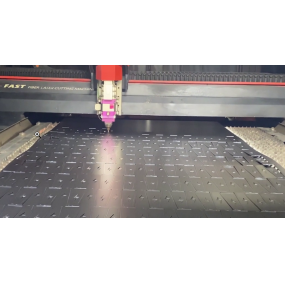
The technological capabilities in Shenzhen have improved significantly in recent years. Many leading enterprises are adopting advanced equipment, automation systems, and precision manufacturing technologies to meet higher customer requirements.
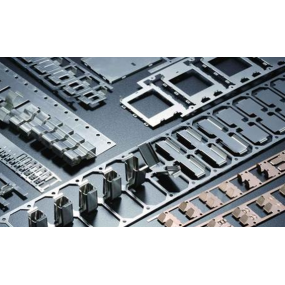
Some advanced companies can achieve dimensional tolerances of around ±0.005mm in metal material etching processing and support the processing of more than ten types of metal base materials. These capabilities allow Shenzhen enterprises to participate in high-end manufacturing fields.
For example, aerospace and medical device industries often require extremely accurate parts. A small error in an aircraft component or surgical instrument may affect product safety. Precision processing enterprises with advanced technology can produce parts that meet strict industry standards.
Continuous Technology Upgrades
To remain competitive, Shenzhen precision parts processing enterprises continue to upgrade their technology. Common improvement methods include:
- Purchasing newer CNC machining equipment.
- Using advanced production management software.
- Improving automation levels.
- Training engineers and technical workers.
- Developing better inspection and quality control methods.
For example, a processing company may replace older CNC machines with high-speed precision machining centers. This upgrade can improve production efficiency, reduce errors, and allow the company to manufacture more complex parts.
Industrial Chain and Manufacturing Ecosystem in Shenzhen
Complete Industrial Chain of Precision Processing
The industrial chain of Shenzhen enterprises is one of the major advantages of the city's precision manufacturing industry. Shenzhen has developed a complete manufacturing ecosystem covering many processing methods, including CNC machining, precision turning and milling compound machining, and wire-cut electrical discharge machining.
Different processes can work together to complete complex products.
- CNC machining: Usually used for initial shaping and creating basic structures.
- Precision turning and milling: Used for detailed processing and achieving higher accuracy.
- Wire-cut electrical discharge machining: Used for creating complex shapes and narrow structures.
For example, when producing a complex metal component, a manufacturer may first use CNC machining to create the main shape, then use precision milling for detailed features, and finally use wire cutting for special internal structures.
Strong Industrial Clusters
Shenzhen has formed important precision manufacturing clusters in areas such as Bao'an and Longhua. These industrial areas bring together material suppliers, processing companies, inspection service providers, and equipment suppliers.
The cluster model provides several benefits:
- Faster access to raw materials.
- Easier cooperation between specialized companies.
- Lower communication and transportation costs.
- More opportunities for technical exchange.
For example, one company may focus on CNC machining while another specializes in surface treatment. Together, they can complete a full production process more efficiently than working separately.
Service Characteristics of Shenzhen Precision Parts Processing Enterprises
Flexible Customized Manufacturing Services
The service characteristics of Shenzhen precision parts processing enterprises are mainly reflected in small-batch production, multiple product varieties, high precision requirements, and short delivery times.
These characteristics match the needs of modern industries. Many companies today develop products quickly and need flexible suppliers instead of traditional large-volume manufacturers.
For example, electronics companies often release new products every year. Before mass production, they need small batches of high-precision prototype parts for testing. Shenzhen precision processing enterprises can respond quickly and provide customized solutions.
Ability to Meet Customer Requirements
To provide reliable customized services, many Shenzhen enterprises have developed flexible production systems and strong engineering support.
Important service abilities include:
- Quick response to customer drawings and technical requirements.
- Professional engineering communication.
- Strict quality inspection processes.
- Flexible production scheduling.
- Support for prototype and small-batch orders.
Companies that combine manufacturing experience with strong quality management can better support customers from product design to final production.
Enterprise-Level Differences Among Shenzhen Precision Parts Processing Companies
Different Quality Levels Exist in the Market
The enterprise-level differences in Shenzhen precision parts processing companies are noticeable. While many enterprises have advanced capabilities, some smaller workshops still face challenges related to equipment, management, and quality control.
Some low-level workshops may use outdated machines or reduce inspection steps to lower costs. This can lead to problems such as:
- Parts exceeding required dimensional tolerances.
- Unstable quality between different production batches.
- Shorter product service life.
For example, a small workshop producing metal components for electronic equipment may deliver parts with inconsistent sizes because it lacks professional inspection equipment. These parts may not fit correctly during assembly, causing production delays for customers.
Leading Enterprises Build Strong Competitive Advantages
In contrast, excellent precision processing enterprises focus on technology development, quality management, and long-term customer relationships.
Companies such as Shenzhen Xinsheng Hardware Co., Ltd. and Shenzhen Changying Precision Technology Co., Ltd. represent enterprises with stronger manufacturing capabilities. They typically have complete quality-control closed loops and stronger research and development abilities.
These companies may develop new processing methods, improve material applications, or create customized solutions for emerging industries. Their advantages help them serve customers with higher technical requirements.
Conclusion: Understanding the Future of Shenzhen Precision Parts Processing Enterprises
The current situation of Shenzhen precision parts processing enterprises shows a market with both strong opportunities and serious competition. The industry benefits from growing demand in new-energy vehicles, communication technology, medical equipment, and other advanced manufacturing fields.
Shenzhen's advantages include a large market scale, advanced technological capabilities, a complete industrial chain, flexible service models, and strong manufacturing clusters. However, differences between enterprises mean customers must carefully evaluate suppliers based on equipment, quality systems, technical experience, and production ability.
For companies looking to cooperate in precision manufacturing, understanding these industry characteristics is essential. EMAR continues to study the development trends and capabilities of Shenzhen precision parts processing enterprises, helping identify suitable cooperation opportunities and better understand how to compete effectively in this fast-changing manufacturing environment.