HTML
CNC Machining Flywheel: Precision Manufacturing for Smooth and Reliable Engine Performance
A flywheel is a critical mechanical component used in engines and industrial equipment. Its main job is to store rotational energy, reduce vibration, and help the engine run smoothly. Because flywheels must handle high speed, heavy loads, and repeated operation, manufacturing accuracy is extremely important.
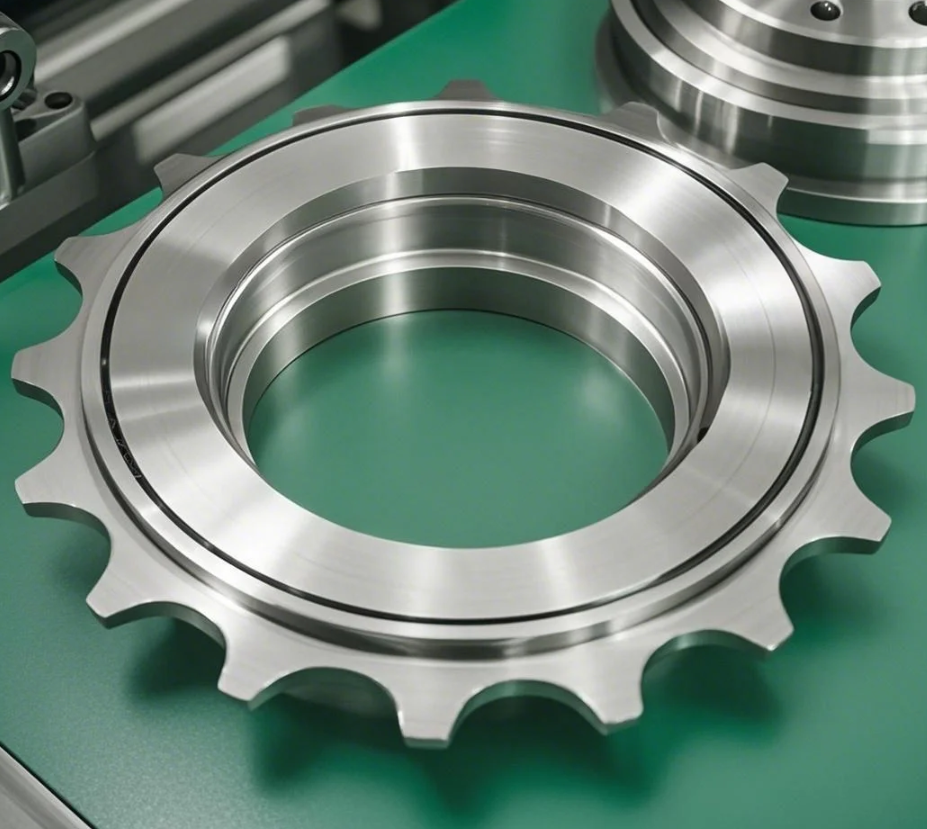
CNC Machining Flywheel production is widely used because CNC technology can create complex flywheel designs with high precision, stable quality, and excellent repeatability. For companies that need reliable flywheels for automotive, industrial, and special applications, choosing the right machining process, material, and quality control method is essential.
EMAR provides professional CNC machining solutions for flywheels and other precision mechanical parts. With experience in precision manufacturing, EMAR helps customers achieve accurate dimensions, stable performance, and cost-effective production.
Why CNC Machining Is Preferred for Flywheel Production
Traditional machining methods may struggle to maintain consistent accuracy when producing flywheels, especially for parts that require strict balance and precise dimensions. CNC machining uses computer-controlled equipment to perform cutting operations with high repeatability.
The main advantages of CNC Machining Flywheel production include:
- High dimensional accuracy: CNC machines can maintain tight tolerances for diameter, thickness, mounting holes, and contact surfaces.
- Consistent quality: The same digital program can produce multiple flywheels with nearly identical results.
- Complex design capability: CNC machining can create special grooves, weight reduction structures, and customized profiles.
- Better production efficiency: Automated machining reduces manual errors and improves production speed for small and large batches.
For engines and machines where vibration control and smooth rotation are important, CNC machining provides the precision needed to ensure proper flywheel function.
Design Considerations for CNC-Machined Flywheels
The performance of a flywheel depends greatly on its design. Proper design considerations for CNC-machined flywheels help ensure the part can store enough energy, maintain balance, and operate safely under working conditions.
Engine Type and Application Requirements
The flywheel design must match the engine or equipment where it will be installed.
- Gasoline engines: These usually operate at higher speeds and may require flywheels designed for smooth acceleration and vibration reduction.
- Diesel engines: Diesel engines produce higher torque and stronger vibration, so flywheels often need higher strength and greater durability.
- Industrial equipment: Machines such as generators, pumps, and production systems may require flywheels designed for long operating hours and heavy loads.
The engine power output also affects the flywheel size, thickness, and material choice. A higher-power engine usually requires a stronger flywheel with suitable mass and inertia.
Mass Distribution and Moment of Inertia
A flywheel works by storing rotational energy. The amount of stored energy depends on the moment of inertia, which is influenced by the flywheel's mass and shape.
Engineers must carefully design the weight distribution. Adding more mass near the outer edge increases inertia, while reducing unnecessary weight can improve response speed and efficiency. Poor mass distribution may cause vibration, uneven rotation, and premature component wear.
Balancing Requirements
Flywheel balance is one of the most important design factors. Even a small imbalance can create vibration when the flywheel rotates at high speed.
CNC machining helps maintain accurate geometry, but final balancing tests are still necessary to verify that the finished flywheel meets operational requirements.
Material Selection for Flywheel CNC Machining
Choosing the correct material is a major concern for flywheel manufacturing. The best material depends on strength requirements, operating speed, cost targets, and application conditions. Proper material selection for flywheel CNC machining improves safety and service life.
Cast Iron Flywheels
Cast iron is one of the most common flywheel materials because it provides good strength, excellent vibration damping, and reasonable cost.
- Good wear resistance
- Strong vibration absorption
- Cost-effective for many automotive and industrial applications
- Suitable for medium-speed engines
Cast iron is often selected when durability and affordability are more important than lightweight design.
Steel Alloy Flywheels
Steel alloys provide higher strength and toughness compared with standard cast iron. They are suitable for high-performance engines and heavy-duty machinery.
- Higher tensile strength
- Better resistance to impact loads
- Suitable for high-speed rotation
- Good machining performance when the correct tools are used
Steel flywheels are commonly used in demanding applications where reliability is critical.
Lightweight Composite Flywheels
Composite materials can reduce weight while maintaining high strength. They are often considered for applications where fast response and energy efficiency are important.
- Low density
- Reduced rotational weight
- Good fatigue performance
- Higher material cost compared with traditional metals
Although composites can provide performance advantages, they require careful design and specialized manufacturing processes.
CNC Machining Operations for Flywheel Manufacturing
Flywheel machining requires accurate cutting processes to achieve the correct shape, surface quality, and balance. Common CNC operations include turning, milling, and drilling.
CNC Turning
CNC turning is mainly used to machine the outer diameter, inner surfaces, and flat faces of the flywheel.
Important machining parameters include:
- Cutting speed: Selected based on material hardness and tool type.
- Feed rate: Controlled to balance machining efficiency and surface finish quality.
- Depth of cut: Adjusted according to material removal requirements and machine capability.
For steel flywheels, carbide cutting tools are often used because they provide good wear resistance and stable performance.
CNC Milling
Milling is used for creating slots, grooves, mounting features, and weight reduction structures. Proper tool selection helps prevent excessive cutting force and surface damage.
CNC Drilling
Drilling creates accurate mounting holes for connection with shafts, clutches, or other components. Hole position accuracy is important because incorrect locations can affect assembly and balance.
Common Challenges in CNC Machining Flywheels
Flywheel machining requires careful control because small errors can affect engine performance.
Handling Flatness in Flywheel CNC Machining
Handling flatness in flywheel CNC machining is a key challenge. Uneven surfaces may cause poor contact with connected parts and increase vibration.
Manufacturers control flatness by:
- Using stable CNC machines with proper fixture systems
- Applying suitable cutting parameters
- Performing finishing passes after rough machining
- Checking surface accuracy during inspection
Controlling Heat-Induced Distortion
Machining generates heat, and excessive temperature changes can cause deformation. To reduce this risk, manufacturers use proper cutting speeds, cooling methods, and machining sequences.
Maintaining Proper Balance
Even when dimensions are accurate, a flywheel may still require balancing after machining. Removing small amounts of material or adjusting balance points helps achieve smooth rotation.
Post-Machining Processes for CNC-Machined Flywheels
After CNC machining, additional processes can improve strength, durability, and surface performance. The correct post-machining processes for CNC-machined flywheels depend on the material and application.
Heat Treatment
Heat treatment can improve hardness, strength, and fatigue resistance. Steel flywheels may receive processes such as tempering or hardening to improve mechanical properties.
Surface Finishing
Surface finishing improves appearance and protects the flywheel from corrosion. Common finishing options include coating, polishing, and protective treatments.
Final Balancing
Dynamic balancing tests confirm that the flywheel rotates smoothly at operating speeds. This step is essential for reducing vibration and improving equipment life.
Quality Control in CNC-Machined Flywheels
Reliable flywheel production requires strict inspection at every stage. Quality control in CNC-machined flywheels ensures that each part meets design requirements before delivery.
Common quality control methods include:
- Dimensional inspection: Checking diameter, thickness, hole position, and geometric tolerances.
- Balancing tests: Measuring and correcting rotational imbalance.
- Hardness testing: Confirming that heat-treated materials meet required strength levels.
- Surface inspection: Checking finish quality and detecting machining defects.
Professional manufacturers like EMAR combine CNC machining technology with inspection equipment to deliver flywheels that meet strict performance requirements.
Choosing a Reliable CNC Machining Flywheel Partner
A successful flywheel project requires more than just machining equipment. Manufacturers need experience in material selection, process planning, precision control, and quality inspection.
EMAR supports customers with customized CNC Machining Flywheel services, from prototype development to batch production. By focusing on accurate machining processes, suitable materials, and strict quality management, EMAR helps customers produce flywheels that provide stable and reliable performance.
Whether the application is automotive, industrial equipment, or specialized machinery, a well-designed and accurately machined flywheel can improve efficiency, reduce vibration, and extend the service life of the entire system.
 English
 » »
» »
 Spanish
 Arabic
 French
 Portuguese
 Belarusian
 Japanese
 Russian
 Malay
Malay Icelandic
 Bulgarian
 Azerbaijani
 Estonian
 Irish
Irish Polish
 Persian
 Boolean
 Danish
 German
 Filipino
 Finnish
 Korean
 Dutch
Dutch Galician
 Catalan
 Czech
Czech Croatian
 Latin
Latin Latvian
 Romanian
 Maltese
 Macedonian
 Norwegian
 Swedish
 Serbian
 Slovak
 Slovenian
 Swahili
 Thai
Thai Turkish
 Welsh
Welsh Urdu
Urdu Ukrainian
 Greek
Greek Hungarian
 Italian
 Yiddish
 Indonesian
 Vietnamese
 Haitian Creole
 Spanish Basque