HTML
CNC Machining Medical Device Components: Precision Manufacturing for Safer Healthcare Products
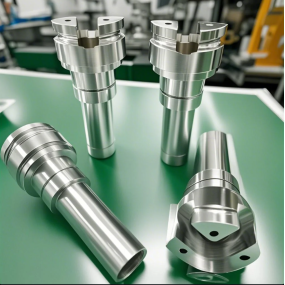
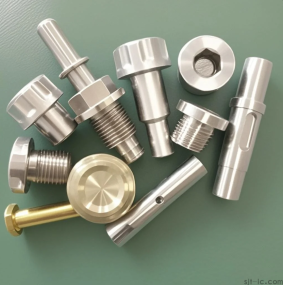
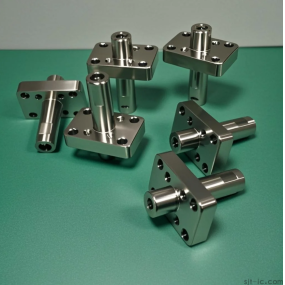
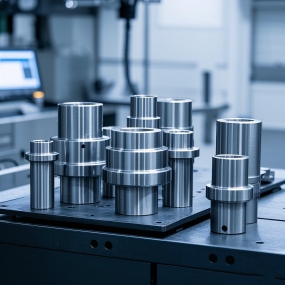
Medical devices must work safely and accurately because even a small manufacturing error can affect patient treatment. From surgical instruments and implant parts to diagnostic equipment components, every medical component requires excellent precision, reliable materials, and strict quality control. CNC Machining Medical Device Components has become a key manufacturing method because it can produce complex parts with tight tolerances, repeatable quality, and compatibility with demanding medical requirements.
Manufacturers in the medical industry face many challenges, including producing extremely small parts, selecting safe materials, preventing contamination, and meeting strict regulations. A professional CNC machining partner, such as EMAR, helps medical companies solve these challenges through advanced machining technology, experienced engineers, and controlled production processes.
Why CNC Machining Is Important for Medical Device Manufacturing
Medical devices often require shapes and dimensions that cannot be achieved easily with traditional manufacturing methods. CNC machining uses computer-controlled machines to remove material with high accuracy, allowing manufacturers to create complex medical components with consistent results.
One major advantage of CNC machining is precision. Many medical parts need very small tolerances to function correctly. For example, surgical tools require accurate edges and smooth surfaces, while implant components need exact dimensions to fit safely inside the human body. CNC machines can maintain stable accuracy during both prototype production and large-scale manufacturing.
CNC machining also supports a wide range of materials. Medical components must use materials that are strong, corrosion-resistant, easy to sterilize, and safe for human contact. The ability to machine metals and medical-grade plastics makes CNC technology suitable for many healthcare applications.
- High dimensional accuracy for reliable medical device performance
- Repeatable production quality for large medical orders
- Ability to manufacture complex geometries and small components
- Compatibility with biocompatible metals and medical plastics
- Support for strict medical manufacturing standards
Design Considerations for CNC-Machined Medical Components
The design stage is one of the most important steps in medical CNC manufacturing. A successful design must consider not only the function of the device but also manufacturing limits, sterilization methods, material behavior, and industry requirements.
Following design standards for CNC-machined medical components helps prevent problems during production. Engineers must carefully define dimensions, surface finishes, tolerances, and assembly requirements before machining begins.
Important design factors include:
- Precision requirements: Critical areas must have exact dimensions to ensure proper assembly and operation.
- Surface finish: Smooth surfaces reduce the risk of bacteria buildup and improve cleaning performance.
- Part geometry: Designs should allow proper tool access and avoid unnecessary machining difficulty.
- Sterilization requirements: Components must withstand cleaning processes such as autoclave sterilization when required.
- Regulatory considerations: Designs should support compliance with medical device manufacturing rules.
Experienced CNC manufacturers review medical designs before production to identify possible risks. EMAR provides engineering support to help optimize medical component designs for accurate and efficient CNC machining.
Biocompatible Material Selection in Medical CNC Machining
Choosing the correct material is essential because medical components may directly contact the human body. The material must provide the necessary strength and durability while also meeting safety requirements.
Biocompatible material selection in medical CNC machining requires a careful balance between mechanical performance, corrosion resistance, sterilization ability, and patient safety.
Titanium Alloys
Titanium is one of the most popular materials for medical applications. It is lightweight, strong, corrosion-resistant, and highly compatible with the human body. Titanium is commonly used for implants, bone fixation parts, and surgical components.
- Excellent biocompatibility
- High strength compared with its weight
- Strong resistance to body fluids and corrosion
- Suitable for long-term medical applications
Stainless Steel Alloys
Medical-grade stainless steel is widely used because it offers good strength, corrosion resistance, and easy sterilization. It is often used for surgical instruments, medical equipment parts, and reusable tools.
- Good mechanical strength
- Reliable corrosion resistance
- Easy cleaning and sterilization
- Cost-effective for many medical applications
Medical-Grade Plastics
Medical plastics such as PEEK and other engineered polymers are useful when lightweight, chemical resistance, or electrical insulation is required. These materials are often used in disposable medical devices and specialized components.
- Lightweight structure
- Resistance to chemicals and moisture
- Suitable for specific medical environments
- Can support complex component designs
CNC Machining Processes for Medical Device Components
After design approval and material selection, the machining process begins. Different medical components require different CNC operations to achieve the required shape and accuracy.
CNC Milling
CNC milling uses rotating cutting tools to remove material from a workpiece. It is suitable for producing complex medical parts with multiple surfaces, holes, slots, and detailed features.
Milling is commonly used for surgical instruments, medical equipment housings, and precision mechanical components.
CNC Turning
CNC turning rotates the material while a cutting tool removes material from the surface. This process is ideal for cylindrical medical parts such as shafts, connectors, and precision fittings.
Micro-Machining
Micro-machining in medical device CNC production is essential for creating extremely small and detailed components. It requires advanced machines, specialized tools, and careful control of cutting conditions.
Micro-machining is used for applications such as miniature surgical tools, medical sensors, and small precision components where normal machining methods may not provide enough accuracy.
Tooling and Cutting Parameters for Medical CNC Machining
Medical components require careful machining strategies because many medical materials are difficult to process. Incorrect cutting conditions can create heat, surface damage, or dimensional errors.
Professional CNC manufacturers select tooling and machining parameters based on the material and component design.
- Cutting tools: High-quality carbide or specialized tools help maintain accuracy and tool life.
- Cutting speed: Proper speed prevents excessive heat and protects the material surface.
- Feed rate: Controlled feed rates improve surface quality and dimensional accuracy.
- Coolant management: Suitable cooling methods reduce heat during machining.
- Tool inspection: Regular tool checks prevent defects caused by tool wear.
Challenges in CNC Machining Medical Device Components
Achieving Micro-Level Precision
Many medical parts require extremely tight tolerances. Even small variations can affect device performance. Manufacturers must use advanced CNC equipment, stable machining processes, and accurate measurement systems to achieve required precision.
Contamination Prevention During Machining
Contamination prevention in medical CNC machining is critical because medical components must be safe for patient use. Manufacturing environments must control dust, particles, oils, and other contaminants.
- Clean production areas
- Proper handling procedures
- Careful coolant and lubricant selection
- Thorough cleaning after machining
- Controlled packaging before delivery
Meeting Sterility Requirements
Some medical components must be sterilized before use. The machining process must create surfaces that can be cleaned effectively and remain stable during sterilization procedures.
Manufacturers must consider surface roughness, material stability, and cleaning methods throughout production.
Quality Control for CNC-Made Medical Device Components
Medical manufacturing requires strict inspection because component failures can create serious risks. Quality control for CNC-made medical device components involves multiple inspection steps from raw material verification to final product testing.
- Material inspection: Confirms that materials meet medical requirements.
- Dimensional inspection: Uses precision measuring equipment to verify critical sizes.
- Surface inspection: Checks smoothness, defects, and machining marks.
- Functional testing: Confirms that components perform as expected.
- Documentation control: Maintains production records for traceability and compliance.
Advanced inspection equipment, including coordinate measuring machines (CMM), helps verify complex medical parts with high accuracy. Reliable manufacturers also follow controlled processes to support regulatory compliance and consistent quality.
How EMAR Supports Medical CNC Machining Projects
Medical device companies need more than machining equipment. They need a manufacturing partner that understands precision requirements, material challenges, and quality expectations.
EMAR provides CNC machining services for medical device components with experience in precision manufacturing, material processing, and quality management. The company supports customers from design review and material selection to machining, inspection, and final delivery.
By combining advanced CNC technology with professional engineering knowledge, EMAR helps produce reliable medical components that meet demanding industry requirements.
Conclusion
CNC Machining Medical Device Components plays an important role in modern healthcare manufacturing. It allows companies to create precise, durable, and safe medical parts while supporting complex designs and strict quality standards.
Successful medical CNC machining depends on careful design, proper biocompatible material selection, advanced machining methods, contamination control, and detailed inspection. Working with an experienced CNC machining supplier helps medical companies reduce risks, improve product reliability, and bring safer healthcare products to the market.
 English
 » »
» »
 Spanish
 Arabic
 French
 Portuguese
 Belarusian
 Japanese
 Russian
 Malay
Malay Icelandic
 Bulgarian
 Azerbaijani
 Estonian
 Irish
Irish Polish
 Persian
 Boolean
 Danish
 German
 Filipino
 Finnish
 Korean
 Dutch
Dutch Galician
 Catalan
 Czech
Czech Croatian
 Latin
Latin Latvian
 Romanian
 Maltese
 Macedonian
 Norwegian
 Swedish
 Serbian
 Slovak
 Slovenian
 Swahili
 Thai
Thai Turkish
 Welsh
Welsh Urdu
Urdu Ukrainian
 Greek
Greek Hungarian
 Italian
 Yiddish
 Indonesian
 Vietnamese
 Haitian Creole
 Spanish Basque