HTML
CNC Machining Small Parts: A Complete Guide to Precision, Design, and Production
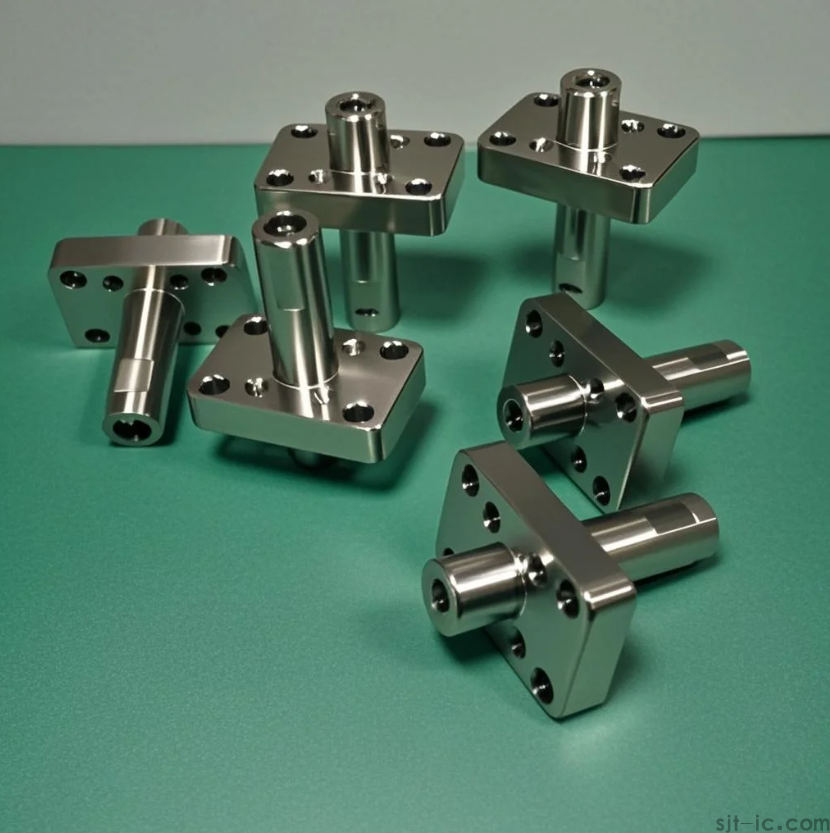
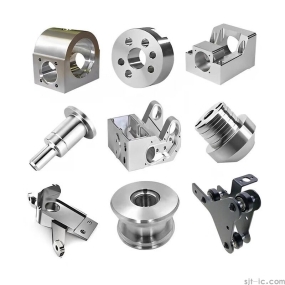
CNC Machining Small Parts is an effective solution for producing tiny components that require high accuracy, complex shapes, and reliable performance. Many industries, including medical equipment, electronics, aerospace, automotive, and automation, depend on small machined parts because even a very small error can affect the function of an entire product.
However, manufacturing small parts is not always easy. Common challenges include maintaining tight tolerances, preventing tool damage, achieving smooth surfaces, selecting the right materials, and controlling quality during production. With advanced CNC technology and professional machining experience, companies like EMAR help customers overcome these challenges by providing accurate and repeatable small part manufacturing solutions.
Why CNC Machining Is Suitable for Small Parts
Small parts often require more precision than larger components because their dimensions leave less room for mistakes. CNC machining uses computer-controlled machines to remove material with high accuracy, making it an ideal manufacturing method for miniature and precision components.
High Precision and Tight Tolerances
One of the biggest advantages of CNC machining is its ability to achieve very tight dimensional control. Small parts may include tiny holes, narrow slots, thin walls, or complex surfaces that must fit perfectly with other components.
CNC machines follow programmed instructions with consistent accuracy, reducing human errors and improving repeatability. This is especially important for industries where small deviations can cause assembly problems or product failures.
Ability to Create Complex Geometries
Modern CNC equipment can produce complicated small part designs that are difficult or impossible to manufacture using traditional methods. Multi-axis CNC machining allows manufacturers to create curved surfaces, miniature grooves, angled features, and detailed structures.
This flexibility gives engineers more freedom when designing compact products without being limited by simple shapes.
Efficient Production for Different Batch Sizes
CNC machining is suitable for both prototype development and mass production. A manufacturer can quickly adjust CNC programs to produce different versions of a small part without creating expensive molds or special tooling.
This makes CNC machining a practical choice for customers who need a few test samples, medium-volume production, or large quantities of precision components.
Design Considerations for CNC-Machined Small Parts
Good design is the foundation of successful small part machining. Before production starts, engineers need to understand the part's purpose, working environment, and performance requirements.
Important design considerations for CNC-machined small parts include:
- Intended use: The part design should match how the component will operate, including load conditions, movement requirements, and contact with other parts.
- Required tolerances: Engineers should define which dimensions require high precision and which areas can have normal tolerances to control machining costs.
- Space limitations: Small parts often work in compact assemblies, so dimensions, wall thickness, and feature locations must be carefully planned.
- Tool accessibility: Designers should consider whether CNC tools can reach all machining areas without difficulty.
- Part stability: Very thin or small components may require special fixtures to prevent movement during machining.
Working with an experienced CNC supplier early in the design stage can help identify possible manufacturing problems before production begins.
Choosing the Right Material for Small CNC Parts
Material selection directly affects the strength, durability, and performance of small components. The correct material depends on the part's operating conditions, environment, and required mechanical properties.
Material selection for small part CNC machining usually considers factors such as:
- Strength: Parts exposed to pressure, vibration, or mechanical loads may require strong materials such as stainless steel, alloy steel, or titanium.
- Durability: Wear-resistant materials are useful for parts with repeated movement or friction.
- Corrosion resistance: Components used in humid, chemical, or outdoor environments may need materials like stainless steel, aluminum alloys, or engineering plastics.
- Weight requirements: Lightweight materials such as aluminum are suitable for applications where reducing weight is important.
- Machinability: Materials that are easier to machine can improve production efficiency and reduce tool wear.
Common materials for CNC machining small parts include aluminum, brass, copper, stainless steel, titanium, and plastic materials such as POM and PEEK. EMAR can help customers select suitable materials based on application requirements and production goals.
CNC Machining Operations for Small Part Production
The machining process for small parts requires careful control because small dimensions make errors more noticeable. Different machining operations are selected based on the part design.
Turning Operations in Small Part Production
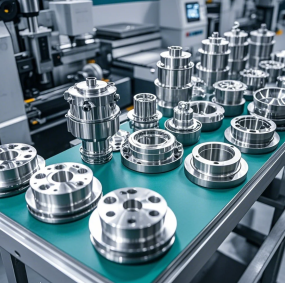
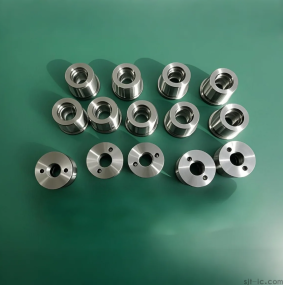
Turning operations in small part production are commonly used for cylindrical components such as shafts, pins, bushings, and connectors. During turning, the workpiece rotates while a cutting tool removes material.
Precision CNC lathes can create accurate diameters, grooves, threads, and small profiles. Proper cutting speed, feed rate, and depth of cut settings are important to maintain surface quality and prevent excessive tool pressure.
Milling Operations
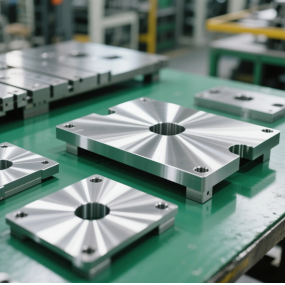
CNC milling is used for small parts with flat surfaces, pockets, slots, and complex shapes. Multi-axis milling machines allow tools to approach the workpiece from different directions, improving design flexibility.
For miniature components, manufacturers often use small-diameter cutting tools and carefully controlled cutting parameters to avoid vibration and damage.
Drilling and Micro-Machining
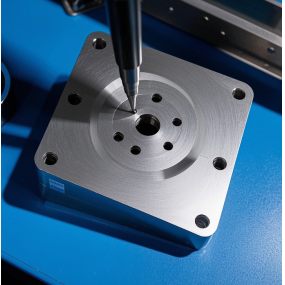
Small parts often require tiny holes with accurate positions. CNC drilling operations use precision drills and specialized tools to achieve consistent hole sizes.
For extremely small components, micro-machining techniques may be required. These processes use very small tools and advanced machine control to create miniature features with high accuracy.
Managing Machining Challenges in Small Parts
Producing small CNC parts requires careful attention to machining conditions. Small tools and thin features can create special challenges during production.
Handling Tool Wear in Small Part CNC Machining
Handling tool wear in small part CNC machining is essential for maintaining accuracy. Small cutting tools are more sensitive to wear because they have limited cutting strength.
- Use high-quality cutting tools designed for small components.
- Adjust cutting speed and feed rate according to the material.
- Apply proper coolant or lubrication when necessary.
- Monitor tool condition and replace worn tools before accuracy decreases.
Achieving Smooth Surface Finish
A smooth surface finish improves appearance, reduces friction, and helps parts fit correctly. Manufacturers can improve surface quality by selecting suitable tools, optimizing cutting parameters, and applying finishing operations after machining.
Maintaining Dimensional Accuracy
Small parts can be affected by heat, vibration, and tool deflection during machining. To maintain accuracy, manufacturers use stable fixtures, controlled machining environments, and precise measurement methods throughout production.
Post-Machining Processes for Small Components
After CNC machining, additional processes may be required to improve appearance, performance, or durability.
- Deburring: Removes sharp edges and small unwanted material left after machining, improving safety and assembly quality.
- Polishing: Creates a smoother and more attractive surface finish for visible components.
- Heat treatment: Enhances hardness, strength, and wear resistance for parts that require improved mechanical performance.
- Surface treatment: Processes such as anodizing, plating, or coating may improve corrosion resistance and product life.
Quality Control in CNC Small Part Manufacturing
Because small parts have limited dimensional space, quality inspection is a critical step in production. A reliable manufacturer must verify every important feature before delivery.
Quality control in small part CNC manufacturing includes:
- Checking dimensions with precision measuring tools such as micrometers, calipers, and coordinate measuring machines.
- Using high-magnification inspection equipment to examine tiny features, edges, and surface conditions.
- Verifying tolerances according to engineering drawings and customer requirements.
- Performing material inspections to confirm the correct alloy or plastic type.
- Recording inspection data to maintain consistent production quality.
Professional CNC suppliers like EMAR combine advanced machining equipment, experienced engineers, and strict inspection systems to deliver reliable small parts for different industries.
Choosing an Experienced CNC Machining Partner
CNC machining small parts requires more than advanced machines. Successful production depends on experience in design support, material selection, machining strategy, and quality control.
A capable machining partner can help customers reduce development risks, improve production efficiency, and achieve consistent part performance. From prototype machining to volume production, EMAR provides customized CNC machining services for small precision components while focusing on accuracy, reliability, and customer requirements.
With proper design planning, suitable materials, optimized machining processes, and strict inspection, CNC machining provides an efficient way to produce high-quality small parts for modern products.
 English
 » »
» »
 Spanish
 Arabic
 French
 Portuguese
 Belarusian
 Japanese
 Russian
 Malay
Malay Icelandic
 Bulgarian
 Azerbaijani
 Estonian
 Irish
Irish Polish
 Persian
 Boolean
 Danish
 German
 Filipino
 Finnish
 Korean
 Dutch
Dutch Galician
 Catalan
 Czech
Czech Croatian
 Latin
Latin Latvian
 Romanian
 Maltese
 Macedonian
 Norwegian
 Swedish
 Serbian
 Slovak
 Slovenian
 Swahili
 Thai
Thai Turkish
 Welsh
Welsh Urdu
Urdu Ukrainian
 Greek
Greek Hungarian
 Italian
 Yiddish
 Indonesian
 Vietnamese
 Haitian Creole
 Spanish Basque