HTML
CNC Stainless Steel Precision Machining: Reliable Solutions for High-Accuracy Metal Parts
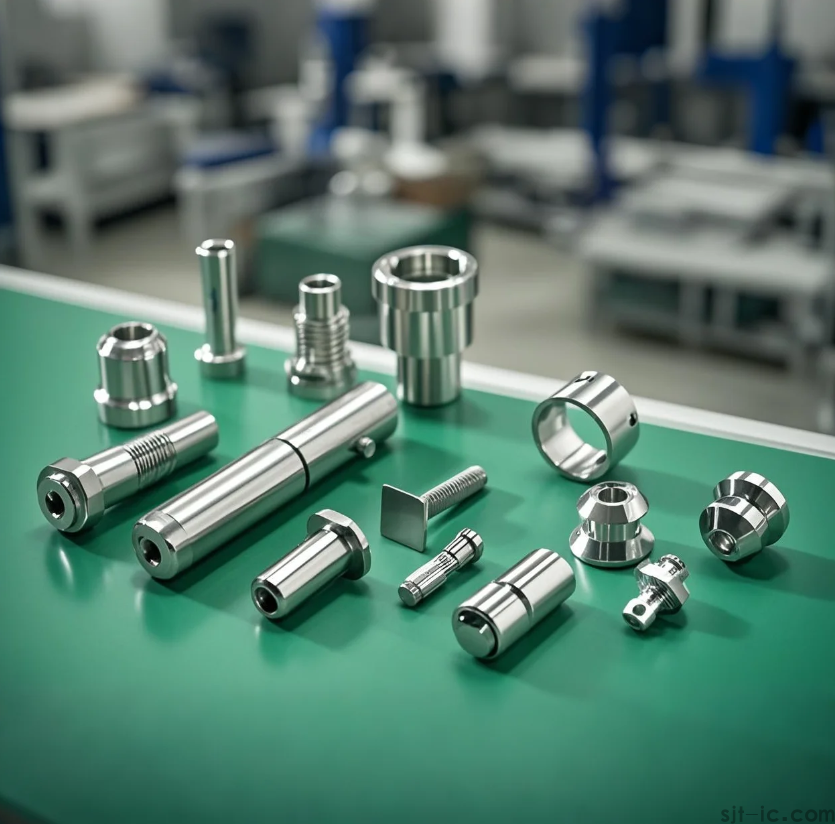
In modern manufacturing, CNC Stainless Steel Precision Machining plays a key role in producing strong, durable, and highly accurate metal parts. Stainless steel is widely used in medical devices, automotive systems, food equipment, and industrial machines. However, many users face common problems such as tool wear, poor surface finish, and tight tolerance control. This article explains practical solutions in simple English so you can better understand how precision machining works and how to improve results.
Why Stainless Steel is Difficult to Machine
Stainless steel is strong and corrosion-resistant, but these same properties make it harder to cut. It generates more heat during machining and can quickly wear out tools. Without proper planning, users may face rough surfaces, dimensional errors, or tool breakage.
This is why professional CNC Stainless Steel Precision Machining is needed to ensure stable results and consistent quality.
Steps in CNC Precision Machining of Stainless Steel
Understanding the process helps reduce errors and improve efficiency. The steps in CNC precision machining of stainless steel usually include:
- Design and programming: Engineers create a CAD model and convert it into CNC code.
- Material preparation: Stainless steel blocks are selected and inspected for defects.
- Rough machining: Large amounts of material are removed quickly using CNC machines.
- Semi-finishing: The shape becomes closer to final design with better accuracy.
- Precision finishing: Fine cutting tools are used for tight tolerances and smooth surfaces.
- Inspection: Final parts are measured to confirm accuracy and quality standards.
Advantages of CNC for Stainless Steel Precision Work
The advantages of CNC for stainless steel precision work are very important for industries that need reliable performance:
- High accuracy and repeatability for mass production
- Stable quality even for complex shapes
- Reduced human error during production
- Ability to machine hard stainless steel grades efficiently
- Better production speed compared to manual methods
These advantages help manufacturers reduce costs while improving product reliability.
Tooling for CNC Stainless Steel Precision Machining
Choosing the right tools is essential. Tooling for CNC stainless steel precision machining must handle high heat and strong cutting forces.
Common tool choices include:
- Carbide end mills for durability and heat resistance
- Coated tools (TiAlN, TiN) to reduce wear
- High-speed steel tools for light operations
- Specialized coolant systems to control temperature
Good tooling extends tool life and improves surface quality significantly.
Precision Levels Achievable in CNC Stainless Steel Machining
Modern machines can achieve extremely high accuracy. The precision levels achievable in CNC stainless steel machining can reach:
- ±0.01 mm for standard industrial parts
- ±0.005 mm for high-precision components
- Even tighter tolerances for aerospace and medical applications
However, achieving these levels depends on machine stability, tool quality, and operator experience.
Quality Control in CNC Stainless Steel Precision Machining
Strict inspection is necessary to ensure every part meets requirements. Quality control in CNC stainless steel precision machining usually includes:
- Dimensional measurement using CMM machines
- Surface roughness testing
- Visual inspection for defects or burrs
- Batch sampling for production consistency
Good quality control reduces waste and ensures customer satisfaction.
How EMAR Supports High-Precision CNC Machining Needs
In real production environments, stable equipment and engineering support are essential. Companies like EMAR provide advanced manufacturing solutions and technical expertise in CNC machining systems. With a focus on precision engineering, EMAR helps customers improve machining stability, reduce production errors, and achieve consistent stainless steel part quality.
By combining modern CNC systems with engineering know-how, EMAR supports industries that require reliable CNC Stainless Steel Precision Machining for demanding applications.
Conclusion
CNC stainless steel machining is not just about cutting metal—it is about achieving accuracy, stability, and long-term reliability. By understanding machining steps, choosing the right tools, and applying strict quality control, manufacturers can significantly improve production results. With the support of professional engineering partners like EMAR, high-precision stainless steel machining becomes more efficient and dependable.
 English
 » »
» »
 Spanish
 Arabic
 French
 Portuguese
 Belarusian
 Japanese
 Russian
 Malay
Malay Icelandic
 Bulgarian
 Azerbaijani
 Estonian
 Irish
Irish Polish
 Persian
 Boolean
 Danish
 German
 Filipino
 Finnish
 Korean
 Dutch
Dutch Galician
 Catalan
 Czech
Czech Croatian
 Latin
Latin Latvian
 Romanian
 Maltese
 Macedonian
 Norwegian
 Swedish
 Serbian
 Slovak
 Slovenian
 Swahili
 Thai
Thai Turkish
 Welsh
Welsh Urdu
Urdu Ukrainian
 Greek
Greek Hungarian
 Italian
 Yiddish
 Indonesian
 Vietnamese
 Haitian Creole
 Spanish Basque