HTML
CNC Machined Parts Customization: A Practical Guide for Better Manufacturing Results
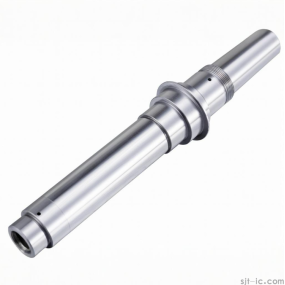
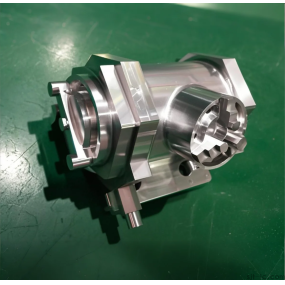
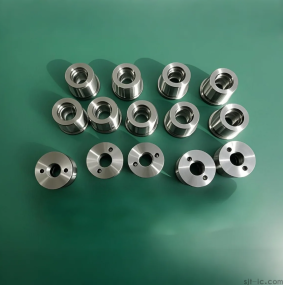
CNC Machined Parts Customization is becoming one of the most important solutions in modern manufacturing. Many industries need parts that are not standard, but specially designed for their machines, products, or systems. Custom CNC Machining helps solve this problem with accuracy, flexibility, and repeatable quality.
However, many buyers and engineers face challenges such as unclear design requirements, material confusion, cost concerns, and inconsistent quality. This article explains the key points in simple English so you can understand how CNC customization works and how to avoid common mistakes.
Why CNC Machined Parts Customization Matters
Standard parts cannot always meet special engineering needs. That is why customization is important. With CNC technology, you can design parts based on exact measurements, shapes, and performance requirements.
The biggest advantages of customizing CNC parts include better product performance, higher precision, and improved compatibility with existing systems. It also reduces assembly problems and increases long-term reliability.
Steps in Custom CNC Machining Process
Understanding the steps in customizing CNC machined parts helps you avoid delays and misunderstandings during production.
- Requirement analysis: Define the purpose of the part, working environment, and performance needs.
- Design creation: Engineers create 2D or 3D drawings based on your specifications.
- Programming: CNC machines are programmed with precise cutting paths.
- Machining process: The raw material is cut, shaped, and refined using CNC equipment.
- Inspection: Final parts are checked to ensure they match the design.
Each step must be carefully controlled to ensure the final product meets expectations.
Design Considerations for CNC Part Customization
Good design is the foundation of successful machining. Without proper planning, even advanced machines cannot produce good results.
Important design considerations for CNC part customization include tolerance levels, wall thickness, surface finish, and functional structure. Small design mistakes can lead to production errors or increased costs.
- Keep designs simple when possible to reduce machining time.
- Avoid extremely thin walls unless necessary for function.
- Choose proper tolerance based on part usage.
- Consider assembly requirements early in the design stage.
Material Selection in CNC Parts Customization
Choosing the right material is another key factor that directly affects performance and cost. Different materials have different strengths, durability, and machining difficulty.
The material selection in CNC parts customization process usually depends on the application environment.
- Aluminum: Lightweight, easy to machine, widely used in aerospace and automotive parts.
- Stainless steel: Strong and corrosion-resistant, suitable for medical and industrial use.
- Brass: Good electrical conductivity, often used in connectors.
- Plastic (engineering plastics): Cost-effective and lightweight for non-metal applications.
Selecting the wrong material can reduce product lifespan or increase production difficulty.
Quality Control in CNC Machined Parts Customization
High-quality parts require strict inspection and testing. Without proper control, even small errors can lead to product failure.
Quality control in CNC machined parts customization usually includes dimensional inspection, surface testing, and performance verification.
- Use precision measuring tools such as calipers and CMM machines.
- Check surface finish to ensure smoothness and accuracy.
- Verify all dimensions match the original design drawings.
Reliable suppliers always follow strict inspection standards to maintain consistency across production batches.
How EMAR Supports CNC Machined Parts Customization
Choosing the right manufacturing partner is just as important as design and material selection. EMAR company has strong experience in CNC machining services and supports clients from prototype development to mass production.
With advanced equipment and a skilled engineering team, EMAR focuses on precision, fast delivery, and stable quality. Whether you need complex geometries or simple functional parts, EMAR provides practical solutions tailored to your project needs.
The company also pays attention to communication during the entire process, helping customers avoid design errors and reduce production risks.
Conclusion
CNC Machined Parts Customization is not just about manufacturing parts—it is about solving engineering problems with precision and efficiency. By understanding design rules, material options, production steps, and quality control methods, you can significantly improve your project results.
Working with an experienced partner like EMAR can make the process smoother, more reliable, and cost-effective. With the right approach, custom CNC machining becomes a powerful tool for product innovation and industrial success.
 English
 » »
» »
 Spanish
 Arabic
 French
 Portuguese
 Belarusian
 Japanese
 Russian
 Malay
Malay Icelandic
 Bulgarian
 Azerbaijani
 Estonian
 Irish
Irish Polish
 Persian
 Boolean
 Danish
 German
 Filipino
 Finnish
 Korean
 Dutch
Dutch Galician
 Catalan
 Czech
Czech Croatian
 Latin
Latin Latvian
 Romanian
 Maltese
 Macedonian
 Norwegian
 Swedish
 Serbian
 Slovak
 Slovenian
 Swahili
 Thai
Thai Turkish
 Welsh
Welsh Urdu
Urdu Ukrainian
 Greek
Greek Hungarian
 Italian
 Yiddish
 Indonesian
 Vietnamese
 Haitian Creole
 Spanish Basque