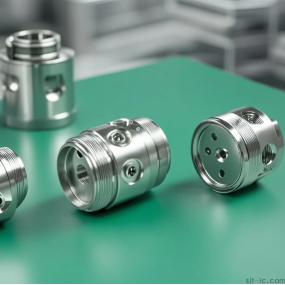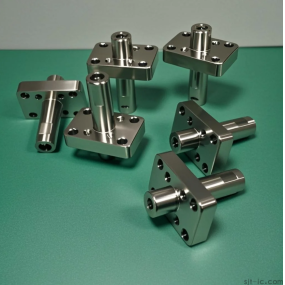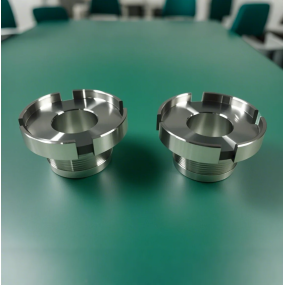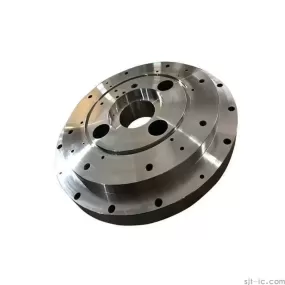
The reliability of any plumbing system depends on every precision-machined component. From brass fittings to stainless steel valves, CNC (Computer Numerical Control) machining has become the core manufacturing process for high-quality plumbing components. This guide synthesizes best practices from leading manufacturers across the industry, covering material selection, machining processes, tolerance control, quality standards, and application fields—serving as a practical reference for procurement professionals and design engineers.
CNC machining is a subtractive manufacturing process in which pre-programmed computer instructions control machine tools to remove material layer by layer from a solid blank, ultimately producing a precision part that meets design specifications. Unlike additive manufacturing methods such as 3D printing, CNC machining begins with a complete bar or block of metal or plastic, with material removed by rotating end mills or turning tools.
The core advantage of modern CNC machining lies in its repeatability and high precision. A standard 3-axis machining center can achieve feature tolerances of ±0.025 mm (±0.001 in.), while high-end 5-axis equipment and Swiss-type lathes can reach ±0.005 mm (IT6 grade) or better. The entire workflow begins with 3D CAD modeling, proceeds through CAM software for toolpath generation and G-code production, and concludes with the machine executing the cutting operations.
The complete CNC machining process comprises eight stages: CAD design and modeling → CAM toolpath generation → machine setup and calibration → material selection → cutting tool and parameter definition → actual machining → finishing and deburring → quality inspection. Each stage directly influences the dimensional accuracy and surface quality of the final part.
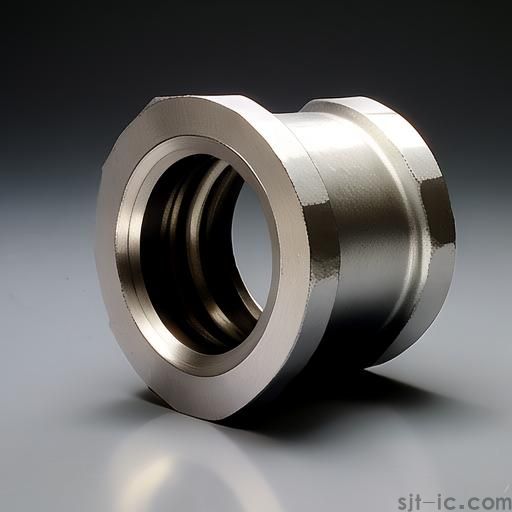
Plumbing systems span hydraulic, pneumatic, water supply, and HVAC applications, requiring a wide variety of machined components. The following table outlines the most common part categories:
| Part Category | Typical Products | Key Machining Requirements |
|---|---|---|
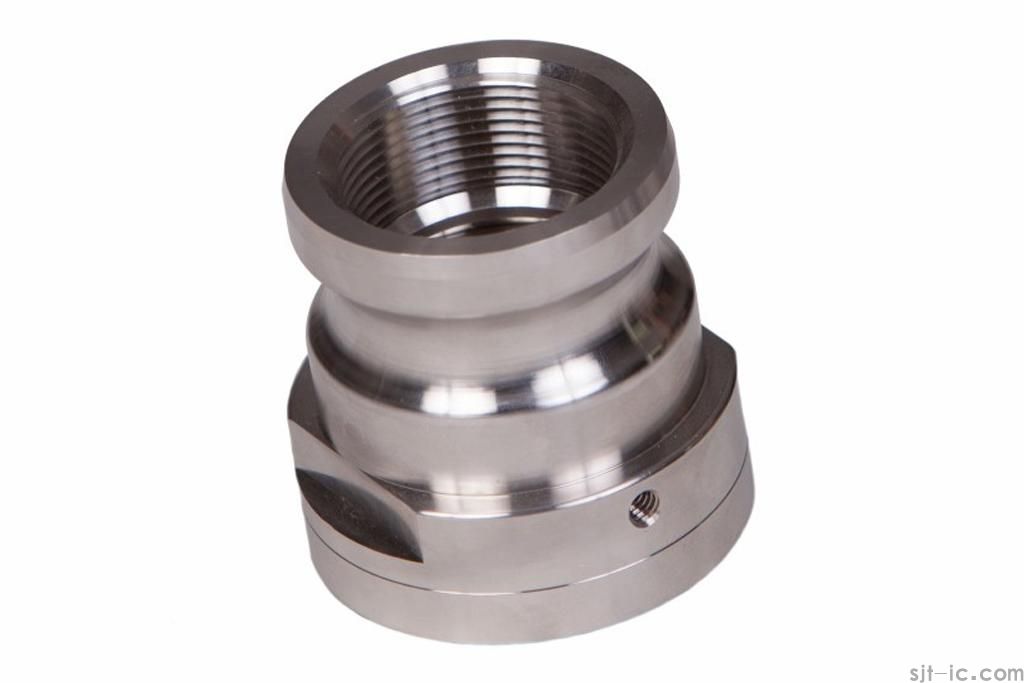
| Fittings & Connectors | Compression fittings, elbows, tees, unions, hose barbs, adapters, compression nuts | Thread accuracy, sealing surface finish, concentricity |
| Valve Components | Ball valves, check valves, pressure relief valves, solenoid valves, spools, seats, stems | Seat flatness, bore precision, pressure rating |
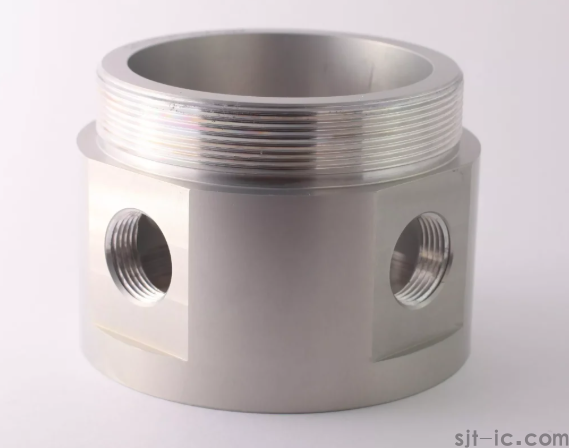
| Flanges & Manifolds | Custom flanges, hydraulic manifolds, integrated fluid control blocks | Multi-hole positional accuracy, cross-hole machining, flatness |
| Rotating & Moving Parts | Hydraulic pistons, pump impellers, valve spools, spindles, couplings | Cylindricity, surface roughness, dynamic balance |
| Seals & Fasteners | Gland nuts, gaskets, custom bolts, pins, bushings | Thread tolerance, surface hardness, corrosion resistance |
| Plumbing-Specific Parts | Flow regulators, pipe connectors, thru-hull fittings, seacocks | Uniform wall thickness, pressure testing, material certification |
For high-volume plumbing components, multi-station rotary transfer machines can achieve production rates of over 1,000 parts per hour—for example, 1/2-inch fittings can be machined at up to 1,350 pieces per hour. These systems are ideal for standardized parts such as union nuts and couplings.
Material selection for plumbing parts requires balancing corrosion resistance, strength, machinability, cost, and compatibility with the working medium. The following table summarizes the industry's mainstream materials and their applications:
| Material | Common Grades | Key Properties | Typical Applications |
|---|---|---|---|
| Brass | C360, C260, C377, Cz121, C464 (Naval Brass) | Excellent machinability, corrosion resistance, thermal conductivity, cost-effective | Fittings, valves, pipe components, plumbing hardware, potable water systems |
| Stainless Steel | 303, 304, 316L, 17-4 PH | High strength, excellent corrosion resistance; 316L for seawater environments | High-pressure valves, flanges, hydraulic components, marine plumbing |
| Aluminum | 6061, 7075, 5052, 2024 | Lightweight, good thermal conductivity, anodizable | Hydraulic manifolds, lightweight fittings, pneumatic systems |
| Carbon & Alloy Steel | 1018, 4140, 4340, A2, D2 | High strength, good toughness, heat-treatable | High-pressure piping, flanges, shafts, fasteners |
| Copper & Bronze | C101, C110, C954 (Aluminum Bronze), 544, 841 | High thermal/electrical conductivity, wear resistance, seawater corrosion resistance | Heat exchangers, bearings, marine valves, electrical connectors |
| Engineering Plastics | PEEK, POM (Delrin), Nylon, PTFE, PVC | Corrosion resistant, lightweight, low friction, insulating | Non-metallic fittings, seals, chemical piping, insulating components |
Brass is the most widely used material in the plumbing industry, particularly C360 free-machining brass, which offers high machining efficiency, low cost, and good corrosion resistance—making it ideal for plumbing fittings and valves. For potable water applications, lead-free brass complying with NSF/ANSI 61 standards is required. Seawater and highly corrosive environments call for naval brass C464 or stainless steel 316L.
Plumbing part manufacturing typically involves the following core processes, selected based on part geometry and production volume:
1. CNC Turning
Suitable for cylindrical, axisymmetric parts such as fittings, valve spools, bushings, and threaded components. The workpiece rotates while the tool feeds along the axial and radial directions. Turning centers equipped with live tooling can complete secondary operations such as axial/radial holes, flats, and slots in a single setup, significantly improving efficiency. Standard turning diameters range from 1 mm to 250 mm, while Swiss-type lathes excel at slender shafts and miniature precision components.
2. CNC Milling
Suitable for flat surfaces, cavities, and complex contours such as flanges, manifolds, valve bodies, and brackets. The cutting tool rotates while the workpiece moves along the X/Y/Z axes. 3-axis mills handle conventional geometries, while 5-axis machining centers can machine multiple sides in a single setup—ideal for complex curved surfaces and deep cavities, reducing cumulative error from repeated fixturing.
3. Swiss-Type Machining
Featuring a sliding headstock design, the cutting tool operates close to the guide bushing, effectively reducing deflection of slender workpieces. Particularly suited for miniature, complex parts in medical, electronics, and precision plumbing applications, Swiss-type machines can support up to 11 axes and complete turning, milling, drilling, and tapping in one operation.
4. Multi-Axis and Multi-Tasking Machining
Mill-turn centers and multi-tasking machines integrate a milling spindle with a turning turret, completing all operations on a single machine for highly complex parts. For standardized, high-volume plumbing components, multi-spindle automatic lathes and multi-station rotary transfer machines deliver exceptional production efficiency.
5. Thread Machining
Threads are critical functional features on plumbing parts. Common standards include NPT (National Pipe Taper), BSPP/BSPT (British Standard Pipe), and metric threads. NPT achieves sealing through thread interference, while BSPP typically seals with an O-ring or gasket. Thread machining accuracy directly affects system sealing performance and pressure capability.
In plumbing systems, any dimensional deviation can lead to leaks, pressure drops, or premature wear. Tolerance control is therefore the cornerstone of CNC plumbing part manufacturing.
Tolerance Reference Levels:
Quality Control Systems and Inspection Methods:
| Inspection Item | Method / Equipment | Purpose |
|---|---|---|
| Dimensional measurement | Coordinate Measuring Machine (CMM), optical comparator, vision measuring system | Verify geometric accuracy and positional tolerances |
| First Article Inspection (FAI) | AS9102 standard, full-dimensional inspection report | Confirm process capability before batch release |
| In-process monitoring | Statistical Process Control (SPC), in-machine gauging | Real-time batch consistency monitoring |
| Surface quality | Profilometer, visual / magnified inspection | Confirm sealing surface and appearance quality |
| Material verification | Certificate of Conformance (COA/MTR), spectral analysis | Ensure material grade and chemical composition |
| Functional testing | Hydrostatic / pneumatic pressure testing, salt spray testing | Verify pressure rating and corrosion resistance |
Industry-standard quality certifications include ISO 9001:2015 (general quality management), AS9100 (aerospace), ITAR (U.S. defense trade controls), NSF/ANSI 61 (drinking water safety), as well as CE and RoHS compliance. Selecting a supplier with the appropriate certifications is fundamental to ensuring plumbing part quality.
Surface finishing affects not only appearance but also the corrosion resistance, wear resistance, and sealing performance of plumbing parts. Common post-processing methods include:
Thoughtful design significantly reduces manufacturing cost and improves part quality. Based on industry practice, the following are key DFM principles for CNC-machined plumbing parts:
1. Simplify Geometry
Avoid complex swept surfaces and multi-sided machining features whenever possible. Parts that can be machined from a single direction reduce setup time and eliminate the need for 5-axis equipment. For overly complex monolithic parts, consider splitting into multiple simpler components assembled via threading or welding.
2. Apply Tolerances Judiciously
Reserve tight tolerances for critical functional features such as sealing surfaces and mating bores. Use default block tolerances for non-critical dimensions. Overly tight tolerances increase machining time and cost, and may require special tooling or secondary operations.
3. Avoid Deep Cavities and Thin Walls
Deep cavity machining requires long-reach tools, which are prone to chatter and dimensional deviation. Thin-walled parts deform under clamping and cutting forces—reinforcing ribs or increased wall thickness are recommended. Tool overhang should generally not exceed 4× the tool diameter.
4. Thread and Hole Design
Tapped hole depth should generally not exceed 3× the diameter, as deep hole tapping suffers from chip evacuation issues. Through holes are preferred over blind holes. Internal corner radii should be no smaller than the tool radius; sharp internal corners require special small-diameter tools.
5. Minimize Engraved Text
Machined engraved text requires small-diameter tools to trace each character, consuming significant machine time. For part identification, laser marking, silk-screening, or stamping are preferred alternatives.
6. Match Material to Design Requirements
Brass and aluminum offer good machinability at lower cost; stainless steel and titanium are more difficult to machine with faster tool wear—designs should allow for wider tolerances and larger corner radii when using these materials.
CNC-machined plumbing parts are widely used across the following industries:
When evaluating a plumbing parts machining supplier, consider the following dimensions:
CNC-machined plumbing part manufacturing is a systematic engineering discipline integrating materials science, precision machinery, and quality control. From brass plumbing fittings to stainless steel high-pressure valves, success hinges on four pillars: selecting the right material for the application, matching the appropriate machining process, strictly controlling tolerances and sealing surface quality, and establishing a comprehensive inspection and traceability system.
For buyers, partnering with a supplier that offers DFM expertise and a complete quality management system not only ensures compliant parts but also helps mitigate manufacturing risks at the design stage, optimizing both cost and lead time. As 5-axis machining, automated inspection, and digital twin technologies become more widespread, the precision and efficiency of plumbing part manufacturing will continue to advance.