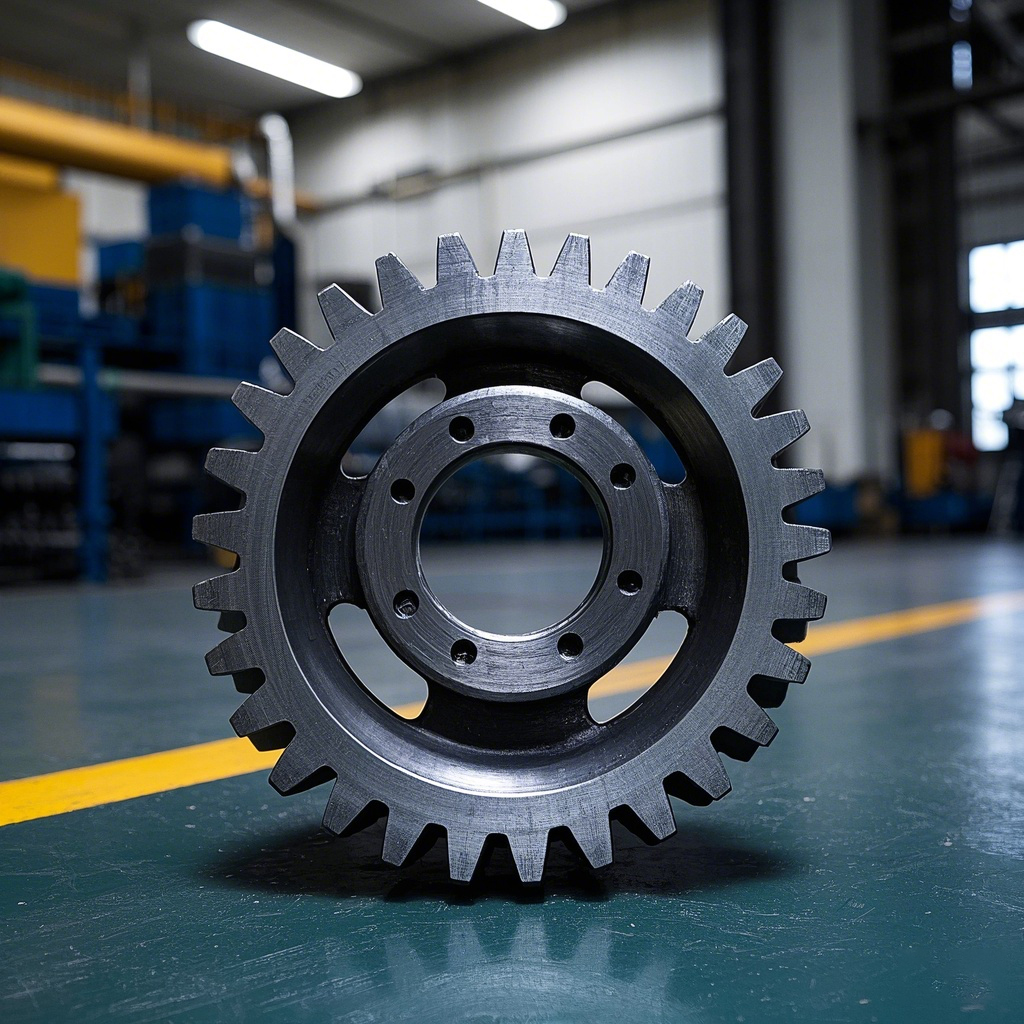
Gears are essential mechanical components used in almost every power transmission system. They help transfer motion, control speed, increase or reduce torque, and change the direction of movement. From automotive transmissions and aerospace equipment to industrial machines and automation systems, the accuracy of gears directly affects machine efficiency, operating noise, service life, and reliability.
With the development of modern manufacturing, CNC machining gear processing method? Gear Processing Detailed Process has become a preferred solution for producing high-precision gears. Compared with traditional gear manufacturing methods, CNC machining provides better accuracy, repeatability, faster production, and greater flexibility for producing different gear designs. Professional CNC manufacturers, such as EMAR, use advanced CNC equipment and strict process control to help customers produce gears with stable quality and reliable performance.
Traditional gear production often requires more manual adjustment and has limitations when producing complex tooth profiles. CNC gear machining uses computer-controlled programs to manage cutting movements, tool paths, and machining parameters. This allows manufacturers to achieve consistent tooth accuracy even in complex gear structures.
The main advantages of CNC machining for gears include:
For industries that require high-performance transmission systems, precise CNC gear machining helps reduce vibration, noise, energy loss, and unexpected equipment failures.
Choosing the correct material is the first important step in gear manufacturing. Different applications require different mechanical properties, including strength, hardness, wear resistance, corrosion resistance, and cost control.
Common materials used for CNC gears include:
The correct CNC gear material selection depends on working conditions, load requirements, operating speed, environmental factors, and production budget. Experienced CNC manufacturers can help customers select materials that balance performance and cost.
Before machining begins, a detailed gear drawing or 3D model is required. The design should include all important specifications, such as:
CAD software is commonly used to create accurate 2D drawings and 3D models. These designs are then converted into CNC programs that control the machining process. A complete and accurate blueprint reduces machining errors and avoids unnecessary production costs.
Hobbing in CNC gear machining is one of the most common methods for producing external gears. It is especially suitable for medium and high-volume production because it can quickly create accurate gear teeth.
The hob is a cutting tool that directly forms the gear teeth. Selecting the correct hob is important because the tool design must match the gear specifications, including:
Different hobs are required for spur gears, helical gears, and worm gears. Incorrect tool selection may lead to inaccurate tooth profiles and poor gear performance.
During setup, the gear blank is fixed onto the hobbing machine, and the hob is installed at the correct angle. The CNC system controls the relationship between the hob rotation and workpiece rotation.
Important setup parameters include:
During machining, the hob rotates as the main cutting movement while the gear blank rotates at a synchronized speed. The hob gradually removes material and creates the gear teeth through continuous cutting.
Hobbing provides high productivity and is widely used for manufacturing spur gears and helical gears in automotive, industrial, and automation equipment.
Gear shaping uses a reciprocating cutting tool to create gear teeth. It is especially useful when hobbing is difficult or impossible.
The shaping cutter can be a rack-type cutter or pinion-type cutter. The cutter profile must match the required gear tooth design.
The gear blank is securely mounted, and the cutter moves up and down while the workpiece rotates in synchronization. Each cutting stroke removes a small amount of material until the complete tooth profile is formed.
Gear shaping is commonly used for:
Gear milling is a flexible machining method often used for small batches, prototypes, and special gear designs.
Different milling cutters can be selected depending on the gear structure:
During milling, the CNC machine controls multiple axes to move the cutter and create the gear teeth. Although milling is slower than hobbing, it provides excellent flexibility for complex designs.
Heat treatment is a critical step that improves gear strength, hardness, and wear resistance. Proper heat treatment allows gears to handle heavy loads and operate for longer periods.
Common heat treatment methods include:
The heat treatment process must be carefully controlled because excessive heat or improper cooling may cause gear deformation.
After heat treatment, precision grinding is often used to improve gear accuracy. Grinding removes small amounts of material and corrects minor dimensional errors.
Benefits of gear grinding include:
Machining can leave small burrs on gear edges. Deburring removes these sharp edges to prevent uneven wear and noise during operation.
Polishing may also be used to further improve surface quality, reduce friction, and extend gear service life.
Quality control in CNC gear processing is essential because even small gear errors can cause vibration, noise, and premature failure.
Inspection should be performed during machining instead of waiting until the final stage. Common measuring tools include:
These inspections help detect problems with tooth dimensions, alignment, concentricity, and surface quality before additional costs occur.
After machining and finishing, the completed gear undergoes final inspection. The inspection process usually includes:
Following international standards such as ISO 1328 helps ensure that CNC-produced gears meet industry accuracy requirements.
Cost-effectiveness of CNC gear production depends on selecting the right machining strategy, materials, tools, and production methods.
Proper CNC parameters can reduce production costs while maintaining quality. Important factors include:
Optimized settings reduce machining time, lower tool replacement frequency, and improve overall efficiency.
Production quantity affects the best manufacturing method:
Working with an experienced CNC gear machining supplier can help choose the most economical process for each project.
Spur gears have straight teeth parallel to the gear axis. They are simple in design and widely used in mechanical systems.
Common manufacturing methods include:
Helical gears have angled teeth that provide smoother operation and higher load capacity compared with spur gears.
Manufacturing helical gears requires precise control of the helix angle. Special hobs and accurate CNC programming are needed to achieve the correct tooth geometry.
Bevel gears have cone-shaped teeth and are used to transmit power between shafts that are not parallel. Their tooth geometry is more complex, requiring specialized CNC machines and advanced machining methods.
Accurate bevel gear machining is important for achieving proper contact between gear teeth and ensuring reliable operation.
The CNC Machining Gear Processing Method? Gear Processing Detailed Process involves multiple important stages, including material selection, gear design, CNC cutting, heat treatment, finishing, inspection, and cost optimization. Each step directly affects the final gear performance.
By choosing suitable machining methods, controlling production parameters, and applying strict quality inspection, manufacturers can produce gears with high accuracy, long service life, and stable performance. Companies with professional CNC machining experience, such as EMAR, provide advanced gear machining solutions for different industries by combining precision equipment, engineering knowledge, and reliable manufacturing processes.