
CNC Machining Connector
Review the factors that affect CNC machining connector, including dimensional inspection, drawing tolerances and coating.
Published by EMAR TECH CO., LTD.
Request a machining reviewIn modern industries, connectors are small parts but play a very important role. They ensure stable electrical signals, secure mechanical assembly, and long-term performance. When connectors fail, the whole system may stop working. This is why CNC Machining Connector solutions are widely used in aerospace, automotive, medical devices, and electronics.
Many users struggle with poor fit, unstable conductivity, or short service life in connector parts. CNC technology helps solve these problems by offering high accuracy, repeatability, and strong material compatibility.
Why CNC Machining Connectors Matter
Connectors require extremely tight tolerances. Even a small error can lead to signal loss or assembly failure. Traditional manufacturing methods often cannot guarantee stable precision.
CNC machining provides digital control, which ensures every connector is produced exactly according to design. This is especially important for industries that require zero-error performance.
Common Challenges in Connector Manufacturing
- Poor dimensional accuracy causing loose or tight fitting
- Surface defects affecting electrical contact performance
- Material wear in harsh environments
- Difficulties in mass production consistency
These challenges are why many companies now switch to CNC machining for connector production.
Steps in CNC machining a connector
The steps in CNC machining a connector are carefully controlled to ensure precision and repeatability:
- Design and CAD modeling: Engineers create a detailed 3D model of the connector.
- Programming: The CNC machine is programmed with exact tool paths.
- Material selection: Suitable metals or plastics are chosen based on application needs.
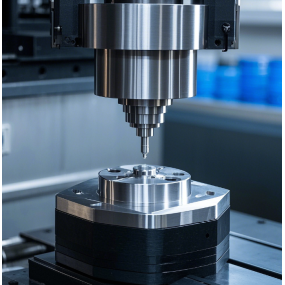
- Precision machining: CNC machines cut, drill, and shape the connector.
- Surface finishing: Polishing or coating is applied to improve durability.
- Inspection: Each part is measured and tested before delivery.
Precision requirements in CNC connector machining
The precision requirements in CNC connector machining are extremely strict. In many cases, tolerances must be controlled within microns.
This ensures perfect mating between connector parts and stable electrical performance. Even slight deviation may cause signal interference or mechanical instability.
Materials suitable for CNC-machined connectors
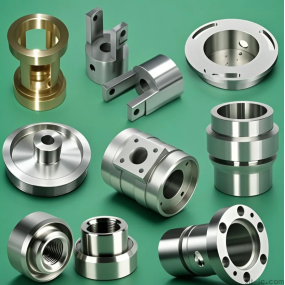
Choosing the right material is essential for performance and durability. Common materials suitable for CNC - machined connectors include:
- Aluminum alloys – lightweight and corrosion-resistant
- Stainless steel – strong and durable for harsh environments
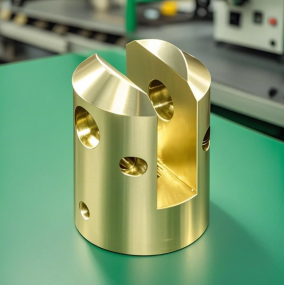
- Brass – excellent electrical conductivity
- Copper – used in high-conductivity applications
- Engineering plastics – used for insulation and lightweight needs
Advantages of using CNC for connector machining
The advantages of using CNC for connector machining are clear for manufacturers and engineers:
- High precision and repeatability
- Stable quality in mass production
- Flexibility for complex designs
- Reduced human error in production
- Faster prototyping and customization
These benefits make CNC machining the preferred choice for modern connector manufacturing.
Quality control in CNC machining connector process
Strong quality control in CNC machining connector process ensures every part meets strict industry standards.
Common quality control methods include coordinate measuring machines (CMM), visual inspection, and functional testing. These steps ensure that every connector performs reliably in real applications.
Choosing a reliable manufacturing partner
Selecting the right supplier is key to achieving consistent results. A professional CNC machining partner should have advanced equipment, experienced engineers, and strict inspection systems.
EMAR has built strong expertise in precision connector manufacturing. With advanced CNC equipment and strict quality management, provides stable and high-quality CNC Machining Connector solutions for global customers. Their focus on accuracy and process control helps reduce risk and improve product reliability.
By combining engineering knowledge with modern CNC technology, EMAR supports industries that demand high-performance connector parts.
In summary, CNC machining has become the backbone of modern connector production. From design to inspection, every step is controlled to ensure precision, durability, and performance. Whether for small-scale prototypes or large-scale production, CNC Machining Connector solutions provide the reliability that modern industries require.