Turbine blades are some of the most demanding components in modern power systems and aircraft engines. They must operate under extreme conditions, including high temperatures, high pressure, and strong mechanical stress. Even a small dimensional error can reduce efficiency, increase fuel consumption, or shorten the service life of the turbine.
CNC Machining Turbine Blades is a preferred manufacturing method because it can produce complex aerodynamic shapes with very high accuracy and repeatability. Advanced CNC technology allows manufacturers to create precise blade profiles, smooth curved surfaces, and consistent dimensions that are difficult to achieve with traditional machining methods.
For companies looking for reliable turbine blade production, choosing the right machining partner is critical. Experienced manufacturers such as EMAR provide advanced CNC machining solutions, focusing on precision control, material expertise, and strict quality management to meet the demanding requirements of turbine applications.
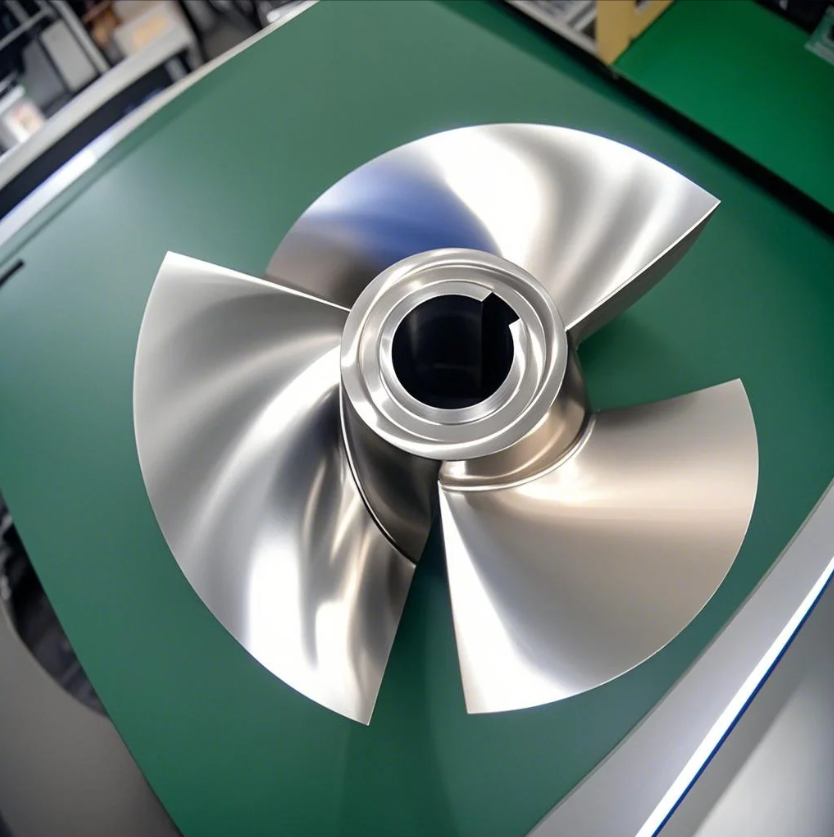
Turbine blades have complex three-dimensional shapes designed to control airflow and improve energy conversion. The blade surface includes carefully calculated curves, twists, and angles. Traditional machining methods often struggle to create these shapes accurately, especially for small production batches or customized designs.
CNC machining provides several important advantages:
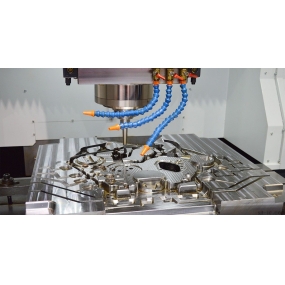
With advanced five-axis machining technology, manufacturers can move cutting tools around multiple directions at the same time. This capability is especially important for handling complex geometries in turbine blade CNC machining, where every surface must meet strict aerodynamic requirements.
The performance of a turbine blade depends heavily on its design. Proper design considerations for CNC-machined turbine blades help improve efficiency, durability, and resistance to operating stresses.
The blade design must match the turbine application. Gas turbines usually operate at extremely high temperatures, while steam turbines face different challenges related to pressure, moisture, and corrosion.
Engineers must consider temperature, pressure, rotational speed, and expected service life when developing turbine blade designs.
The blade profile directly affects airflow efficiency. A properly designed airfoil shape reduces turbulence and improves energy transfer. CNC machining allows manufacturers to accurately reproduce these aerodynamic profiles with smooth surface finishes.
The twist angle of a turbine blade changes along its length to optimize airflow from the root to the tip. Incorrect twist angles can reduce turbine efficiency.
Tip clearance is another important factor. The space between the blade tip and the turbine housing must be carefully controlled. Too much clearance causes energy loss, while too little clearance may create contact and damage during operation.
Choosing the correct material is one of the biggest challenges in turbine blade manufacturing. The material must withstand heat, stress, corrosion, and repeated operating cycles. The right material selection for turbine blade CNC machining depends on the turbine type and working environment.
Nickel-based superalloys are widely used for high-temperature gas turbine blades. They maintain mechanical strength even at extreme temperatures and provide excellent resistance to oxidation and corrosion.
Common advantages include:
Because nickel alloys are difficult to machine, they require advanced CNC equipment, proper cutting tools, and optimized machining parameters.
Titanium alloys are popular when low weight is important. They offer high strength with lower density compared with many steel-based materials.
Titanium alloys are suitable for applications that require:
Ceramics can withstand extremely high temperatures and provide excellent wear resistance. They are considered for advanced turbine applications where thermal performance is a priority.
However, ceramics are brittle and require specialized machining methods to avoid cracking or surface damage.
Turbine blade machining requires advanced manufacturing techniques to achieve accurate shapes and reliable performance.
Five-axis milling is one of the most common methods for turbine blade production. It allows the cutting tool to approach the blade from different angles, making it possible to machine complex curved surfaces in fewer setups.
Typical machining considerations include:
For difficult materials such as nickel alloys, manufacturers often use carbide or ceramic cutting tools with carefully controlled cutting conditions.
EDM uses electrical sparks to remove material and is useful for machining hard metals or producing detailed features that are difficult to cut with traditional tools.
EDM is often used for:
ECM removes material through controlled chemical reactions. It creates smooth surfaces without generating significant cutting forces or heat stress.
This method is suitable for delicate turbine components where maintaining material properties is important.
Manufacturing turbine blades requires careful control because small mistakes can affect performance.
Turbine blades require precise dimensions to maintain proper airflow and balance. CNC machining systems with advanced measurement feedback help maintain accuracy throughout production.
Heat generated during machining can change material properties or create surface damage. Proper coolant selection, cutting parameters, and tool management help control machining temperatures.
The complicated curvature of turbine blades makes programming and machining difficult. Advanced CAD/CAM software and multi-axis CNC machines are necessary to accurately follow the designed blade geometry.
After machining, turbine blades often require additional treatments to improve performance. The post-machining processes for CNC-machined turbine blades help increase strength, durability, and resistance to harsh operating environments.
Heat treatment can improve mechanical properties by adjusting the internal structure of the material. It helps increase strength, hardness, and fatigue resistance.
Special coatings protect turbine blades from oxidation, corrosion, and wear. Thermal barrier coatings are commonly used in high-temperature applications to reduce heat exposure on the blade material.
Surface finishing improves smoothness and helps maintain efficient airflow. A high-quality surface reduces friction and improves turbine performance.
Strict inspection is necessary to ensure every turbine blade meets engineering requirements. Effective quality control in CNC-machined turbine blades helps prevent failures and ensures reliable operation.
Important inspection methods include:
Professional CNC machining suppliers use strict quality systems throughout the entire process, from material inspection and machining to final testing. EMAR combines advanced CNC equipment, experienced engineers, and quality inspection procedures to support customers requiring high-precision turbine blade components.
Turbine blade manufacturing requires more than advanced machines. A reliable supplier should have experience with difficult materials, complex geometries, precision machining, and quality verification.
When selecting a CNC machining partner, consider:
With the right manufacturing partner, CNC machining can deliver turbine blades with excellent accuracy, durability, and performance. Advanced CNC technology continues to improve turbine efficiency by making complex designs easier to produce with consistent quality.