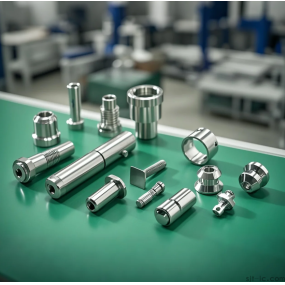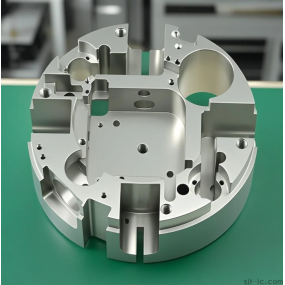
High - quality mechanical parts are the foundation of modern industries, including manufacturing, automotive, aerospace, robotics, and industrial equipment. These parts must work accurately, safely, and reliably under different operating conditions. Even a small dimensional error can cause poor performance, faster wear, or complete system failure.
Precision CNC Machining Services for High - Quality Mechanical Parts provide an effective solution for companies that need accurate, durable, and customized components. By using advanced CNC machines, skilled engineers, proper material selection, and strict inspection methods, professional machining providers can produce mechanical parts that meet demanding industry requirements.
Precision in high - quality mechanical part machining directly affects how mechanical systems operate. CNC machining can achieve very tight tolerances, allowing each component to match the original design specifications. This level of accuracy is important because mechanical systems often contain many connected parts that must work together perfectly.
A small deviation in part dimensions can create serious problems. Incorrect sizes may lead to misalignment, excessive friction, vibration, or improper operation. For example, in an automotive engine, precisely machined pistons and cylinders ensure proper sealing, efficient combustion, and smooth power transfer.
In aerospace systems, where safety and reliability are extremely important, precision-machined components help aircraft systems operate correctly under high loads and changing conditions. Accurate manufacturing reduces the risk of performance problems and improves overall system efficiency.
Precision machining improves the connection between mechanical parts. When components are manufactured with tight tolerances, they fit together better and experience less stress during operation. This reduces friction, wear, and unexpected damage.
For industrial machinery, durable CNC-machined parts can reduce maintenance frequency and replacement costs. Companies can achieve higher productivity because equipment spends less time stopped for repairs.
Precision CNC machining allows parts to be produced with consistent dimensions. This makes components interchangeable, which is especially valuable in large-scale manufacturing.
When a part needs replacement, a new precision-machined component can be installed without major adjustments. This improves repair speed, simplifies inventory management, and increases production efficiency.
Choosing the correct material is one of the most important steps in CNC machining. The right material must balance strength, weight, corrosion resistance, machining difficulty, and cost. Proper material selection for mechanical parts CNC projects helps ensure the final component meets its working requirements.
Engineering plastics are also useful materials for precision mechanical parts. Materials such as PEEK, nylon, and acetal provide good mechanical strength, low friction, chemical resistance, and electrical insulation.
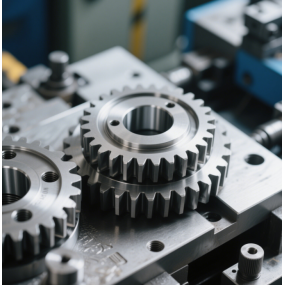
These plastics are often used for lightweight components, wear-resistant parts, gears, bushings, seals, and applications requiring self-lubricating properties. Selecting the right plastic material can reduce weight and improve performance while lowering production costs.
Different mechanical parts require different machining methods. Understanding the machining processes in high - quality mechanical parts helps manufacturers select the best production approach for accuracy, efficiency, and cost control.
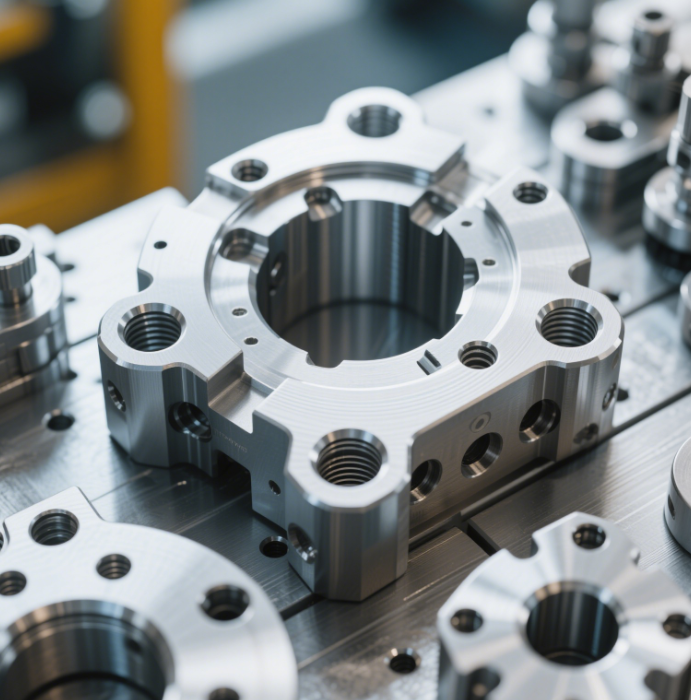
CNC milling is commonly used to create flat surfaces, slots, pockets, holes, and complex three-dimensional shapes. Milling machines use rotating cutting tools to remove material from a workpiece.
Common milling cutters include:
Cutting parameters such as cutting speed, feed rate, and depth of cut must be adjusted according to the material. For example, aluminum can usually be machined at higher speeds, while titanium requires slower cutting speeds and careful heat control.
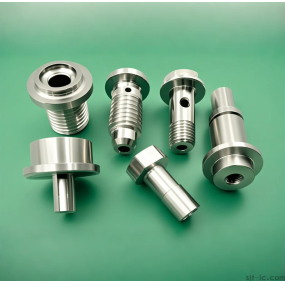
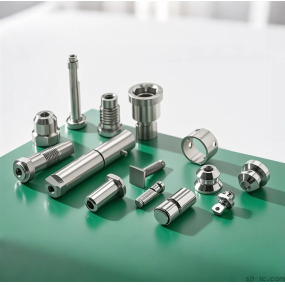
CNC turning is mainly used for cylindrical components such as shafts, bushings, pins, and bolts. During turning, the workpiece rotates while a cutting tool removes material to achieve the required diameter, length, and surface finish.
Professional CNC operators select suitable cutting tools based on material properties. Proper control of spindle speed, feed rate, and cutting depth helps achieve consistent dimensions and smooth surfaces.
Drilling creates holes in mechanical parts, while boring improves the accuracy and surface quality of existing holes. Correct drill selection depends on the material type, hole size, and required tolerance.
Accurate drilling and boring are essential for components that use bolts, pins, bearings, or shafts. Maintaining hole straightness and position accuracy ensures proper assembly and reliable operation.
Grinding is used when extremely tight tolerances and smooth surface finishes are required. It removes small amounts of material using abrasive wheels.
The selection and maintenance of grinding wheels are important. Proper wheel dressing keeps the abrasive surface effective and maintains consistent machining quality.
Strong quality management is essential for producing reliable mechanical components. The quality control of precision mechanical part CNC processes ensures every part meets design requirements before delivery.
Professional CNC machining providers use advanced measurement tools during production, including:
Real-time inspection helps identify machining deviations early. If a tool wears out or the machine moves away from the programmed path, adjustments can be made immediately to prevent defective parts.
Before shipment, high-quality mechanical parts may undergo several final tests, including hardness testing, material composition analysis, and functional testing.
Functional testing simulates real working conditions to confirm that the part performs correctly. Reliable CNC machining companies also follow industry standards such as ISO 9001 for general manufacturing and AS9100 for aerospace-related production.
Many customers worry that precision machining will increase production costs. However, smart planning and professional manufacturing methods can achieve excellent quality while controlling expenses. Understanding cost - effectiveness in high - quality mechanical part services helps companies make better production decisions.
Production quantity has a direct effect on machining costs. Large-volume orders usually have lower unit costs because setup expenses are distributed across more parts.
For small-batch production, companies can reduce costs by optimizing designs, combining similar projects, or sharing setup costs whenever possible.
Design optimization can significantly reduce machining time and material waste. Simple changes, such as reducing unnecessary complex features, using standard dimensions, and improving tool accessibility, can lower production costs without affecting performance.
The most expensive material is not always the best choice. Engineers should select materials according to actual application requirements.
For example, aluminum may replace heavier metals when lightweight performance is needed, while stainless steel may be unnecessary for applications that do not face corrosion risks. Choosing the correct material provides the best balance between performance and cost.
One major advantage of CNC machining is the ability to create customized components. Whether a customer needs a special shape, unique size, or specific mechanical function, precision CNC technology can transform a digital design into a finished part.
Customized CNC machining is widely used in different industries:
Successful customization requires close cooperation between customers and machining providers. A professional supplier should understand the application requirements, review drawings, suggest design improvements, and select suitable materials and processes.
Companies like EMAR provide precision CNC machining expertise for complex mechanical parts by combining advanced equipment, experienced engineers, and strict quality management. Their focus on accuracy, customization, and production efficiency helps customers achieve reliable solutions for demanding applications.
Selecting the right CNC machining service provider is important for project success. Customers should consider machining capabilities, quality systems, material experience, production flexibility, and communication ability.
A reliable partner can help reduce production risks, improve part performance, and provide cost-effective solutions from prototype development to mass production. With professional Precision CNC Machining Services for High - Quality Mechanical Parts, companies can achieve accurate, durable, and customized components that support long-term business success.