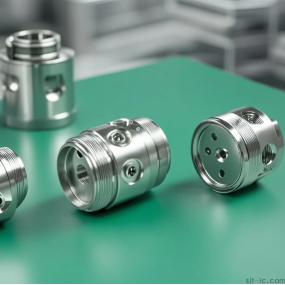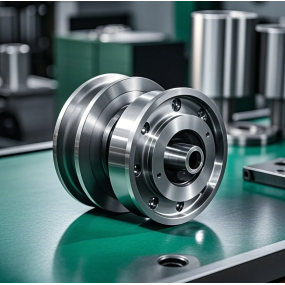

Drones are used in many fields, including aerial photography, agriculture, mapping, inspection, delivery, and industrial monitoring. Every drone needs reliable accessories and components to achieve stable flight and long service life. Many of these parts are made through CNC machining of drone accessories because CNC technology can produce lightweight, strong, and accurate parts with consistent quality.
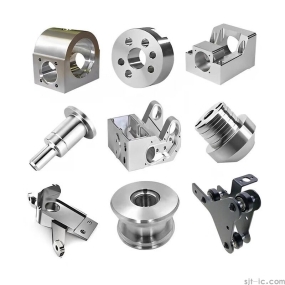
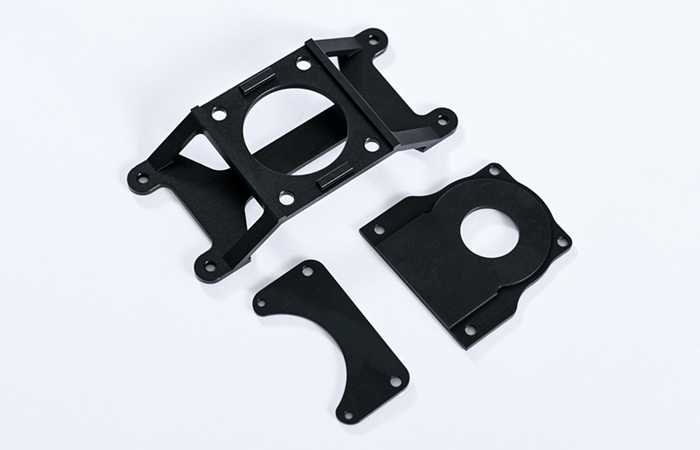
CNC machining allows manufacturers to create drone accessories such as motor mounts, camera brackets, landing gear parts, propeller adapters, frames, connectors, and electronic housings. Compared with traditional manual processing, CNC machining provides better accuracy, faster production, and easier customization for different drone designs.
This article explains the important factors involved in CNC machining of drone accessories, including material selection, design, machining methods, precision requirements, and quality control. It also provides practical guidance for companies looking for reliable drone component manufacturing solutions.
Drone accessories must meet strict requirements. They need to be lightweight enough to reduce energy consumption but strong enough to handle vibration, impact, and changing flight conditions. CNC machining is suitable because it can remove unnecessary material while keeping important structural areas strong.
For example, a drone camera mount needs high strength to hold the camera securely but should not add extra weight. A CNC-machined aluminum mount can achieve this balance by using precise shapes and optimized structures.
The main advantages of CNC machining for drone accessories include:
Material selection in CNC machining of drone accessories directly affects the weight, strength, durability, and cost of the final product. Different drone applications require different materials. Common choices include aluminum alloys and stainless steels.
7075-T6 aluminum alloy is widely used for high-performance drone components because it offers excellent strength while remaining lightweight.
Typical applications include drone arms, structural connectors, and high-load mounting parts. However, 7075-T6 is usually more expensive than common aluminum alloys, so it is often selected for critical components.
6061 aluminum alloy is another popular choice for drone accessories because it provides a good balance between cost, strength, and machinability.
6061 aluminum is commonly used for drone frames, housings, brackets, and general structural parts.
Stainless steel is selected when higher corrosion resistance and durability are needed.
Although stainless steel is heavier than aluminum, it is useful for drone components that require extra strength or environmental protection.
Design considerations for CNC machining of drone accessories are important because a good design improves performance, reduces manufacturing difficulty, and lowers production costs.
Drone parts should not simply be made thinner to reduce weight. A weak component may fail because of vibration or sudden impact during flight.
Engineers usually improve designs by:
For example, a drone arm may use a hollow structure to reduce weight while maintaining enough strength for motor operation.
Drone accessories must fit accurately with other parts. Poor design may cause installation problems, vibration, or loose connections.
Important design points include:
Designers should consider the complete assembly process before CNC machining begins. This reduces later modifications and saves manufacturing time.
CNC machining techniques for drone accessories include different machining methods depending on the part shape, material, and required accuracy.
3-axis milling is one of the most common CNC processes. The cutting tool moves along three directions to remove material from the workpiece.
It is suitable for:
It provides good efficiency and is a cost-effective choice for many standard drone accessories.
4-axis machining adds a rotating axis, allowing the machine to process more complex shapes and multiple sides of a part without frequent repositioning.
It is useful for parts such as:
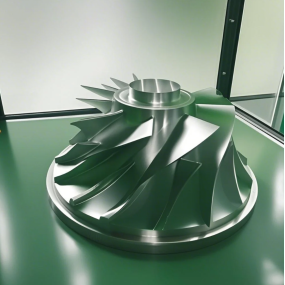
5-axis machining allows the cutting tool to approach the part from multiple angles. This technology is suitable for advanced drone components with complex shapes.
Advantages include:
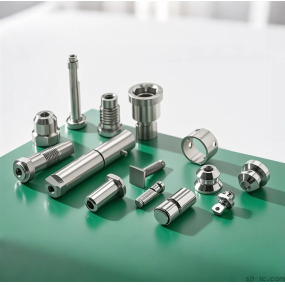
CNC turning is mainly used for round components. The workpiece rotates while cutting tools remove material.
Typical drone applications include:
Turn-milling combines turning and milling operations in one machine. It reduces processing steps and improves accuracy between different features.
This method is suitable for complex drone accessories that require both rotating and multi-angle machining.
Precision requirements in CNC machining of drone accessories depend on the function of each component. High precision is especially important for parts connected to motors, cameras, sensors, and flight control systems.
Dimensional tolerance controls how much a part can differ from the designed size. Important drone components often require tight tolerances to ensure proper assembly.
For example:
Surface finish affects appearance, assembly performance, and durability. Smooth surfaces can reduce friction and improve contact between parts.
Key components such as bearing seats, sliding surfaces, and precision connectors usually require better surface finishes than general structural parts.
Quality control in CNC machining of drone accessories ensures that every component meets design requirements and performs safely during operation.
Three-coordinate measuring machines (CMMs) are commonly used to check the size and position accuracy of CNC-machined parts.
CMM inspection can measure:
This inspection method is especially important for drone parts with complex structures and strict assembly requirements.
Surface inspection tools help verify whether the machined surface meets the required smoothness standard. Proper surface quality improves both appearance and function.
Non-destructive testing methods can check whether parts have hidden defects without damaging them.
Common methods include:
These methods help ensure that drone accessories remain reliable during flight.
Manufacturing high-quality drone accessories requires experience, advanced equipment, and strict quality management. A professional CNC machining supplier can help customers move from prototype designs to stable mass production.
EMAR provides CNC machining services for drone accessories with experience in precision metal manufacturing. The company supports customers with professional machining technology, suitable material recommendations, customized production solutions, and strict quality inspection processes.
EMAR focuses on producing reliable drone components by combining advanced CNC equipment with experienced technicians. Its quality control system helps ensure dimensional accuracy, consistent surface quality, and stable product performance. At the same time, efficient production methods help customers reduce manufacturing costs while maintaining product quality.
Whether a customer needs prototype drone parts or larger production quantities, working with an experienced CNC machining company can reduce development risks and improve production efficiency.
The CNC machining of drone accessories plays an important role in modern drone manufacturing. By choosing suitable materials, optimizing designs, applying proper machining techniques, controlling precision, and performing strict inspections, manufacturers can create drone parts that are lightweight, strong, and reliable.
Understanding material selection in CNC machining of drone accessories, design considerations for CNC machining of drone accessories, CNC machining techniques for drone accessories, precision requirements in CNC machining of drone accessories, and quality control in CNC machining of drone accessories helps businesses make better decisions when developing drone products.
With professional experience and reliable manufacturing capabilities, companies like EMAR can provide efficient CNC machining solutions that support the growing needs of the drone industry.