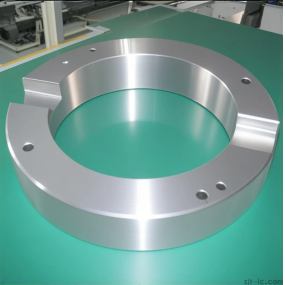
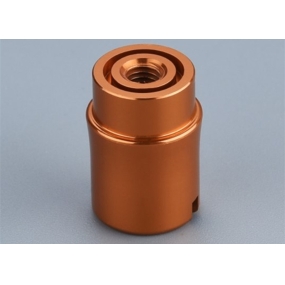
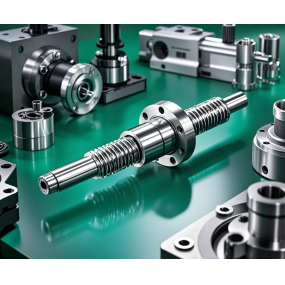
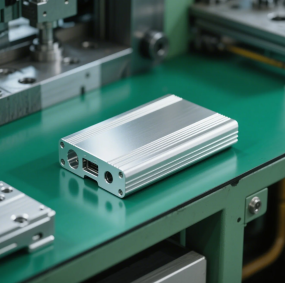
CNC Metal Products Machining plays an important role in modern metal product manufacturing. It allows manufacturers to create complex metal parts with high accuracy, stable quality, and repeatable results. From small precision components to large industrial metal products, CNC Machining helps turn digital designs into reliable finished products.
Many customers face common challenges when producing metal parts, such as inconsistent dimensions, long production times, material selection problems, and poor surface quality. CNC machining solves these problems by using computer-controlled machines that can perform accurate cutting operations with minimal human error. This makes CNC machining a preferred choice for industries such as automotive, aerospace, medical equipment, electronics, and industrial machinery.
The advantages of CNC for metal product machining come from its ability to provide precision, repeatability, and flexibility. Unlike traditional manual machining, CNC machines follow programmed instructions to produce the same design many times with consistent quality.
For businesses that need reliable metal components, CNC machining provides a balance between design freedom, production speed, and product quality.
The design stage has a major influence on the final machining result. Good design considerations in CNC metal product machining help avoid unnecessary costs, machining difficulties, and quality issues.
The process usually starts with a 3D CAD model. Engineers convert product ideas into detailed digital drawings that include dimensions, tolerances, surface requirements, and machining instructions.
Experienced CNC manufacturers review designs before machining to identify possible improvements. Companies such as EMAR provide professional CNC metal product machining services with engineering support to help customers optimize designs for better performance and cost control.
Material choice for CNC-made metal products directly affects strength, durability, machining difficulty, and product cost. Choosing the correct metal ensures that the final product performs well in its working environment.
When selecting materials, manufacturers must consider operating conditions, required strength, corrosion resistance, production volume, and budget. A professional CNC partner can recommend suitable materials based on the product application.
The process begins with a customer concept, drawing, or 3D model. Engineers analyze the design, check machining feasibility, and suggest improvements when necessary. This step helps reduce production risks and improves final quality.
Programming for CNC metal product machining converts the digital design into machine instructions. CNC programmers use CAM software to create tool paths, cutting sequences, and machining parameters.
A good CNC program controls important factors such as:
Proper programming improves machining efficiency, reduces tool damage, and helps maintain stable product quality.
Different machining methods are selected depending on the product design and material properties.
CNC milling uses rotating cutting tools to remove material from a metal workpiece. It is suitable for creating flat surfaces, pockets, slots, complex contours, and detailed structures.
Common milling tools include end mills, face mills, and ball nose cutters. Proper cutting speed, feed rate, and cutting depth help achieve good surface quality while reducing tool wear.
Turning operations in CNC metal product manufacturing are mainly used for cylindrical parts. During turning, the workpiece rotates while a cutting tool removes material.
Turning is commonly used for shafts, pins, bushings, and threaded components. Selecting the correct insert type, cutting speed, and feed rate helps maintain dimensional accuracy and surface finish.
Drilling creates accurate holes for assembly and functional purposes. Proper drill selection, cooling methods, and chip removal techniques are important to prevent overheating and poor hole quality.
CNC punching is often used for sheet metal products. It uses programmed punches and dies to create holes, shapes, and patterns quickly and efficiently.
Although CNC machining offers many advantages, metal processing still requires careful control. Understanding the challenges in CNC machining of metal products helps manufacturers improve efficiency and avoid defects.
Metal cutting creates heat, especially when machining hard materials such as stainless steel and titanium. Excessive heat can cause tool wear, dimensional changes, and poor surface quality.
Solutions include:
Continuous cutting can gradually damage tools. Worn tools may reduce accuracy and create rough surfaces.
Manufacturers can reduce tool problems by selecting the correct tool materials, monitoring tool condition, replacing tools at the right time, and adjusting cutting parameters.
Handling chip evacuation in CNC metal machining is important because trapped chips can damage surfaces, affect accuracy, and interrupt production.
Effective solutions include:
Ensuring surface finish in CNC metal products requires control of tool condition, cutting parameters, machine stability, and material behavior.
Fine finishing operations, appropriate cutting tools, and careful process control help achieve the required appearance and performance.
Quality control in CNC-made metal products ensures that every finished part meets customer requirements. Reliable manufacturers use inspection procedures throughout the entire production process, not only after machining.
Manufacturers with strong quality systems can reduce production risks and provide more reliable CNC metal products. EMAR focuses on CNC machining quality management, advanced equipment, and engineering experience to support customers with customized metal product solutions.
Selecting the right machining supplier is important for product success. Customers should consider several factors:
A capable CNC machining partner does more than operate machines. The best suppliers provide technical advice, solve production challenges, and help customers create better products.
With experience in precision manufacturing, EMAR provides CNC Metal Products Machining services for customers requiring accurate, durable, and customized metal components. Through professional engineering support, advanced CNC equipment, and strict quality control, EMAR helps transform product concepts into finished metal solutions.