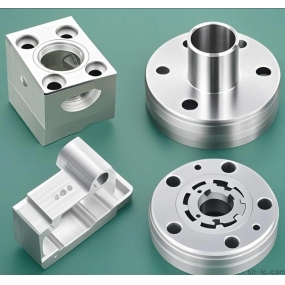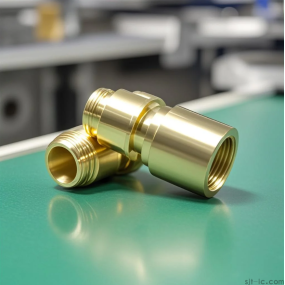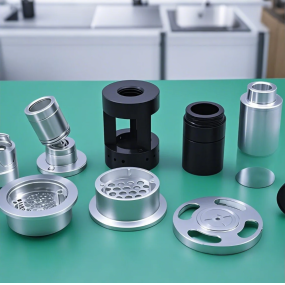

Five axis CNC machining is an advanced manufacturing technology used to produce highly accurate and complex parts. Many companies choose this method when traditional machining cannot meet their requirements for precision, complex shapes, or production efficiency.
For engineers and manufacturers who are new to this technology, understanding how five axis CNC machining works, where it is used, and how it compares with other CNC methods can help them choose the right machining solution. This guide explains the key points in simple language, including the advantages of five-axis CNC machining, applications of five-axis CNC machining, and the role of precision in five-axis CNC machining.
Five axis CNC machining is a computer-controlled machining process that uses five different movement directions to cut and shape a workpiece. Traditional CNC machines usually work with three linear axes: X, Y, and Z. These axes allow the cutting tool to move left and right, forward and backward, and up and down.
A five axis CNC machine adds two rotational axes. These additional axes can be arranged as A and B, A and C, or B and C, depending on the machine design. The rotational movement allows the cutting tool or workpiece to tilt and rotate from different angles during machining.
For example, imagine producing a part with curved surfaces and deep areas. A three-axis machine may need several setups because the tool cannot reach all areas. A five axis CNC machine can tilt the tool and rotate the part to access difficult positions in one setup, making the machining process faster and more accurate.
Understanding this basic working principle is important because it explains why five axis CNC machining is widely used for parts with complex designs and strict quality requirements.
One of the biggest advantages of five-axis CNC machining is its ability to achieve extremely high precision. The extra rotational movements allow the cutting tool to approach the workpiece from the best angle, reducing cutting errors and improving surface quality.
For example, aerospace components such as turbine blades require very tight tolerances. A small dimensional error can affect engine performance and safety. Five axis CNC machining can accurately control the cutting position and produce turbine blades with tolerances that may reach around ±0.05 mm.
This level of accuracy is also important in medical manufacturing, where implants and surgical components must fit precisely inside the human body. The improved precision in five-axis CNC machining helps manufacturers create reliable parts with consistent dimensions.
Another important benefit is reduced production time. In traditional machining, a complex part may need to be moved between different machines or repositioned several times. Each repositioning increases setup time and creates the possibility of alignment errors.
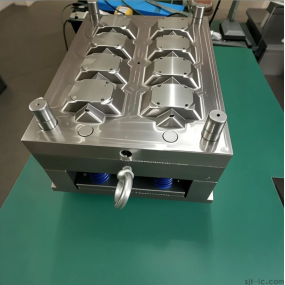
With five axis CNC machining, many operations can be completed in one setup. For example, when manufacturing a complex mold, a five axis machine can perform rough machining, drilling, and finishing without repeatedly removing and repositioning the mold.
This reduces manufacturing steps, improves production speed, and helps companies meet delivery schedules while controlling costs.
Five axis CNC machining can also improve surface quality. Because the cutting tool can maintain an ideal angle against the material, it produces smoother surfaces with fewer tool marks.
This is especially useful for industries that require attractive finishes or precise aerodynamic surfaces, such as aerospace, automotive, and high-end consumer products.
The aerospace industry is one of the main users of five axis CNC machining. Aircraft parts often have complex shapes and require extremely high accuracy to ensure safe operation.
Common aerospace applications include turbine blades, engine mounts, wing structures, and aircraft body components. These parts must be strong, lightweight, and precisely manufactured.
For example, aircraft engine mounts must hold heavy engines securely during flight. Five axis CNC machining allows manufacturers to create these complex parts with accurate dimensions and reliable performance.
The medical industry also benefits greatly from five axis CNC machining. Many medical devices require custom designs that match specific patient needs.
Examples include hip implants, knee replacement components, and specialized surgical tools. Because five axis machines can create complex three-dimensional shapes, manufacturers can produce parts that closely match anatomical requirements.
The ability to manufacture customized and precise medical components makes five axis CNC machining an important technology in modern healthcare.
Automotive manufacturers use five axis CNC machining to produce engine parts, performance components, molds, and prototypes. Complex internal structures, such as cooling channels inside engine components, can be created more effectively with five-axis technology.
This capability supports the development of lighter, stronger, and more efficient automotive designs.
The additional rotational axes make it easier to achieve tight tolerances. The machine can adjust the cutting angle continuously, allowing engineers to create accurate features that are difficult to produce with traditional methods.
For example, when manufacturing precision gears, the machine can maintain the correct tool position to produce accurate tooth profiles. This helps gears operate smoothly and reduces mechanical problems.
Five axis CNC machining provides excellent repeatability because the entire process is controlled by computer programs. Once the machining instructions are verified, the machine can reproduce the same part many times with consistent results.
This is especially valuable for industries that require large quantities of identical components, such as electronics, automotive, and industrial equipment manufacturing.
Three-axis CNC machining is suitable for simpler parts with flat surfaces or basic geometric features. However, it has limitations when working with deep cavities, curved surfaces, and complex angles.
In comparison, five axis CNC machining can move and rotate in multiple directions, allowing the cutting tool to reach difficult areas without changing the setup. This makes it a better choice for complex components.
Four-axis CNC machining adds one rotational movement compared with three-axis machining, improving flexibility. However, it still cannot provide the same level of movement freedom as a five-axis machine.
Five axis CNC machining offers greater versatility because it can handle more complicated geometries and reduce the number of machining operations required.
One of the main reasons manufacturers choose five axis CNC machining is its ability to perform complex-shape machining in five-axis CNC.
Parts with curved surfaces, undercuts, and multiple intersecting features can be produced more easily. Industries such as aerospace, jewelry, automotive, and advanced manufacturing rely on this capability to create innovative designs.
Five axis CNC machining allows manufacturers to produce parts with unique geometric features that are difficult or impossible to create using traditional machining methods.
For example, automotive engineers can design engine components with complex internal cooling channels. A five axis machine can reach these areas from different angles, creating accurate channels that improve heat management and engine performance.
Modern industries increasingly require customized products. Five axis CNC machining provides an efficient way to manufacture parts with unique designs and specifications.
For example, medical companies can produce customized surgical instruments based on specific requirements. The machine can accurately follow digital designs and create reliable, high-quality parts.
Choosing an experienced machining partner is important when producing complex and high-precision components. EMAR has professional expertise in Five axis CNC machining and focuses on delivering high-quality machining solutions for different industries.
With skilled engineers, experienced operators, and advanced machining capabilities, EMAR can handle challenging projects that require high accuracy and complex geometries. For industries such as aerospace, automotive, and medical manufacturing, EMAR applies five axis technology to achieve reliable results and meet strict quality requirements.
EMAR understands that precision and consistency are critical in modern manufacturing. Through strict quality control processes, careful inspection, and advanced machining techniques, EMAR helps customers receive parts that meet their design specifications.
By combining technical experience with the advantages of five axis CNC machining, EMAR provides efficient and dependable machining services for companies looking for high-quality custom parts.
Five axis CNC machining is an advanced manufacturing method that provides higher precision, better efficiency, and greater design flexibility compared with traditional CNC machining. Its ability to create complex shapes makes it valuable in industries such as aerospace, medical, automotive, and high-performance manufacturing.
By understanding its working principles, benefits, applications, and differences from other CNC methods, companies can make better decisions when selecting machining solutions. With professional experience and quality-focused processes, manufacturers like EMAR help customers take full advantage of five axis CNC machining technology.