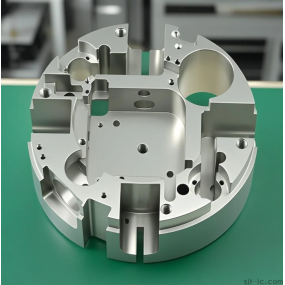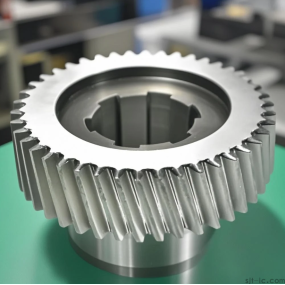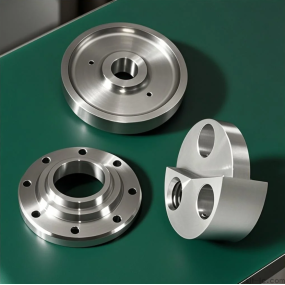

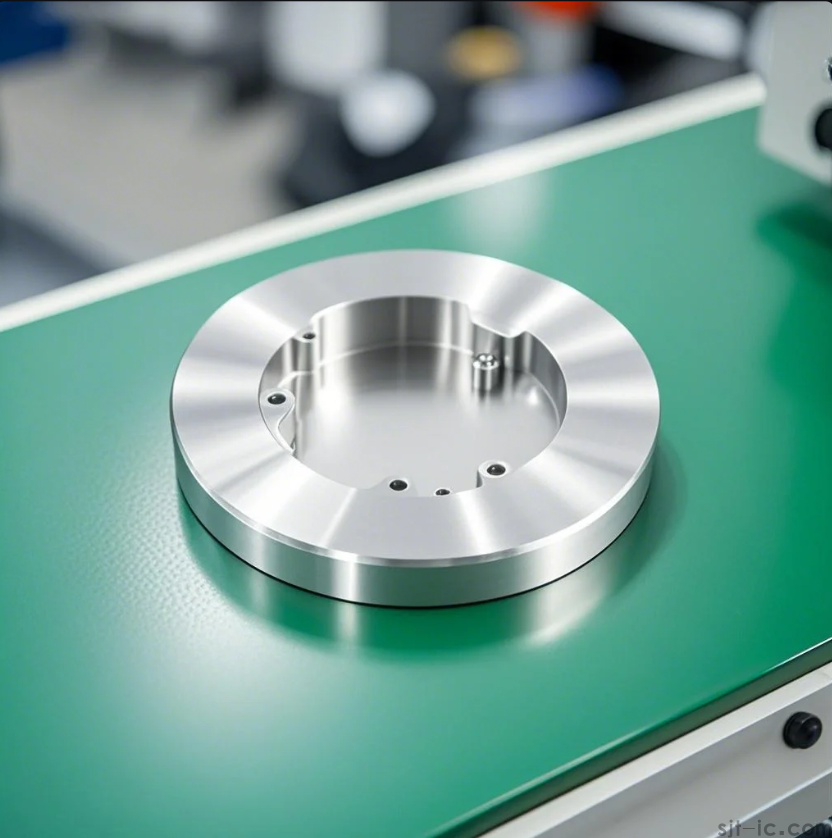
Industrial equipment requires parts that are accurate, strong, lightweight, and reliable. Even a small machining error can affect machine performance, increase maintenance costs, or cause production delays. This is why many industries choose Precision Aluminum CNC Parts Machining for Industrial Applications to create high-quality components for automation equipment, machinery systems, aerospace devices, medical equipment, and other demanding fields.
CNC Machining provides excellent control over aluminum parts, helping manufacturers achieve tight tolerances, complex designs, and stable production quality. With advanced equipment, experienced engineers, and strict inspection processes, companies like EMAR support industrial customers in producing reliable aluminum CNC parts that meet different application requirements.
Aluminum is widely used in industrial applications because it offers a good balance of strength, weight, corrosion resistance, and thermal performance. However, producing industrial aluminum parts requires high accuracy and professional machining knowledge. CNC machining is one of the best solutions because it can control every cutting movement with high precision.
Compared with traditional machining methods, CNC technology offers several important advantages:
For industries that need thousands of identical components, CNC machining provides a practical way to achieve both quality and cost control.
A successful machining project starts with careful design. Before production begins, engineers must understand how the aluminum part will work in the final industrial system. The design should consider the operating environment, mechanical requirements, and manufacturing limitations.
Important design considerations for industrial aluminum CNC parts include:
Early communication between designers and machining engineers helps avoid production problems, reduce costs, and improve final part performance.
Different industrial applications require different material properties. Proper aluminum alloy selection for industrial machining is important because each alloy has unique advantages.
Material selection should consider strength-to-weight ratio, thermal conductivity, corrosion resistance, and the expected working conditions. Choosing the correct alloy helps extend service life and reduce replacement costs.
Precision aluminum CNC parts often require several machining processes. Each operation is selected based on the part design and performance requirements.
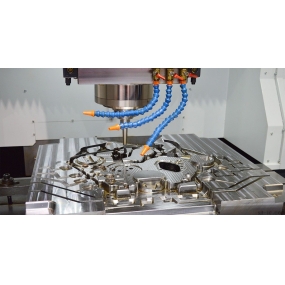
CNC milling is widely used for creating complex industrial components. It can produce flat surfaces, slots, pockets, curved profiles, and detailed features with high accuracy.
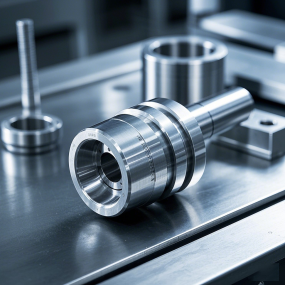
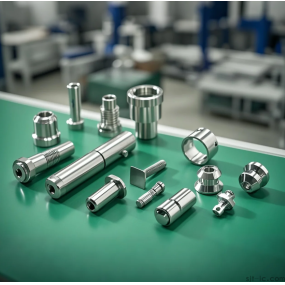
CNC turning is suitable for round aluminum parts such as shafts, rings, connectors, and cylindrical components. It provides excellent control of diameter accuracy and surface finish.
Precision drilling creates accurate holes for assembly and installation. Threading operations ensure reliable connections between industrial components.
Some industrial parts may require additional processes such as precision boring, tapping, surface grinding, or multi-axis machining to achieve complex designs.
When machining aluminum, selecting proper cutting parameters is essential. Aluminum allows higher cutting speeds than many harder metals, but incorrect settings can cause tool wear, poor surface quality, or deformation.
Aluminum is lightweight and has a high thermal expansion rate, which can create deformation problems during machining. Preventing warping in industrial aluminum part CNC machining requires careful process control.
Industrial parts often need to maintain accuracy over long periods. Stress relief treatments, correct alloy selection, and controlled machining processes help prevent size changes after production.
Burrs can affect assembly accuracy and product safety. Using optimized cutting parameters, sharp tools, and proper finishing processes helps produce cleaner edges and smoother surfaces.
After machining, additional treatments can improve aluminum part performance. Post-machining processes for industrial aluminum CNC-machined parts are selected according to the working environment and functional needs.
These treatments help aluminum parts perform better in industrial environments where reliability and long service life are required.
Industrial customers need confidence that every part will meet specifications. Strong quality management is essential throughout the entire manufacturing process.
Quality control in industrial aluminum part CNC manufacturing usually includes:
A complete quality system reduces production risks and ensures that aluminum CNC parts can operate safely in industrial equipment.
Selecting the right machining supplier is important for achieving reliable industrial parts. A professional CNC manufacturer should have advanced machining equipment, experienced engineers, strong quality control procedures, and the ability to support both prototype development and mass production.
EMAR provides precision aluminum CNC machining services for industrial applications, supporting customers from design analysis and material selection to machining, finishing, and inspection. With experience in complex aluminum components, EMAR helps industrial companies achieve accurate, durable, and cost-effective solutions.
By combining advanced CNC technology, optimized machining processes, and strict quality management, manufacturers can produce aluminum parts that deliver stable performance in challenging industrial environments.