Spanish
 Arabic
 French
 Portuguese
 Belarusian
 Japanese
 Russian
 Malay
Malay Icelandic
 Bulgarian
 Azerbaijani
 Estonian
 Irish
Irish Polish
 Persian
 Boolean
 Danish
 German
 Filipino
 Finnish
 Korean
 Dutch
Dutch Galician
 Catalan
 Czech
Czech Croatian
 Latin
Latin Latvian
 Romanian
 Maltese
 Macedonian
 Norwegian
 Swedish
 Serbian
 Slovak
 Slovenian
 Swahili
 Thai
Thai Turkish
 Welsh
Welsh Urdu
Urdu Ukrainian
 Greek
Greek Hungarian
 Italian
 Yiddish
 Indonesian
 Vietnamese
 Haitian Creole
 Spanish Basque

HTML
Precision CNC Machining Services for High - Quality Components
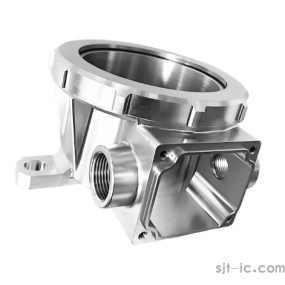
Modern industries need components that are accurate, reliable, and consistent. From aircraft parts to medical devices, even a small dimensional error can affect product performance and safety. This is why Precision CNC Machining Services for High - Quality Components have become essential for manufacturers that require excellent accuracy, complex designs, and stable production quality.
Precision CNC machining uses computer-controlled machines to remove material from a workpiece and create parts with very tight tolerances. Compared with traditional machining methods, CNC technology offers better repeatability, faster production, and the ability to manufacture complicated geometries.
However, choosing the right machining partner is not always easy. Many customers worry about quality control, material compatibility, production costs, and whether a supplier has the right equipment and experience. This guide explains what to consider when selecting a precision CNC machining provider and how professional machining services help produce high-quality components.
Why Precision CNC Machining Is Important for High - Quality Components
High-quality components are used in industries where performance and reliability are critical. Industries such as aerospace, automotive, medical equipment, electronics, and industrial machinery depend on precision machining to produce parts that meet strict requirements.
Precision CNC machining provides several important advantages:
- Tight tolerances: CNC machines can produce components with extremely accurate dimensions, reducing assembly problems and improving product performance.
- Complex geometries: Advanced CNC equipment can create curved surfaces, deep cavities, thin walls, and other difficult features that are hard to achieve with manual machining.
- Consistent quality: Once a CNC program is verified, the machine can produce many identical parts with stable quality.
- Better efficiency: Automated machining reduces human errors and improves production speed, especially for repeated manufacturing.
For example, aerospace components often require lightweight structures with strict accuracy requirements. Automotive manufacturers need durable parts that can handle vibration and stress. Medical components require excellent surface finishes and reliable dimensions. Precision CNC machining helps meet these different industry needs.
Choosing a CNC Service for High - Quality Parts
Selecting the right machining provider is one of the most important steps in achieving successful production. A reliable supplier should not only have CNC machines but also understand engineering requirements, material behavior, and quality standards.
Industry Experience and Technical Knowledge
A CNC machining company with experience in your industry can better understand your requirements. Aerospace, medical, and automotive components often have different standards for accuracy, inspection, and documentation.
When choosing a CNC service for high - quality parts, consider:
- Experience producing similar components.
- Knowledge of industry-specific requirements.
- Ability to support design improvements.
- Experience with prototype and mass production projects.
Companies such as EMAR provide precision CNC machining solutions for different industries by combining engineering experience, advanced equipment, and strict production control.
CNC Machine Capabilities
The available CNC equipment directly affects what types of components a supplier can manufacture. A professional machining provider should have different machine options to match various project requirements.
- 3-axis CNC machines: Suitable for standard milling operations and simpler component designs.
- 5-axis CNC machines: Ideal for complex parts with multiple angled surfaces because they can machine several sides in one setup.
- Multi-spindle machines: Useful for high-volume production where efficiency and consistency are important.
The right equipment helps reduce setup time, improve accuracy, and lower production risks.
Material Selection in High - Quality Component Machining
Material choice has a major impact on component performance, machining difficulty, and final cost. A skilled CNC machining provider should help customers select materials based on application requirements, including strength, durability, corrosion resistance, weight, and thermal performance.
Important factors in material selection include:
- Mechanical strength: Parts under heavy loads require materials with high strength and wear resistance.
- Corrosion resistance: Components used in harsh environments may need stainless steel, titanium, or special alloys.
- Thermal properties: Heat-sensitive applications may require materials with good thermal conductivity.
- Machining performance: Some materials are easier to machine, which can reduce production time and cost.
Common Materials Used in Precision CNC Machining
Different industries use different materials for high-quality components:
- Aluminum alloys: Popular because they are lightweight, corrosion-resistant, and easy to machine. However, thin aluminum parts can be affected by vibration or heat during machining.
- Stainless steel: Offers excellent strength and corrosion resistance. The challenge is that stainless steel is harder to cut and may cause faster tool wear.
- Titanium: Used in aerospace and medical applications because of its high strength-to-weight ratio. It requires careful cutting speeds and cooling methods.
- Engineering plastics: Suitable for lightweight or electrical applications but require proper tooling to avoid deformation.
Experienced suppliers help customers balance performance requirements and machining costs through proper material recommendations.
Machining Processes for Precision Components
The production of high-quality CNC components involves several carefully controlled steps. A professional machining process starts before the machine begins cutting.
1. Design and CAD/CAM Programming
The first step is creating a detailed digital model using CAD software. Engineers define dimensions, tolerances, surface requirements, and part features.
CAM software then converts the design into CNC machine instructions. Proper programming helps optimize cutting paths, reduce machining time, and prevent manufacturing problems.
2. CNC Milling
Milling uses rotating cutting tools to remove material from the workpiece. It is commonly used for creating slots, pockets, flat surfaces, and complex shapes.
Choosing the correct cutting tools, spindle speed, feed rate, and cutting depth is important for achieving high accuracy and surface quality.
3. CNC Turning
Turning is mainly used for cylindrical components. The workpiece rotates while a cutting tool removes material. This process is ideal for shafts, pins, bushings, and other round parts.
4. Drilling and Hole Machining
Drilling creates accurate holes for assembly and functional requirements. High-quality machining requires proper tool selection and accurate positioning to maintain hole size and alignment.
5. Grinding and Surface Finishing
Grinding is used when extremely smooth surfaces and tight tolerances are required. Additional finishing processes may include polishing, anodizing, coating, or heat treatment depending on the application.
Handling Challenges in High - Quality CNC Machining
Producing precision components over long production runs can create several challenges. Maintaining accuracy requires careful planning, monitoring, and process control.
Maintaining Dimensional Accuracy
During continuous production, small changes in machine conditions can affect part dimensions. Temperature changes, machine vibration, and material stress may cause variations.
Practical solutions include:
- Using statistical process control (SPC) to monitor production trends.
- Performing regular machine calibration.
- Checking critical dimensions during production.
- Using automated inspection equipment when needed.
Managing Tool Wear
Cutting tools gradually lose performance during machining. Worn tools can create poor surface finishes and inaccurate dimensions.
Professional suppliers reduce this risk by:
- Replacing tools according to wear limits.
- Using suitable cutting materials.
- Monitoring tool performance during production.
Preventing Heat-Induced Distortion
Machining generates heat that may change the shape of sensitive components. Proper cooling methods, optimized cutting parameters, and suitable machining strategies help control thermal effects.
Quality Assurance in Precision CNC Machining Services
Quality control is one of the most important factors when selecting a CNC machining partner. A reliable supplier should have a complete quality management system covering every production stage.
Important Quality Control Steps
- In-process inspection: Components are checked during machining to identify problems early.
- Final product testing: Finished parts are measured and tested before delivery.
- Documentation: Inspection reports and production records help ensure traceability.
- International standards: Quality certifications demonstrate that the supplier follows recognized processes.
Common standards include ISO 9001 for general quality management and AS9100 for aerospace manufacturing requirements. Suppliers with strong quality systems give customers greater confidence in product reliability.
Cost - Effectiveness in High - Quality Component Machining
High precision does not always mean high cost. Proper planning and choosing the right machining strategy can reduce expenses while maintaining quality.
The total machining cost depends on several factors:
- Production volume: Large quantities usually reduce the cost per part because setup costs are spread across more units.
- Component complexity: Parts with complicated geometries require more programming time and machining operations.
- Material cost: Special alloys may increase raw material and machining expenses.
- Surface finishing requirements: Additional treatments can affect the final price.
Ways to improve cost-effectiveness include:
- Requesting volume-based discounts for larger orders.
- Discussing alternative materials with similar performance.
- Optimizing part designs for easier machining.
- Comparing different machining methods before production.
A professional CNC supplier can help identify cost-saving opportunities without reducing component quality.
How to Choose a Reliable Precision CNC Machining Partner
A good machining partner should provide more than machine time. They should offer engineering support, quality assurance, and manufacturing expertise.
Before selecting a supplier, ask about:
- Available CNC machines and production capacity.
- Experience with similar components.
- Material processing capabilities.
- Quality inspection methods.
- Ability to support both prototypes and large-scale production.
EMAR focuses on providing precision CNC machining services for high-quality components by combining advanced CNC equipment, experienced engineers, and strict quality control processes. Their expertise helps customers produce reliable parts for demanding applications while balancing accuracy, efficiency, and cost.
Choosing the right CNC machining provider ensures that every component meets design requirements, performs reliably, and supports long-term product success.