Spanish
 Arabic
 French
 Portuguese
 Belarusian
 Japanese
 Russian
 Malay
Malay Icelandic
 Bulgarian
 Azerbaijani
 Estonian
 Irish
Irish Polish
 Persian
 Boolean
 Danish
 German
 Filipino
 Finnish
 Korean
 Dutch
Dutch Galician
 Catalan
 Czech
Czech Croatian
 Latin
Latin Latvian
 Romanian
 Maltese
 Macedonian
 Norwegian
 Swedish
 Serbian
 Slovak
 Slovenian
 Swahili
 Thai
Thai Turkish
 Welsh
Welsh Urdu
Urdu Ukrainian
 Greek
Greek Hungarian
 Italian
 Yiddish
 Indonesian
 Vietnamese
 Haitian Creole
 Spanish Basque

HTML
Metal CNC Machining Quote: Understanding Costs and Getting an Accurate Estimate
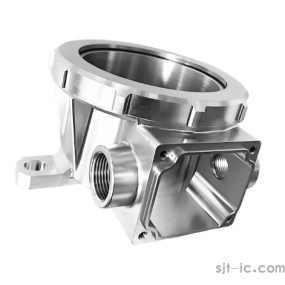
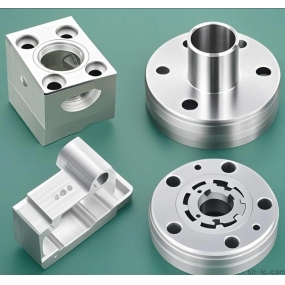
When customers need custom metal parts, one of the first questions is usually: “How much will CNC machining cost?” A Metal CNC Machining Quote provides the answer by estimating the total cost based on materials, machining time, production requirements, and additional services.
However, many customers find it difficult to understand why quotes from different suppliers can vary. The price is not only based on the size of the part. Factors such as metal type, part complexity, machining processes, tooling requirements, and production volume all affect the final cost.
Understanding the elements behind a CNC machining quote helps customers make better decisions and helps machining providers create more accurate and transparent pricing. A clear quotation reduces unexpected costs, improves communication, and supports a more efficient manufacturing process.
Why Understanding a Metal CNC Machining Quote Is Important
A CNC machining quote is more than just a price number. It is a detailed evaluation of the resources needed to produce a part. Customers who understand the quotation process can better compare suppliers, control their budgets, and avoid unnecessary expenses.
For machining providers, an accurate quote helps determine the required machines, labor time, materials, and production planning. A reliable quote also shows professional experience and technical understanding.
Companies like EMAR focus on providing competitive and accurate metal CNC machining quotes by reviewing customer drawings, material requirements, production quantities, and manufacturing challenges before calculating costs.
Material Factors in Metal CNC Machining Quote
The choice of metal is one of the most important factors affecting a CNC machining quote. Different metals have different prices, machining characteristics, and production requirements. The material factors in metal CNC machining quote can greatly influence both machining difficulty and total cost.
Steel
Steel is widely used because it offers high strength, durability, and good wear resistance. However, many steel grades are harder than softer metals, which can increase cutting time and tool wear.
Harder steel materials may require stronger cutting tools, slower machining speeds, and additional finishing processes. These factors can increase the machining cost.
Aluminum
Aluminum is popular in CNC machining because it is lightweight, corrosion resistant, and easy to machine. It usually allows faster cutting speeds and shorter production times compared with harder metals.
Because aluminum is easier to process, aluminum parts often have lower machining costs. It is commonly used in industries such as aerospace, electronics, automotive, and consumer products.
Brass
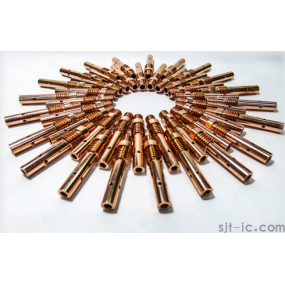
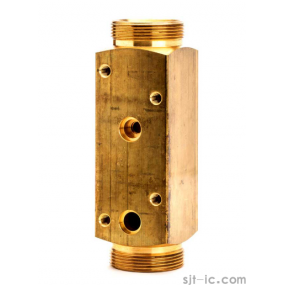
Brass has excellent machinability, good corrosion resistance, and strong electrical and thermal conductivity. It is often selected for precision components, fittings, and electrical parts.
Although brass is easy to cut, the material price may be higher than some common steels. The raw material cost must be included in the CNC machining quote.
Titanium
Titanium provides excellent strength-to-weight ratio, corrosion resistance, and high temperature performance. It is widely used in demanding applications such as aerospace and medical components.
However, titanium is more difficult to machine because of its hardness and heat resistance. It requires specialized tools, careful cutting parameters, and more machining time, which can significantly increase the quote.
Metal Price and Market Changes
The cost of raw metal also affects CNC machining quotes. Metal prices can change because of supply, demand, transportation costs, and global market conditions.
For large production orders, even a small change in material price can create a noticeable difference in total cost. Professional machining companies consider current material costs when preparing quotes to provide realistic pricing.
Machining Process Impact on Metal CNC Quote
The manufacturing process required for a part has a direct effect on the final price. The machining process impact on metal CNC quote depends on machine time, equipment requirements, operator skills, and part complexity.
Part Design Complexity
A simple metal block with basic holes requires less machining time than a complex component with curved surfaces, deep pockets, thin walls, or multiple precision features.
Important design factors include:
- The number of holes, slots, and threads
- The complexity of the overall geometry
- The difficulty of holding the part during machining
- The required dimensional accuracy and tolerance
- The surface finish requirements
Parts with tighter tolerances usually require more inspection, slower machining speeds, and advanced equipment, which increases the quote.
Different CNC Machining Operations
Different machining methods have different cost effects because they require different equipment and processing times.
- CNC Milling: Used for creating complex shapes, pockets, and surfaces. More complicated milling operations usually require more programming and machine time.
- CNC Turning: Common for round parts such as shafts and bushings. Cost depends on part size, material, and required precision.
- Drilling: Usually lower cost for simple holes but can become expensive when many holes or special hole sizes are required.
- EDM: Used for very hard materials or extremely precise features. It may increase costs because of longer processing times and specialized equipment.
A detailed review of the manufacturing process helps machining providers create a more accurate Metal CNC Machining Quote.
How Production Volume Affects Metal CNC Machining Cost
The relationship between order quantity and pricing is an important consideration. The production volume and metal CNC quote are closely connected because CNC machining includes fixed preparation costs.
For low-volume production or prototypes, setup costs and programming time are spread across fewer parts, making the cost per piece higher.
For larger production quantities, the same setup cost can be divided among more parts. This creates economies of scale and reduces the average cost per component.
When requesting a quote, customers should provide expected production quantities whenever possible. This allows suppliers to recommend the most cost-effective manufacturing method.
Tooling Cost, Setup Cost, and Additional Services
Beyond machining time and material cost, other factors can influence the final quotation.
Tooling Cost in Metal CNC Machining
The tooling cost in metal CNC machining includes cutting tools, fixtures, and special equipment needed to manufacture the part.
Standard tools may already be available, but some projects require custom tooling. Examples include:
- Special holding fixtures for unique part shapes
- Custom cutting tools for special features
- Special inspection tools for tight tolerances
Custom tooling increases initial costs but may reduce production time and improve consistency for larger orders.
Setup Costs
Before machining begins, engineers must prepare CNC programs, set up machines, test operations, and inspect initial parts. These activities create setup costs.
For simple parts, setup may be quick. Complex parts with multiple operations require more preparation time and can increase the quote.
Additional Manufacturing Services
Many metal parts require extra processing after CNC machining. These services may include:
- Surface finishing such as anodizing, polishing, coating, or plating
- Heat treatment to improve strength or hardness
- Quality inspection and measurement reports
- Assembly or packaging services
These additional services should be included when requesting a quotation to avoid unexpected costs later.
Preparing for Metal CNC Machining Quote
Good preparation helps customers receive faster and more accurate quotations. The following steps can improve the quoting process:
- Provide detailed design drawings: Include dimensions, tolerances, surface requirements, and technical notes.
- Share 3D CAD files: 3D models help engineers understand part geometry and machining requirements.
- Specify material preferences: Clearly state the desired metal type and grade.
- Confirm production quantity: Include prototype, small batch, or mass production requirements.
- Explain application requirements: Information about operating conditions helps suppliers recommend suitable materials and processes.
Following these steps makes preparing for metal CNC machining quote easier and helps manufacturers provide a realistic estimate.
How to Choose a Reliable CNC Machining Quote Provider
A good machining supplier should provide more than a low price. Customers should consider technical experience, quality control, communication, and production capability.
A reliable provider will carefully review:
- Material selection and availability
- Machining challenges
- Required tolerances
- Production schedule
- Quality inspection needs
EMAR provides metal CNC machining solutions with professional engineering support and accurate quotation services. By analyzing drawings, materials, and production requirements, EMAR helps customers find practical and cost-effective manufacturing solutions.
Conclusion
A Metal CNC Machining Quote is influenced by many factors, including material selection, machining processes, production volume, tooling requirements, and additional services. Understanding these factors helps customers make better choices and avoid unexpected costs.
By preparing complete design information, selecting suitable materials, and working with an experienced CNC machining provider, customers can achieve high-quality metal parts at a competitive price. A detailed and accurate quotation is the first step toward successful CNC manufacturing.