Spanish
 Arabic
 French
 Portuguese
 Belarusian
 Japanese
 Russian
 Malay
Malay Icelandic
 Bulgarian
 Azerbaijani
 Estonian
 Irish
Irish Polish
 Persian
 Boolean
 Danish
 German
 Filipino
 Finnish
 Korean
 Dutch
Dutch Galician
 Catalan
 Czech
Czech Croatian
 Latin
Latin Latvian
 Romanian
 Maltese
 Macedonian
 Norwegian
 Swedish
 Serbian
 Slovak
 Slovenian
 Swahili
 Thai
Thai Turkish
 Welsh
Welsh Urdu
Urdu Ukrainian
 Greek
Greek Hungarian
 Italian
 Yiddish
 Indonesian
 Vietnamese
 Haitian Creole
 Spanish Basque

HTML
Large - Scale CNC Machining Customization: A Complete Guide for High-Precision Large Components
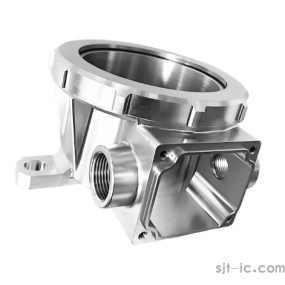
Large - Scale CNC Machining Customization is an effective solution for companies that need large, complex, and high-precision components for industries such as aerospace, energy, automotive, heavy equipment, and industrial machinery. Many customers worry about high costs, long production times, and maintaining consistent quality when ordering large CNC-machined parts. A professional machining partner can help solve these challenges through advanced equipment, experienced engineers, and strict quality management.
Unlike standard machining, large-scale CNC customization focuses on producing oversized parts with complex shapes while maintaining tight tolerances. It allows manufacturers to create components that match specific project requirements instead of forcing a design to fit existing standard products.
Why Choose Large - Scale CNC Machining Customization?
Large components often have unique design requirements. Traditional manufacturing methods may struggle with complex geometries, large dimensions, or strict accuracy requirements. CNC machining provides a flexible and reliable method for producing these parts.
The main advantages of large-scale CNC machining customization include:
- Ability to machine complex geometries: Multi-axis CNC machines can produce large parts with curved surfaces, deep cavities, precise holes, and complicated structures.
- High precision for large components: Advanced CNC equipment helps maintain accurate dimensions even when machining very large workpieces.
- Efficient production for large volumes: Once machining programs are developed and tested, CNC systems can repeat production with stable quality.
- Reduced manual errors: Computer-controlled processes improve consistency and reduce variation between parts.
For projects requiring large customized components, EMAR provides professional CNC machining solutions supported by engineering experience, advanced machining equipment, and strict production controls.
Design Considerations for Large - Scale CNC Machining Customization
The design stage is one of the most important steps in large-scale CNC machining. A clear understanding between the customer and machining provider helps prevent delays, unnecessary costs, and production problems.
Customers should provide detailed project information, including:
- Intended use of the component: Explain where and how the part will operate. This helps engineers understand load conditions, working environments, and performance requirements.
- Functional requirements: Share details about strength, movement, connection points, sealing requirements, and operating conditions.
- Aesthetic requirements: If appearance matters, provide requirements for surface quality, texture, and visual finishing.
- Required tolerances: Specify dimensional accuracy, fitting requirements, and critical areas where precision is especially important.
During design communication, engineers can review drawings, 3D models, and production requirements to identify possible improvements. For example, adjusting wall thickness, changing corner designs, or improving machining accessibility can reduce manufacturing difficulty and cost.
Material Selection for Large - Scale Customized CNC Parts
Choosing the right material directly affects the performance, durability, machining cost, and production efficiency of large CNC parts. The best material depends on the project's operating environment and technical requirements.
Important factors in material selection for large - scale customized CNC parts include:
- Strength: Heavy-duty applications may require strong materials that can withstand high loads and stress.
- Durability: Parts exposed to impact, friction, heat, or harsh environments need materials with long service life.
- Cost-effectiveness: Material selection should balance performance needs with overall project budget.
- Machinability: Materials should allow efficient cutting while maintaining accuracy and surface quality.
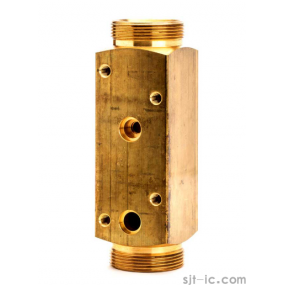
Common materials used for large CNC machining include aluminum alloys, stainless steel, carbon steel, titanium, brass, and engineering plastics. Each material requires different machining strategies, cutting tools, and processing parameters.
Large - Scale CNC Machining Operations and Production Process
Large CNC parts usually require multiple machining operations. Engineers select the correct processes based on part size, geometry, material, and tolerance requirements.
Turning Operations
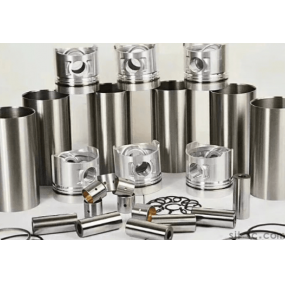
Large CNC turning is commonly used for cylindrical components such as shafts, rollers, and rotating machine parts. Proper setup is essential because large workpieces can create additional forces during rotation.
Milling Operations
CNC milling is used to create flat surfaces, slots, pockets, complex contours, and precision features. Multi-axis milling machines provide flexibility for large and complicated designs.
Boring Operations
Boring improves the accuracy of existing holes, especially when large components require precise alignment between multiple openings.
Specialized Machining Operations
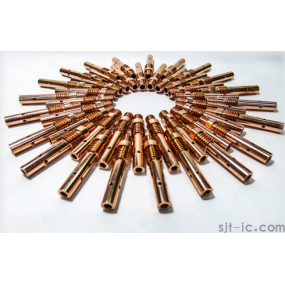
Some large parts may require additional processes such as deep-hole drilling, thread machining, gear machining, or custom tooling solutions.
Machining performance depends on selecting suitable tools and cutting parameters, including:
- Cutting speed: The correct speed improves tool life and surface quality.
- Feed rate: Proper feed settings help achieve stable cutting performance.
- Depth of cut: Balanced cutting depth reduces stress on machines and tools.
Handling Challenges in Large - Scale CNC Machining
Handling Vibration in Large - Scale CNC Machining
Large components can create vibration problems because of their size, weight, and uneven cutting forces. Excessive vibration may reduce surface quality, damage tools, and affect dimensional accuracy.
To solve these issues, manufacturers use methods such as:
- Improving workpiece clamping and support methods.
- Using rigid cutting tools and proper tool holders.
- Adjusting cutting speed, feed rate, and depth of cut.
- Optimizing machining paths to reduce sudden cutting force changes.
Managing Long-Term Tool Wear
Large CNC projects often require long machining cycles. Tool wear must be carefully monitored to prevent quality problems during production.
Effective methods include:
- Regular tool inspection and replacement planning.
- Using high-quality cutting tools suitable for specific materials.
- Monitoring machining conditions throughout production.
Maintaining Consistent Quality During Production
For large-volume production, every part must meet the same requirements. CNC programming, process control, and inspection systems work together to maintain stable quality from the first piece to the last.
Post - Machining Processes for Large - Scale CNC - Machined Parts
After machining, additional processes may be required to improve performance, appearance, or assembly readiness.
Post - machining processes for large - scale CNC - machined parts may include:
- Heat treatment: Improves hardness, strength, and internal material properties.
- Surface finishing: Provides corrosion protection, improves appearance, or creates specific surface characteristics.
- Assembly preparation: Includes deburring, cleaning, precision fitting, and final checks before installation.
The correct post-processing method depends on the component's working environment and performance requirements.
Quality Control in Large - Scale CNC Machining Customization
Quality control is critical when manufacturing large customized CNC parts because even small errors can affect equipment performance and safety.
Professional manufacturers use multiple inspection methods, including:
- In-process inspections: Measurements are taken during machining to detect problems early and prevent waste.
- Large-scale dimensional checks: Specialized measuring equipment verifies overall size, position accuracy, and critical dimensions.
- Material verification: Material certificates and testing help confirm the correct material is used.
- Industry standard compliance: Production processes follow customer requirements and applicable industry standards.
Quality control in large - scale CNC machining customization requires both advanced inspection equipment and experienced technicians. Companies like EMAR focus on combining precision machining technology with systematic quality management to deliver reliable large-scale CNC components.
How to Select the Right Large-Scale CNC Machining Partner
Choosing the right machining supplier can greatly influence project success. Customers should evaluate:
- Experience with large and complex CNC projects.
- Available machine size and production capabilities.
- Engineering support during design and process planning.
- Quality inspection systems and production control methods.
- Ability to meet delivery schedules and production requirements.
A reliable machining partner does more than manufacture parts. They help optimize designs, select suitable materials, improve production efficiency, and reduce risks throughout the project.
Conclusion
Large - Scale CNC Machining Customization provides a practical solution for producing large, complex, and high-precision components. With the right design planning, material selection, machining processes, and quality control methods, companies can achieve reliable performance while controlling costs and production time.
Working with an experienced CNC machining provider such as EMAR allows customers to benefit from professional engineering support, advanced manufacturing capabilities, and consistent quality for demanding large-scale projects.