Spanish
 Arabic
 French
 Portuguese
 Belarusian
 Japanese
 Russian
 Malay
Malay Icelandic
 Bulgarian
 Azerbaijani
 Estonian
 Irish
Irish Polish
 Persian
 Boolean
 Danish
 German
 Filipino
 Finnish
 Korean
 Dutch
Dutch Galician
 Catalan
 Czech
Czech Croatian
 Latin
Latin Latvian
 Romanian
 Maltese
 Macedonian
 Norwegian
 Swedish
 Serbian
 Slovak
 Slovenian
 Swahili
 Thai
Thai Turkish
 Welsh
Welsh Urdu
Urdu Ukrainian
 Greek
Greek Hungarian
 Italian
 Yiddish
 Indonesian
 Vietnamese
 Haitian Creole
 Spanish Basque

HTML
CNC Machining Boiler Precision Components: A Complete Guide for Safe and Reliable Boiler Parts
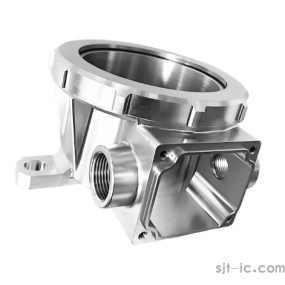
Boiler systems operate under extreme conditions, including high pressure, high temperature, and continuous operation. Every precision component inside a boiler must be strong, accurate, and reliable to prevent failures, leaks, and unexpected downtime. CNC Machining Boiler Precision Components provides the accuracy and consistency needed to manufacture critical boiler parts that can meet demanding industrial requirements.
From pressure vessels and connection fittings to heat exchanger parts and valve components, CNC machining helps manufacturers produce complex boiler components with tight tolerances and excellent surface quality. Companies such as EMAR use advanced CNC machining technology and professional manufacturing experience to support the production of high-performance boiler precision parts.
Why CNC Machining Is Essential for Boiler Precision Components
Boiler components must work safely in environments where even small dimensional errors can cause serious problems. Traditional machining methods may not always provide the accuracy, repeatability, and surface quality required for modern boiler systems.
CNC machining offers several important advantages for boiler part manufacturing:
- High precision for safe operation: CNC machines can achieve very tight tolerances, helping parts fit correctly and creating leak-proof connections in high-pressure boiler systems.
- Strict industry standard compliance: CNC machining supports the production of components that meet demanding requirements from industries such as power generation, chemical processing, and energy equipment manufacturing.
- Excellent durability: Precise machining combined with suitable materials helps boiler components resist pressure stress, thermal cycles, and corrosion.
- Complex shape production: Multi-axis CNC machines can create complicated internal channels, sealing surfaces, and special geometries that improve boiler performance.
Reliable boiler operation depends on both material strength and manufacturing accuracy. CNC machining provides the control needed to produce consistent parts for long service life.
Design Considerations for Boiler Component CNC Machining
The design stage directly affects the performance, safety, and machining cost of boiler components. Engineers must consider operating conditions before creating CNC machining drawings.
Important design considerations for boiler component CNC machining include:
- Pressure resistance: Components must have enough wall thickness and structural strength to withstand internal boiler pressure without cracking or deformation.
- Heat resistance: Designs should consider continuous exposure to high temperatures and avoid shapes that create weak heat-stress areas.
- Thermal expansion: Boiler parts expand when heated. Engineers need to include proper clearances, expansion allowances, and connection designs to prevent stress damage.
- Sealing performance: Connection areas, grooves, and mating surfaces require accurate dimensions to prevent steam or fluid leakage.
- Ease of machining: A good design reduces unnecessary machining steps while maintaining required performance.
During the design process, CNC specialists often review part geometry, machining methods, and material behavior together. This helps avoid production problems and improves final component reliability.
Material Selection for Boiler Precision Parts
The working environment of boilers requires materials that can maintain strength under extreme heat and pressure. Choosing the correct material is one of the most important steps in manufacturing reliable boiler components.
Material selection for boiler precision parts usually focuses on strength, heat resistance, corrosion resistance, and long-term stability.
High-Strength Steels
High-strength steels are widely used for boiler components because they provide excellent mechanical strength and good resistance to pressure loads. They are suitable for structural parts, pressure-related components, and heavy-duty applications.
Advantages include:
- High tensile strength
- Good fatigue resistance
- Reliable performance under repeated heating and cooling cycles
- Good machinability compared with some advanced alloys
Nickel-Based Alloys
Nickel-based alloys are selected for applications involving extreme temperatures and corrosive environments. These materials maintain their strength at high temperatures and provide excellent oxidation resistance.
They are often used for:
- High-temperature boiler components
- Heat exchanger parts
- Components exposed to aggressive chemical environments
Although nickel-based alloys are more difficult to machine, advanced CNC equipment and proper cutting strategies can achieve high-quality results.
CNC Machining Process for Boiler Precision Components
The CNC machining process involves several controlled operations to transform raw materials into accurate boiler parts.
1. Turning Operations in Boiler Component Production
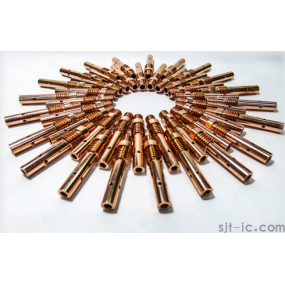
Turning operations in boiler component production are commonly used for cylindrical parts such as shafts, sleeves, connectors, and round pressure components.
During turning, the workpiece rotates while a cutting tool removes material. The main machining factors include:
- Cutting speed: Adjusted according to material hardness and tool type. Heat-resistant alloys usually require lower speeds to reduce tool wear.
- Feed rate: Controlled to balance machining efficiency and surface finish requirements.
- Depth of cut: Selected based on material removal needs and machine stability.
Carbide tools and coated cutting tools are often used because they provide better wear resistance when machining high-strength steels and nickel alloys.
2. Milling Operations
Milling creates complex shapes, slots, sealing surfaces, and connection features. Multi-axis CNC milling allows manufacturers to machine difficult geometries while maintaining accuracy.
Proper tool selection and stable cutting conditions help reduce vibration and improve surface quality.
3. Drilling Operations
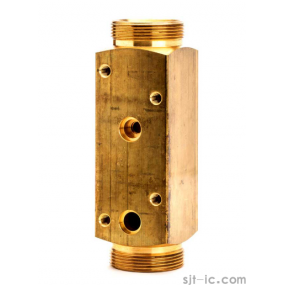
Drilling is used for bolt holes, fluid passages, and assembly connections. Boiler components often require accurate hole positions because incorrect alignment can affect sealing performance and assembly strength.
Special drills, cooling methods, and controlled feed rates help prevent overheating and tool damage.
4. Grinding Operations
Grinding is used when extremely precise dimensions and smooth surfaces are required. It is especially important for sealing surfaces where small surface defects may cause leakage.
Challenges in CNC Machining Boiler Components and Solutions
Achieving Tight Tolerances for Leak-Proof Seals
Boiler systems require reliable sealing because steam or high-pressure fluid leakage can reduce efficiency and create safety risks. CNC machining solves this challenge through precise tool control, advanced measurement systems, and careful process planning.
Manufacturers use methods such as:
- Real-time dimensional inspection
- Precision tooling
- Careful machining sequence planning
- Surface finish control
Handling Heat-Induced Deformation in Boiler CNC Machining
Handling heat-induced deformation in boiler CNC machining is a major challenge, especially when machining heat-resistant alloys and large components.
Heat generated during cutting can change material dimensions and reduce accuracy. Common solutions include:
- Using suitable cutting speeds and feed rates
- Applying effective coolant systems
- Reducing excessive cutting forces
- Using multiple machining stages instead of removing too much material at once
- Allowing stress relief between machining operations when needed
These methods help maintain dimensional stability and protect the final component quality.
Maintaining Surface Integrity
A high-quality surface is important for corrosion resistance and long-term durability. Improper machining can create surface stress, tool marks, or micro-damage.
Manufacturers control surface integrity through:
- Optimized cutting parameters
- Sharp and suitable cutting tools
- Fine finishing operations
- Surface inspection after machining
Post-Machining Treatments for Better Performance
After CNC machining, additional processes may be applied to improve material properties and extend component service life.
Heat Treatment
Heat treatment can improve strength, hardness, and stress resistance. It is especially useful for components exposed to repeated pressure and temperature changes.
Common goals of heat treatment include:
- Reducing internal stress after machining
- Improving mechanical strength
- Enhancing resistance to thermal fatigue
Non-Destructive Testing
Non-destructive testing (NDT) checks component quality without damaging the part. It helps identify hidden defects before the component enters service.
Common inspection methods include:
- Ultrasonic testing
- Magnetic particle testing
- Dye penetrant testing
- Dimensional inspection using precision measuring equipment
Quality Control in Boiler Part CNC Manufacturing
Quality control in boiler part CNC manufacturing is essential because boiler components directly affect equipment safety and operating efficiency.
A complete quality control system usually includes:
- Reviewing engineering drawings and machining requirements before production
- Checking raw material certificates and material properties
- Monitoring CNC machining parameters during production
- Performing dimensional inspections with advanced measurement equipment
- Testing surface quality and mechanical performance
- Maintaining production records for traceability
Professional CNC machining suppliers combine advanced equipment, skilled engineers, and strict inspection procedures to deliver reliable boiler components. EMAR focuses on precision manufacturing solutions, helping customers produce boiler parts that meet demanding accuracy and performance requirements.
Conclusion
CNC Machining Boiler Precision Components plays an important role in creating safe, durable, and efficient boiler systems. From careful design and material selection to precision turning, milling, drilling, grinding, and quality testing, every manufacturing step affects final performance.
By choosing suitable materials such as high-strength steels and nickel-based alloys, controlling machining challenges, and applying strict quality inspections, manufacturers can produce boiler components capable of handling extreme operating conditions. Experienced CNC machining partners like EMAR provide the technology and expertise needed to support reliable boiler precision component production.