Spanish
 Arabic
 French
 Portuguese
 Belarusian
 Japanese
 Russian
 Malay
Malay Icelandic
 Bulgarian
 Azerbaijani
 Estonian
 Irish
Irish Polish
 Persian
 Boolean
 Danish
 German
 Filipino
 Finnish
 Korean
 Dutch
Dutch Galician
 Catalan
 Czech
Czech Croatian
 Latin
Latin Latvian
 Romanian
 Maltese
 Macedonian
 Norwegian
 Swedish
 Serbian
 Slovak
 Slovenian
 Swahili
 Thai
Thai Turkish
 Welsh
Welsh Urdu
Urdu Ukrainian
 Greek
Greek Hungarian
 Italian
 Yiddish
 Indonesian
 Vietnamese
 Haitian Creole
 Spanish Basque

HTML
How to Optimize CNC Machining Costs Without Sacrificing Quality
CNC machining is widely used for producing precise metal and plastic parts in industries such as automotive, aerospace, medical devices, electronics, and industrial equipment. However, many companies face a common challenge: how to reduce manufacturing costs while keeping high precision, reliable performance, and consistent quality.
How to Optimize CNC Machining Costs Without Sacrificing Quality requires a balanced approach. The goal is not simply to choose the cheapest option, but to improve efficiency through better material choices, smarter part designs, optimized production methods, and effective tool management. A good CNC machining partner can help identify hidden cost-saving opportunities while protecting product quality.
Choose the Right Material for Better Cost Performance
Material selection has a direct impact on CNC machining costs. Different materials have different prices, machining difficulties, tool wear rates, and performance advantages. Choosing the correct material based on the application can reduce expenses without affecting the final product function.
Material selection for cost-effective CNC machining means considering both material cost and machining performance. A cheaper material is not always the most economical choice because difficult-to-machine materials may increase processing time and tool replacement costs.
- Aluminum: Aluminum is one of the most popular CNC machining materials because it is lightweight, corrosion-resistant, and easy to machine. Alloys such as aluminum 6061 offer a good balance between price, strength, and machining efficiency.
- Stainless steel: Stainless steel provides excellent corrosion resistance and strength but usually requires more machining time. It is suitable for applications where durability and environmental resistance are important.
- Steel: Carbon steel is often more affordable than stainless steel and provides good mechanical strength for many industrial parts.
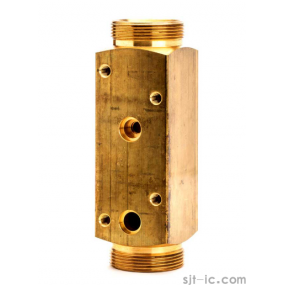
- Brass: Brass is easy to machine and provides good electrical conductivity, making it useful for precision components and fittings.
- Engineering plastics: Materials such as PEEK, nylon, and ABS can reduce weight and machining costs in applications where metal strength is unnecessary.
The best material choice depends on the required strength, temperature resistance, corrosion protection, appearance, and production quantity. Experienced CNC manufacturers, such as EMAR, can help customers evaluate material options and select solutions that achieve both performance and cost efficiency.
Optimize Part Design to Reduce Machining Time and Waste
Part design plays a major role in CNC machining costs. Complex designs often require more machine operations, longer production times, and specialized tools. Small design changes can significantly reduce manufacturing expenses while maintaining the required function.
Design tips for cost-optimization in CNC focus on making parts easier to manufacture without reducing performance.
- Reduce unnecessary complexity: Avoid adding features that do not improve product function. Extra holes, deep pockets, and complicated curves may increase machining time.
- Use standard dimensions: Standard hole sizes, common thread sizes, and regular material thicknesses can reduce the need for special tools.
- Improve part accessibility: Designs that allow cutting tools to easily reach machining areas require fewer setups and reduce labor costs.
- Reduce tight tolerances when possible: Extremely tight tolerances require more precise machines, slower speeds, and additional inspections. Apply strict tolerances only where necessary.
- Consider machining processes during design: Cooperation between designers and CNC engineers helps create parts that are easier and faster to produce.
A design review before production can identify cost-saving improvements early. CNC experts can suggest modifications that maintain strength and accuracy while lowering machining time.
Increase Efficiency Through Batch Production
Production quantity has a strong influence on CNC machining costs. Producing more parts in one production run usually lowers the average cost per piece because setup time, programming costs, and preparation work are spread across more units.
Batch production and cost in CNC machining are closely connected. Small production runs often have higher unit costs because machine setup and programming take a large percentage of the total manufacturing time. Larger batches allow manufacturers to improve workflow and increase machine utilization.
- Lower setup cost per part: The same CNC program and fixture preparation can be used for multiple parts.
- Better material utilization: Larger orders allow manufacturers to plan cutting patterns more efficiently and reduce material waste.
- Improved production scheduling: Batch manufacturing helps reduce machine downtime and increases overall efficiency.
- Stable quality control: Repeated production processes make it easier to maintain consistent part quality.
However, companies should avoid unnecessary overproduction. The ideal batch size depends on demand, storage costs, product life cycle, and future design changes.
Use Effective Tool Management to Control Machining Costs
CNC cutting tools directly affect production speed, part quality, and operating costs. Poor tool selection or incorrect tool usage can cause higher expenses due to frequent replacements, longer machining cycles, and quality problems.
Tool management for cost savings in CNC includes selecting suitable tools, monitoring tool conditions, and improving tool usage methods.
- Select the correct cutting tools: Tools should match the material, machining operation, and required surface finish. The right tool improves cutting efficiency and reduces wear.
- Use proper cutting parameters: Correct cutting speed, feed rate, and depth of cut help extend tool life and prevent damage.
- Monitor tool wear: Regular inspection prevents unexpected tool failure that may damage parts or interrupt production.
- Maintain machines properly: Well-maintained CNC equipment improves accuracy and reduces production delays.
- Use advanced tooling when beneficial: High-performance tools may have a higher initial cost but can reduce total machining expenses through longer service life.
Effective tool management is not about buying the cheapest tools. It is about achieving the best balance between tool price, machining speed, lifespan, and final part quality.
Maintain Quality While Reducing CNC Machining Costs
Cost reduction should never damage product reliability. A successful CNC machining strategy must protect important quality factors, including dimensional accuracy, surface finish, and material performance.
Quality assurance during cost-optimization in CNC machining ensures that efficiency improvements do not create risks for the final product.
- Maintain precision standards: Use appropriate inspection equipment, such as coordinate measuring machines (CMM), to verify critical dimensions.
- Control surface finish requirements: Avoid unnecessary finishing processes, but ensure the final surface meets application needs.
- Protect material integrity: Proper machining methods prevent cracks, deformation, overheating, and other material problems.
- Follow quality management systems: Clear inspection procedures and production controls help maintain consistent results.
The key is to remove unnecessary costs, not necessary quality steps. Reducing waste, improving efficiency, and optimizing processes are safer cost-saving methods than lowering material standards or skipping inspections.
Work With an Experienced CNC Machining Partner
Optimizing CNC machining costs requires experience in engineering, manufacturing processes, and quality control. A professional CNC supplier can review part designs, recommend suitable materials, improve production methods, and identify ways to reduce costs without affecting performance.
EMAR supports customers with CNC machining solutions focused on efficiency, precision, and reliable quality. By combining manufacturing experience with advanced machining capabilities, EMAR helps clients find practical cost optimization strategies for different industries and production requirements.
Conclusion
How to Optimize CNC Machining Costs Without Sacrificing Quality depends on making smarter decisions throughout the entire manufacturing process. Selecting cost-effective materials, improving part designs, planning suitable batch sizes, and managing tools properly can reduce expenses while maintaining excellent results.
The best CNC cost strategy is not the lowest price option. It is a manufacturing approach that improves efficiency, reduces waste, and protects quality. With careful planning and support from an experienced CNC machining partner, companies can achieve competitive costs and dependable parts at the same time.