Spanish
 Arabic
 French
 Portuguese
 Belarusian
 Japanese
 Russian
 Malay
Malay Icelandic
 Bulgarian
 Azerbaijani
 Estonian
 Irish
Irish Polish
 Persian
 Boolean
 Danish
 German
 Filipino
 Finnish
 Korean
 Dutch
Dutch Galician
 Catalan
 Czech
Czech Croatian
 Latin
Latin Latvian
 Romanian
 Maltese
 Macedonian
 Norwegian
 Swedish
 Serbian
 Slovak
 Slovenian
 Swahili
 Thai
Thai Turkish
 Welsh
Welsh Urdu
Urdu Ukrainian
 Greek
Greek Hungarian
 Italian
 Yiddish
 Indonesian
 Vietnamese
 Haitian Creole
 Spanish Basque

HTML
CNC Machining Process for Face Mask Machine Components
The production of face mask machines requires components with high accuracy, stable performance, and long service life. Even a small error in a machine part can affect mask quality, production speed, and equipment reliability. This is why many manufacturers use the CNC Machining Process for Face Mask Machine Components to produce key parts with tight tolerances and consistent quality.
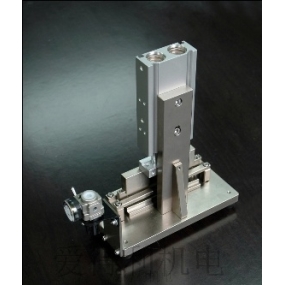
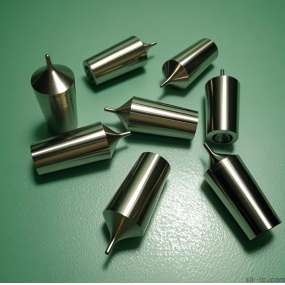
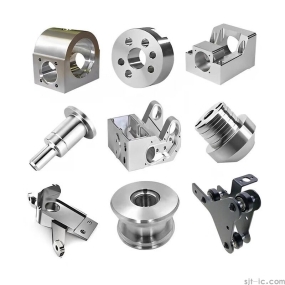
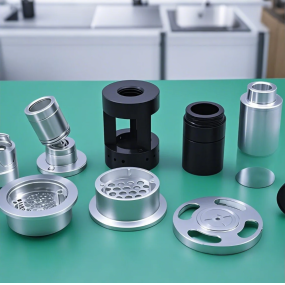
CNC machining helps create important face mask machine components such as rollers, shafts, brackets, molds, guide parts, cutting tools, and other metal parts. Compared with traditional machining methods, CNC technology provides better accuracy, repeatability, and flexibility for complex machine structures.
Why CNC Machining Is Suitable for Face Mask Machine Components
Face mask machines operate at high speed, which means every component must work smoothly and accurately. Parts that guide materials, control movement, or perform cutting and sealing operations need precise dimensions and good surface quality.
CNC machining is suitable for these applications because it offers:
- High precision: CNC machines can produce parts with accurate dimensions, helping machine components fit correctly during assembly.
- Stable production quality: Computer-controlled machining reduces human errors and keeps every batch of parts consistent.
- Complex part manufacturing: CNC milling and turning can create parts with detailed shapes, holes, grooves, and curved surfaces.
- Fast customization: Manufacturers can quickly modify designs and produce different versions of components.
- Good surface finish: Smooth surfaces reduce friction and improve machine operation.
For face mask machine manufacturers, these advantages help reduce equipment downtime and improve production efficiency.
Design in CNC Machining of Face Mask Machine Components
The first step in CNC machining is creating a detailed component design. Engineers usually develop 3D models and technical drawings based on the machine structure and working requirements.
Good design in CNC machining of face mask machine components should consider several factors:
- Required dimensions and tolerances
- Assembly position and connection methods
- Material strength and working environment
- Machining difficulty and production cost
- Surface treatment requirements
A well-prepared design helps avoid machining problems later. For example, incorrect hole positions or unsuitable part structures may cause assembly problems or reduce machine performance.
Experienced CNC machining suppliers can review drawings before production and suggest improvements to make parts easier to manufacture while maintaining performance requirements.
Material Selection for Face Mask Machine Part CNC Machining
The choice of material directly affects the durability and performance of face mask machine components. Different parts may require different materials depending on their function, load, and operating conditions.
Material selection for face mask machine part CNC machining commonly includes:
- Aluminum: Lightweight, corrosion-resistant, and easy to machine. It is often used for brackets, covers, and structural parts.
- Stainless steel: Provides excellent strength and corrosion resistance for parts exposed to frequent cleaning or long-term operation.
- Carbon steel: Suitable for strong mechanical parts that require good wear resistance.
- Engineering plastics: Used for lightweight components that need low friction or insulation properties.
The correct material choice helps balance cost, machining performance, and service life. CNC machining companies with material experience can help customers select suitable options based on the actual application.
Main CNC Machining Operations for Face Mask Machine Components
After design approval and material preparation, the parts enter the machining stage. Different CNC processes are selected according to the component shape and function.
Milling Operations in Face Mask Machine Component CNC Machining
Milling operations in face mask machine component CNC machining are widely used for producing flat surfaces, slots, holes, and complex shapes. CNC milling machines use rotating cutting tools to remove material with high accuracy.
Common milling applications include:
- Machine frames and support plates
- Precision brackets
- Guide blocks
- Mounting parts with multiple holes
Proper tool selection, cutting speed, and machining parameters are important because poor settings may cause surface damage, dimensional errors, or shorter tool life.
CNC Turning for Rotating Face Mask Machine Parts
CNC turning is mainly used for round components. During turning, the workpiece rotates while a cutting tool removes material to create accurate cylindrical shapes.
Typical face mask machine parts produced by CNC turning include:
- Drive shafts
- Rollers
- Pins
- Shaft sleeves
These parts require precise diameter control because small differences can affect machine movement and alignment.
Additional Processes for Better Performance
Some face mask machine components may require additional processes after CNC machining, including:
- Grinding for improved surface accuracy
- Deburring to remove sharp edges
- Anodizing aluminum parts for better corrosion resistance
- Polishing for smoother contact surfaces
- Heat treatment for improved strength and wear resistance
These secondary processes improve part reliability and help components perform better in continuous production environments.
Challenges in CNC Machining Face Mask Machine Components
Although CNC machining provides many advantages, producing face mask machine parts still involves technical challenges.
The main challenges in CNC machining face mask machine components include:
- Strict accuracy requirements: Small dimensional errors may affect machine assembly and operation.
- Complex part structures: Some components require multiple machining steps and careful programming.
- Material difficulties: Hard materials may increase tool wear and machining time.
- Surface quality requirements: Moving parts need smooth surfaces to reduce friction.
- Short production schedules: Manufacturers often need parts delivered quickly to maintain production plans.
Solving these challenges requires skilled engineers, advanced CNC equipment, proper process planning, and strict inspection procedures.
Quality Control in CNC-Made Face Mask Machine Parts
Quality inspection is a critical step before CNC machined components are delivered. Reliable quality control ensures that every part meets the required specifications.
Quality control in CNC-made face mask machine parts usually includes:
- Checking dimensions with precision measuring tools
- Inspecting surface finish and appearance
- Verifying hole positions and tolerances
- Testing assembly compatibility
- Reviewing material certificates when required
Advanced inspection equipment, such as coordinate measuring machines (CMM), can be used for complex parts that require very high accuracy.
Complete CNC Machining Workflow for Face Mask Machine Components
- Design review: Analyze drawings, 3D models, and machining requirements.
- Material preparation: Select suitable metals or plastics according to part function.
- CNC programming: Create machining paths and optimize cutting processes.
- Machining: Perform milling, turning, drilling, grinding, and other required operations.
- Surface treatment: Apply finishing processes when necessary.
- Quality inspection: Check dimensions, appearance, and performance requirements.
- Delivery: Package and deliver finished components ready for machine assembly.
Choosing a Reliable CNC Machining Partner
Choosing the right supplier is important for face mask machine manufacturers because component quality directly affects equipment performance. A professional CNC machining partner should have experience with precision parts, strong engineering support, modern equipment, and reliable quality management.
EMAR provides CNC machining services for customized mechanical components, including precision parts used in automation equipment and manufacturing systems. With experience in CNC milling, CNC turning, material selection, and quality inspection, EMAR supports customers from design review to finished part delivery.
For companies requiring stable and accurate face mask machine components, working with an experienced CNC machining supplier can reduce production risks, improve equipment reliability, and support long-term manufacturing success.