Spanish
 Arabic
 French
 Portuguese
 Belarusian
 Japanese
 Russian
 Malay
Malay Icelandic
 Bulgarian
 Azerbaijani
 Estonian
 Irish
Irish Polish
 Persian
 Boolean
 Danish
 German
 Filipino
 Finnish
 Korean
 Dutch
Dutch Galician
 Catalan
 Czech
Czech Croatian
 Latin
Latin Latvian
 Romanian
 Maltese
 Macedonian
 Norwegian
 Swedish
 Serbian
 Slovak
 Slovenian
 Swahili
 Thai
Thai Turkish
 Welsh
Welsh Urdu
Urdu Ukrainian
 Greek
Greek Hungarian
 Italian
 Yiddish
 Indonesian
 Vietnamese
 Haitian Creole
 Spanish Basque

HTML
What Should Be Noted in CNC Machining Precision Molds
CNC machining precision molds requires careful planning, advanced equipment, and strict quality control. A small mistake in mold design, material choice, machining process, or inspection can lead to inaccurate dimensions, poor surface quality, shorter mold life, and higher production costs.
For manufacturers and engineers, understanding What Should Be Noted in CNC Machining Precision Molds is important before starting a project. Precision molds are often used for industries that require high accuracy, such as automotive parts, medical components, electronics, and industrial equipment. This article explains the key points to consider during the entire CNC mold machining process.
1. Pay Attention to Mold Design Before CNC Machining
Good mold design is the foundation of successful CNC machining. Many machining problems happen because the original design does not consider manufacturing requirements. Engineers should review the mold structure, dimensions, tolerances, and machining feasibility before production.
Important design notes for CNC machining precision molds include:
- Consider machining accessibility: Deep cavities, narrow slots, and complex angles may require special tools or multiple machining operations.
- Set reasonable tolerances: Extremely tight tolerances increase machining difficulty and cost. Tolerances should match the actual application requirements.
- Reduce unnecessary complexity: A simpler mold structure can improve machining efficiency and reduce the risk of errors.
- Consider mold assembly requirements: Components should fit correctly after machining to avoid assembly problems.
Before machining begins, engineers should communicate clearly with the CNC machining supplier. Professional manufacturers can provide suggestions to improve mold design, reduce production risks, and achieve better results.
2. Choose the Right Mold Material
Material selection directly affects mold performance, machining difficulty, and service life. Different applications require different material properties, such as hardness, wear resistance, corrosion resistance, and thermal stability.
Important material considerations in precision mold CNC machining include:
- Mold steel: Materials such as tool steel are commonly selected for molds that require high strength and long service life.
- Aluminum alloys: Aluminum is suitable for prototype molds because it is lightweight and easier to machine.
- Stainless steel: Stainless materials are useful when corrosion resistance is important.
- Heat treatment requirements: Some materials need heat treatment to improve hardness and durability.
The selected material should match the production environment, expected mold lifespan, and product requirements. Choosing a material that is too hard may increase machining time and tool wear, while choosing a material with insufficient strength may shorten mold life.
3. Select Suitable CNC Tooling for Precision Mold Machining
Precision molds often contain complex shapes and fine details. The correct cutting tools are necessary to achieve accurate dimensions and smooth surfaces.
Key tooling essentials in CNC precision mold machining include:
- Tool material selection: Carbide tools are commonly used because they provide good hardness and wear resistance.
- Tool size selection: Small tools are useful for detailed areas, while larger tools improve efficiency on open surfaces.
- Tool condition monitoring: Worn tools can cause dimensional errors and poor surface finishes.
- Proper tool paths: Optimized tool paths reduce machining time and improve accuracy.
Using high-quality tools and maintaining proper tool management helps reduce defects and ensures stable machining performance, especially for molds with complex structures.
4. Control Machining Parameters Carefully
CNC machining parameters have a direct impact on mold accuracy, surface quality, and production efficiency. Incorrect settings can cause problems such as vibration, tool damage, overheating, or inaccurate dimensions.
Important machining parameter notes for precision molds include:
- Cutting speed: The speed should match the material and tool type to achieve stable cutting performance.
- Feed rate: A suitable feed rate helps balance machining efficiency and surface quality.
- Cutting depth: Proper cutting depth reduces tool stress and improves machining stability.
- Cooling and lubrication: Proper coolant use helps control heat and extend tool life.
For complex precision molds, machining usually involves rough machining, semi-finishing, and finishing processes. Each stage requires different parameter settings to achieve the final accuracy requirements.
5. Maintain Strict Quality Control During CNC Mold Machining
Precision molds require accurate inspection throughout the manufacturing process. Quality control should not only happen after machining because early detection of problems can reduce waste and rework costs.
Effective quality control in CNC machining of precision molds includes:
- Dimensional inspection: Use professional measuring equipment to check critical dimensions and tolerances.
- Surface quality inspection: Verify that the mold surface meets required smoothness standards.
- Process monitoring: Check machining conditions during production to identify potential issues early.
- Final assembly testing: Confirm that mold components fit properly before delivery.
Advanced inspection equipment, experienced technicians, and standardized quality procedures help ensure that precision molds meet customer expectations.
6. Consider Post-Machining Treatment
After CNC machining, some molds require additional treatments to improve performance. These treatments can increase wear resistance, reduce corrosion, and extend mold service life.
Common post-machining treatments include:
- Heat treatment: Improves material hardness and mechanical strength.
- Surface coating: Provides additional protection against wear and corrosion.
- Polishing: Improves surface finish and supports better product appearance.
- Deburring: Removes sharp edges and improves mold safety and performance.
The correct post-machining process depends on the mold material and final application. Unnecessary treatments may increase costs, while insufficient treatment may reduce mold durability.
7. Work With an Experienced CNC Precision Mold Machining Partner
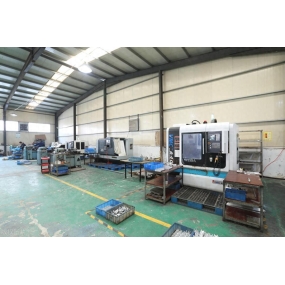
Choosing a reliable CNC machining supplier is an important step in producing high-quality precision molds. A professional supplier should have experience in mold manufacturing, advanced CNC equipment, skilled engineers, and strict quality management systems.
EMAR provides professional CNC machining services with experience in producing precision mechanical parts and complex molds. By focusing on accurate machining processes, suitable material selection, advanced tooling methods, and careful inspection procedures, EMAR helps customers achieve reliable mold quality and stable production performance.
Conclusion
Understanding What Should Be Noted in CNC Machining Precision Molds helps companies avoid common manufacturing problems and improve project success. Key factors include proper mold design, suitable material selection, correct tooling, optimized machining parameters, strict quality control, and suitable post-machining treatment.
Precision mold machining is a process that requires both technical knowledge and manufacturing experience. By paying attention to every stage of production and working with an experienced CNC machining partner, manufacturers can achieve accurate, durable, and cost-effective precision molds.