Spanish
 Arabic
 French
 Portuguese
 Belarusian
 Japanese
 Russian
 Malay
Malay Icelandic
 Bulgarian
 Azerbaijani
 Estonian
 Irish
Irish Polish
 Persian
 Boolean
 Danish
 German
 Filipino
 Finnish
 Korean
 Dutch
Dutch Galician
 Catalan
 Czech
Czech Croatian
 Latin
Latin Latvian
 Romanian
 Maltese
 Macedonian
 Norwegian
 Swedish
 Serbian
 Slovak
 Slovenian
 Swahili
 Thai
Thai Turkish
 Welsh
Welsh Urdu
Urdu Ukrainian
 Greek
Greek Hungarian
 Italian
 Yiddish
 Indonesian
 Vietnamese
 Haitian Creole
 Spanish Basque

HTML
High - Precision CNC Machining Services for Industrial Applications
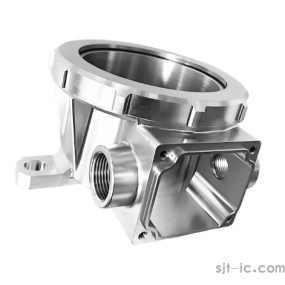
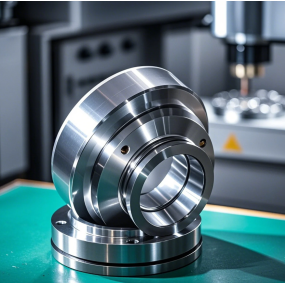
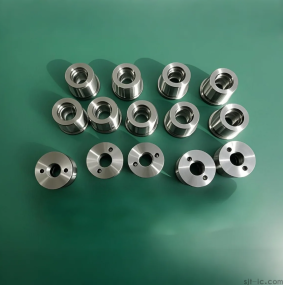
Modern industries need parts that are accurate, reliable, and able to work under demanding conditions. High - Precision CNC Machining Services for Industrial Applications provide manufacturers with advanced machining solutions to produce complex components with tight tolerances, consistent quality, and excellent surface finishes.
For companies that depend on precision parts, choosing the right CNC machining partner can directly affect product performance, production efficiency, and long-term costs. This guide explains what high-precision CNC machining services include, why precision matters, where these services are used, how quality is controlled, and how manufacturers manage costs.
What High - Precision CNC Machining Offers in Industrial Applications
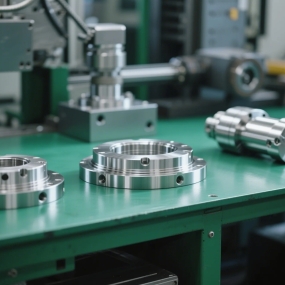
High-precision CNC machining uses computer-controlled machines to remove material from metal or plastic parts according to detailed digital designs. CNC machines can complete complex cutting, drilling, milling, turning, and finishing operations with high repeatability.
Unlike traditional machining methods that rely heavily on manual control, CNC machining follows programmed instructions. This helps reduce human errors and allows manufacturers to create identical parts even during large production runs.
The main benefits of high-precision CNC machining services include:
- Tight dimensional accuracy: Parts can be manufactured according to strict engineering requirements.
- Complex part production: CNC equipment can create detailed shapes that are difficult to make with conventional methods.
- Stable production quality: Automated processes help maintain consistent results across multiple batches.
- Flexible manufacturing: CNC machining supports prototypes, small batches, and high-volume production.
- Reduced assembly problems: Accurate components fit better with other industrial parts.
Companies such as EMAR provide professional CNC machining capabilities for industrial customers by combining advanced equipment, experienced engineers, and strict manufacturing processes to support different precision machining requirements.
The Significance of Precision in Industrial CNC Machining
Significance of precision in industrial CNC machining goes beyond producing parts with accurate measurements. In many industries, even a small dimensional error can reduce equipment performance, create safety risks, or increase maintenance costs.
High precision is especially important when parts must operate together in complex systems. For example, components used in automation equipment, medical devices, aerospace systems, and industrial machinery often require extremely accurate dimensions to ensure proper movement and reliable operation.
High precision helps industries achieve:
- Better product performance and reliability.
- Longer service life of machines and equipment.
- Lower failure rates caused by poor part fitting.
- Reduced waste from rejected components.
- Improved production efficiency.
By using advanced CNC technology and careful process control, manufacturers can meet demanding industrial standards while maintaining stable production results.
Industrial Applications of High - Precision CNC Machining
The industrial applications of high - precision CNC machining cover many fields where accuracy and durability are essential. Different industries rely on CNC machining because it can handle complex designs, special materials, and strict quality requirements.
Aerospace and Aviation
Aerospace components often require lightweight materials, precise dimensions, and excellent strength. CNC machining is used to produce engine parts, structural components, brackets, and other critical aerospace elements.
Automotive Manufacturing
The automotive industry uses CNC machining for engine components, transmission parts, fixtures, and customized performance parts. Precision machining improves vehicle reliability and supports modern automotive designs.
Medical Equipment
Medical devices require accurate and clean components. CNC machining helps produce surgical tools, equipment parts, and medical device housings with strict manufacturing control.
Industrial Automation
Automation systems depend on precise mechanical parts for smooth operation. CNC machining is commonly used for robot components, machine frames, positioning parts, and custom tooling.
Energy and Heavy Equipment
Energy systems and heavy machinery require durable parts that can withstand pressure, temperature changes, and continuous operation. CNC machining supports the production of reliable industrial components.
Quality Control in High - Precision Industrial CNC Machining
Quality control in high - precision industrial CNC machining is one of the most important factors when selecting a machining supplier. A reliable manufacturer must control every stage, from design review to final inspection.
Common quality control methods include:
- Engineering drawing review: Machining requirements, tolerances, and material specifications are checked before production.
- CNC machine calibration: Equipment accuracy is regularly tested to maintain stable performance.
- In-process inspection: Parts are measured during machining to identify problems early.
- Final dimensional inspection: Finished components are checked using precision measurement tools.
- Surface quality inspection: Surface finish and appearance are evaluated according to customer requirements.
Professional machining suppliers like EMAR focus on quality management throughout the manufacturing process. Their approach helps industrial customers receive parts that meet technical specifications and production expectations.
Material Choices for High - Precision Industrial CNC Machining
Material choices for high - precision industrial CNC machining directly influence part performance, machining difficulty, and overall cost. Selecting the correct material requires considering strength, corrosion resistance, temperature conditions, and application requirements.
Common CNC machining materials include:
- Aluminum: Lightweight, corrosion-resistant, and easy to machine. It is widely used in aerospace, electronics, and automation equipment.
- Stainless steel: Provides excellent strength and corrosion resistance for demanding industrial environments.
- Carbon steel: Offers good mechanical strength and cost efficiency for many machine components.
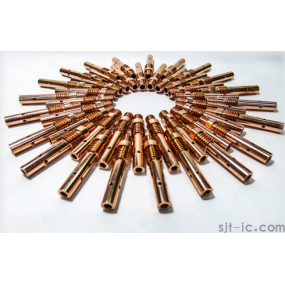
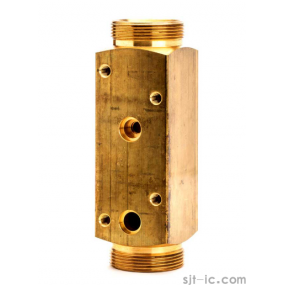
- Brass: Suitable for parts requiring good machinability and electrical properties.
- Engineering plastics: Used when lightweight, insulation, or chemical resistance is needed.
Experienced CNC machining providers help customers choose suitable materials based on operating conditions, production volume, and budget requirements.
Cost - Related Factors in High - Precision CNC Machining for Industrial Use
Cost - related factors in high - precision CNC machining for industrial use include more than the machining time. Several elements affect the final price of precision-manufactured components.
- Part complexity: Complex geometries usually require more programming, setup, and machining time.
- Material selection: Different materials have different prices and machining difficulties.
- Production quantity: Larger production volumes often reduce the average cost per part.
- Tolerance requirements: Extremely tight tolerances may require additional inspection and specialized processes.
- Surface finishing: Additional treatments can increase production costs but improve part performance.
Cost-effective CNC machining does not always mean choosing the lowest price. A reliable supplier helps reduce total costs by preventing quality problems, minimizing waste, and improving production efficiency.
How to Choose a Reliable High - Precision CNC Machining Partner
Selecting the right CNC machining supplier is important for industrial projects that require accuracy and consistency. Businesses should consider the following factors:
- Experience with industrial CNC machining projects.
- Advanced CNC equipment and manufacturing technology.
- Strong quality inspection procedures.
- Ability to machine different materials and part sizes.
- Clear communication and technical support.
EMAR supports industrial customers with precision CNC machining services, including complex component manufacturing, custom machining solutions, and quality-focused production processes. Their experience with different industries helps customers develop reliable parts for demanding applications.
Conclusion
High - Precision CNC Machining Services for Industrial Applications play an important role in modern manufacturing by delivering accurate, durable, and consistent components. From aerospace and automotive production to automation and industrial equipment, precision machining helps companies improve product quality and reduce operational risks.
Understanding machining processes, material selection, quality control methods, and cost factors allows businesses to make better decisions when choosing a CNC machining partner. With advanced technology and professional manufacturing support, high-precision CNC machining can provide long-term value for industrial applications.