Spanish
 Arabic
 French
 Portuguese
 Belarusian
 Japanese
 Russian
 Malay
Malay Icelandic
 Bulgarian
 Azerbaijani
 Estonian
 Irish
Irish Polish
 Persian
 Boolean
 Danish
 German
 Filipino
 Finnish
 Korean
 Dutch
Dutch Galician
 Catalan
 Czech
Czech Croatian
 Latin
Latin Latvian
 Romanian
 Maltese
 Macedonian
 Norwegian
 Swedish
 Serbian
 Slovak
 Slovenian
 Swahili
 Thai
Thai Turkish
 Welsh
Welsh Urdu
Urdu Ukrainian
 Greek
Greek Hungarian
 Italian
 Yiddish
 Indonesian
 Vietnamese
 Haitian Creole
 Spanish Basque

HTML
CNC Copper Material Machining Process
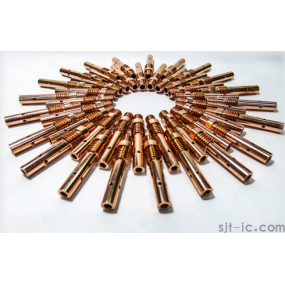
The CNC Copper Material Machining Process is widely used in modern manufacturing because copper is highly conductive, soft, and useful in electrical, thermal, and precision components. However, many engineers and buyers face real problems such as tool wear, surface scratches, and dimensional instability when machining copper. This article explains how to handle these challenges in a simple and practical way.
Understanding the Challenges of Copper Machining
Copper is not a difficult material in terms of hardness, but it creates unique machining problems. It is sticky, soft, and tends to build up on cutting tools. Without proper control, this leads to poor surface finish and reduced precision.
- Tool adhesion and built-up edge (BUE)
- Deformation due to material softness
- Heat accumulation during cutting
- Surface scratches and burr formation
These issues make the CNC Copper Material Machining Process more sensitive than steel or aluminum machining.
Steps Involved in CNC Machining of Copper
A stable workflow is essential for high-quality copper parts. Below are the typical steps involved in CNC machining of copper:
- Material Preparation: Selecting high-purity copper and ensuring clean surfaces.
- Programming: CNC code is optimized for low heat and smooth cutting paths.
- Tool Setup: Choosing sharp and wear-resistant tools.
- Rough Machining: Removing excess material with controlled feed rates.
- Finish Machining: Achieving precise dimensions and smooth surface quality.
- Inspection: Checking final dimensions and surface conditions.
Tooling Selection for Copper CNC Machining
Proper tooling selection for copper CNC machining is one of the most important success factors. Copper tends to stick to dull or incorrect tools, so sharpness and coating are critical.
- Use carbide tools for durability and sharp cutting edges
- Polished flute tools reduce material sticking
- Single or double flute cutters improve chip removal
- Uncoated or special low-friction coatings are often preferred
Good tooling reduces heat, improves surface finish, and extends tool life significantly.
Precision Aspects of CNC Copper Machining
The precision aspects of CNC copper machining are affected by thermal expansion and material softness. Even small changes in temperature or cutting force can affect accuracy.
- Use low cutting speeds to reduce heat generation
- Apply consistent cooling or air blow systems
- Control machine vibration for stable cutting
- Maintain tight CNC calibration for repeatability
With proper control, copper parts can achieve very high precision suitable for electronics, connectors, and medical components.
Quality Control Measures in CNC Copper Material Machining
Reliable production depends on strict quality control measures in CNC copper material machining. Since copper is easily scratched, inspection must be detailed and consistent.
- Dimensional inspection using CMM or micrometers
- Surface roughness testing for smoothness
- Visual inspection for burrs and scratches
- Random batch sampling for stability checks
Strong quality control ensures every copper part meets customer requirements without variation.
Advantages of Using CNC for Copper Material Machining
There are many advantages of using CNC for copper material machining, especially for industries requiring precision and consistency.
- High repeatability for mass production
- Excellent precision for complex geometries
- Reduced human error compared to manual machining
- Efficient production for both small and large batches
These advantages make CNC the preferred method for modern copper component manufacturing.
Why Choose EMAR for CNC Copper Machining
In real production environments, experience matters as much as equipment. EMAR has strong expertise in the CNC Copper Material Machining Process, focusing on stable precision control, optimized tooling strategies, and strict quality systems.
By combining advanced CNC equipment with engineering know-how, EMAR helps customers reduce machining defects, improve surface quality, and achieve consistent batch production results. This makes EMAR a reliable partner for industries requiring high-performance copper components.
Conclusion
The CNC Copper Material Machining Process requires careful attention to tooling, precision control, and quality inspection. With the right process design and professional execution, copper parts can achieve excellent accuracy and surface quality. Working with an experienced manufacturer like EMAR can significantly improve production stability and reduce machining risks.