Spanish
 Arabic
 French
 Portuguese
 Belarusian
 Japanese
 Russian
 Malay
Malay Icelandic
 Bulgarian
 Azerbaijani
 Estonian
 Irish
Irish Polish
 Persian
 Boolean
 Danish
 German
 Filipino
 Finnish
 Korean
 Dutch
Dutch Galician
 Catalan
 Czech
Czech Croatian
 Latin
Latin Latvian
 Romanian
 Maltese
 Macedonian
 Norwegian
 Swedish
 Serbian
 Slovak
 Slovenian
 Swahili
 Thai
Thai Turkish
 Welsh
Welsh Urdu
Urdu Ukrainian
 Greek
Greek Hungarian
 Italian
 Yiddish
 Indonesian
 Vietnamese
 Haitian Creole
 Spanish Basque

HTML
CNC Iron Parts Machining Process: A Practical Guide for High-Precision Manufacturing
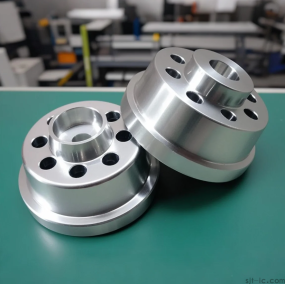
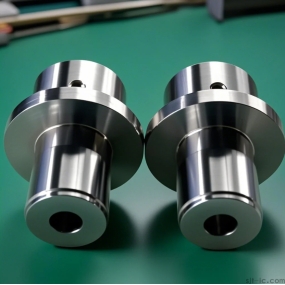
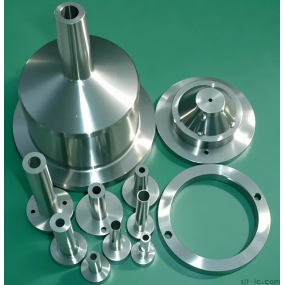
The CNC Iron Parts Machining Process is widely used in modern manufacturing to produce strong, durable, and precise metal components. Iron is tough and stable, which makes it suitable for machine parts, automotive components, industrial equipment, and construction hardware. However, machining iron is not always simple. Many manufacturers face challenges such as tool wear, surface roughness, and dimensional errors.
In this article, we will explain the process in simple terms and help you understand how to improve quality, reduce cost, and achieve stable production results.
Why CNC Machining is Important for Iron Parts
Iron is harder and more abrasive than many other metals. Traditional manual machining often cannot maintain consistent accuracy. This is where CNC technology becomes essential.
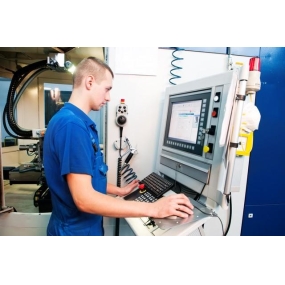
The advantages of CNC in iron part manufacturing include high repeatability, stable precision, and faster production speed. CNC machines follow digital instructions, which reduces human error and improves consistency across large batches.
Companies like EMAR specialize in CNC machining solutions for iron parts, helping customers achieve reliable performance even in demanding industrial applications.
Steps in CNC Machining of Iron Parts
Understanding the steps in CNC machining of iron parts helps you see how raw material becomes a finished product:
- Design and Programming: Engineers create a CAD model and convert it into CNC instructions (G-code).
- Material Selection: Suitable iron grades are chosen based on strength and usage requirements.
- Rough Machining: Excess material is quickly removed to form a basic shape.
- Semi-Finishing: The part is refined to approach final dimensions.
- Precision Finishing: Final cuts ensure tight tolerances and smooth surfaces.
- Inspection: Each part is checked for size, shape, and surface quality.
Each step must be carefully controlled to avoid errors that can affect the final performance of the part.
Tooling Needed for CNC Iron Parts Machining
The tooling needed for CNC iron parts machining plays a key role in efficiency and quality. Because iron is hard and abrasive, tool selection is very important.
- Carbide cutting tools: Provide high wear resistance and long tool life.
- Coated end mills: Reduce friction and heat buildup.
- Drills and boring tools: Used for creating accurate holes and internal features.
- Cooling systems: Help prevent overheating and extend tool lifespan.
Proper tooling reduces production costs and improves surface finish quality, especially during long production runs.
Precision Requirements for CNC-Machined Iron Parts
Many industries require strict precision requirements for CNC-machined iron parts. Even small deviations can cause assembly problems or mechanical failure.
Typical precision standards may range from ±0.01 mm to ±0.05 mm depending on the application. To achieve this level of accuracy, manufacturers must control machine calibration, tool wear, and temperature changes during machining.
EMAR applies strict process control systems to ensure every iron part meets customer specifications with stable repeatability.
Quality Control in CNC Iron Parts Machining Process
Strong quality control in CNC iron parts machining process is essential for reliable production. Without proper inspection, defective parts may enter assembly lines and cause serious issues.
Common quality control methods include:
- Dimensional inspection using calipers and CMM machines
- Surface roughness testing
- Hardness testing for material verification
- Visual inspection for cracks or machining marks
Quality checks are performed at multiple stages, not just at the final step, to prevent waste and rework.
Common Challenges in Iron CNC Machining
Although CNC technology is advanced, machining iron still presents challenges:
- Tool wear occurs faster due to material hardness
- Heat buildup can affect accuracy
- Vibration may reduce surface quality
- Chip removal can become difficult in deep cuts
These issues require optimized cutting parameters and experienced engineering support.
How EMAR Supports High-Quality Iron Part Manufacturing
EMAR focuses on delivering stable and precise CNC machining solutions for industrial clients. With advanced CNC equipment and experienced technicians, EMAR improves efficiency while maintaining strict quality standards.
From prototype development to mass production, EMAR supports customers through every stage of the CNC Iron Parts Machining Process. The goal is to provide reliable components that meet both performance and cost requirements.
Conclusion
The CNC Iron Parts Machining Process is essential for producing strong and accurate metal components used in many industries. By understanding each step, selecting the right tooling, and applying strict quality control, manufacturers can significantly improve product performance.
With professional support from companies like EMAR, businesses can reduce production risks and achieve stable, high-precision iron part manufacturing results.