Spanish
 Arabic
 French
 Portuguese
 Belarusian
 Japanese
 Russian
 Malay
Malay Icelandic
 Bulgarian
 Azerbaijani
 Estonian
 Irish
Irish Polish
 Persian
 Boolean
 Danish
 German
 Filipino
 Finnish
 Korean
 Dutch
Dutch Galician
 Catalan
 Czech
Czech Croatian
 Latin
Latin Latvian
 Romanian
 Maltese
 Macedonian
 Norwegian
 Swedish
 Serbian
 Slovak
 Slovenian
 Swahili
 Thai
Thai Turkish
 Welsh
Welsh Urdu
Urdu Ukrainian
 Greek
Greek Hungarian
 Italian
 Yiddish
 Indonesian
 Vietnamese
 Haitian Creole
 Spanish Basque

HTML
CNC Mold Machining: High Precision Solutions for Modern Manufacturing
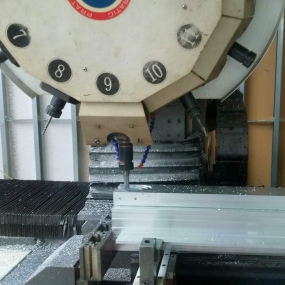
CNC Mold Machining is one of the most important processes in today’s manufacturing industry. It is used to create molds that shape plastic, metal, and other materials into final products. From automotive parts to consumer electronics, almost every industry depends on high-quality molds.
However, many engineers and buyers face common problems such as unstable quality, high production costs, and long lead times. This article explains how CNC technology solves these issues in simple terms, helping you make better decisions for your projects.
Why CNC Mold Machining Matters in Manufacturing
Traditional mold making often depends heavily on manual work, which can lead to inconsistent results. In contrast, CNC (Computer Numerical Control) machines use digital programming to control cutting tools with extreme accuracy.
This means every mold is produced with the same level of precision, reducing human error and improving product consistency. For industries that require tight tolerances, CNC Mold Machining is a reliable solution.
Key advantages of CNC in mold machining
- High accuracy and repeatability
- Faster production cycles compared to manual methods
- Ability to produce complex geometries
- Reduced material waste
- Stable quality for mass production
Common Types of Molds Suitable for CNC Machining
Not all molds are the same. Different industries require different mold structures. CNC technology is flexible enough to handle a wide range of mold types.
- Injection molds: Used for plastic parts in packaging, electronics, and automotive industries
- Die casting molds: Used for metal parts with high strength requirements
- Compression molds: Common in rubber and composite materials
- Prototype molds: Used for product testing and small-batch production
Each type requires different machining strategies, but CNC systems can adapt quickly to different design needs.
Precision Requirements in CNC Mold Machining
Precision is the core of mold manufacturing. Even a small error can lead to defective products in mass production. That is why precision requirements in CNC mold machining are extremely strict.
Modern CNC machines can achieve micron-level accuracy, ensuring that every cavity, edge, and surface meets design specifications. This is especially important for industries like medical devices and electronics, where tolerance is very tight.
Factors affecting precision
- Machine stability and calibration
- Quality of cutting tools
- Material hardness and consistency
- Programming accuracy (CAD/CAM design)
Quality Control in CNC Mold Machining
Strong quality control is essential to ensure every mold meets customer expectations. In professional manufacturing environments, inspection is not just the final step—it happens throughout the entire process.
Quality control in CNC mold machining usually includes the following stages:
- Incoming material inspection
- In-process dimensional checks
- Surface finishing inspection
- Final measurement using precision instruments like CMM (Coordinate Measuring Machine)
These steps help reduce defects and ensure stable production performance.
Cost-Effectiveness of CNC Mold Machining
Many companies worry about cost when choosing CNC solutions. While initial setup may seem higher, CNC machining is actually more cost-effective in the long run.
The cost-effectiveness of CNC mold machining comes from reduced labor, less material waste, and fewer production errors. Once a digital design is created, it can be reused or modified quickly, saving both time and money.
Long-term cost benefits
- Lower defect rates reduce rework costs
- Faster production improves delivery time
- Automation reduces labor dependency
- Stable quality minimizes customer returns
Real-World Challenges and How CNC Solves Them
Manufacturers often face issues like inconsistent mold quality, delayed delivery, and difficulty in producing complex shapes. CNC technology directly addresses these challenges by combining automation with precision engineering.
For example, complex cooling channels inside molds, which are difficult to produce manually, can be accurately created using multi-axis CNC machines. This improves product performance and extends mold life.
Professional CNC Mold Machining Support
Choosing the right manufacturing partner is just as important as choosing the right technology. A skilled supplier can significantly improve product quality and reduce production risks.
EMAR provides professional CNC mold machining services designed to meet the needs of global customers. With advanced equipment, strict quality control systems, and experienced engineers, EMAR focuses on delivering stable, high-precision mold solutions for various industries.
Whether you need prototype molds or large-scale production molds, a reliable partner like EMAR can help you improve efficiency and maintain consistent quality throughout your manufacturing process.
Conclusion
CNC Mold Machining plays a critical role in modern manufacturing by improving accuracy, reducing costs, and supporting complex product designs. Understanding its advantages, precision requirements, and quality control processes helps businesses make smarter production decisions.
As industries continue to demand higher standards, CNC technology will remain a key driver of innovation in mold manufacturing.