Spanish
 Arabic
 French
 Portuguese
 Belarusian
 Japanese
 Russian
 Malay
Malay Icelandic
 Bulgarian
 Azerbaijani
 Estonian
 Irish
Irish Polish
 Persian
 Boolean
 Danish
 German
 Filipino
 Finnish
 Korean
 Dutch
Dutch Galician
 Catalan
 Czech
Czech Croatian
 Latin
Latin Latvian
 Romanian
 Maltese
 Macedonian
 Norwegian
 Swedish
 Serbian
 Slovak
 Slovenian
 Swahili
 Thai
Thai Turkish
 Welsh
Welsh Urdu
Urdu Ukrainian
 Greek
Greek Hungarian
 Italian
 Yiddish
 Indonesian
 Vietnamese
 Haitian Creole
 Spanish Basque

HTML
CNC Die Casting Product Processing Technology: A Practical Guide for Modern Manufacturing
In today’s fast-moving manufacturing world, CNC Die Casting Product Processing Technology plays an important role in producing strong, precise, and cost-efficient metal parts. Many industries struggle with inconsistent quality, long production cycles, and high rework rates. CNC technology combined with die casting helps solve these problems by improving accuracy and stability in production.
Why CNC Die Casting Matters in Real Production
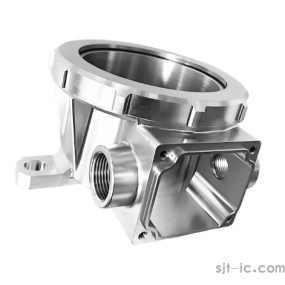
Traditional die casting can produce large quantities of metal parts quickly, but it often lacks fine precision after casting. Surfaces may need additional finishing, and small errors can affect final assembly. This is where CNC Machining becomes essential. It refines cast parts to meet tight tolerances and smooth surface requirements.
With modern CNC Die Casting Product Processing Technology, manufacturers can achieve better consistency, reduce waste, and improve overall product performance. This is especially important for industries like automotive, electronics, aerospace, and industrial machinery.
Steps in CNC Die Casting Product Processing
Understanding the steps in CNC die casting product processing helps users see how raw cast parts become finished precision components.
- Die Casting Formation: Molten metal is injected into a mold to create the basic shape.
- Cooling and Initial Inspection: The cast part is cooled and checked for visible defects like cracks or shrinkage.
- CNC Programming: Engineers design machining paths based on product drawings and tolerance requirements.
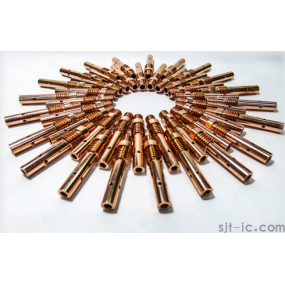
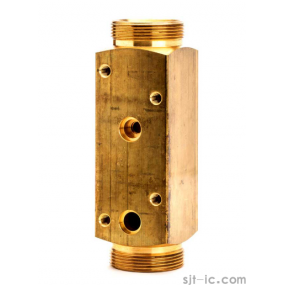
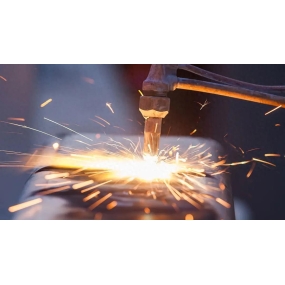
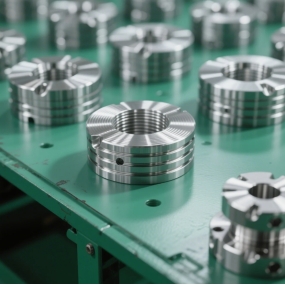
- CNC Machining: The cast part is precisely cut, drilled, or milled to achieve final dimensions.
- Deburring and Surface Finishing: Sharp edges and surface imperfections are removed for better safety and appearance.
- Final Inspection: Each part is measured to ensure it meets quality standards.
Advantages of CNC in Die Casting Product Processing
The advantages of CNC in die casting product processing are clear when comparing it with manual finishing methods.
- High Precision: CNC machines can achieve extremely tight tolerances, ensuring perfect fit in assemblies.
- Better Consistency: Every part is processed with the same digital instructions, reducing human error.
- Improved Efficiency: Automation reduces production time and increases output.
- Reduced Material Waste: Accurate cutting minimizes unnecessary scrap.
- Complex Shapes Possible: CNC allows machining of complex geometries that are difficult to achieve manually.
These benefits make CNC technology a key solution for companies that need reliable mass production with strict quality requirements.
Tooling for CNC Die Casting Product Processing
The performance of machining also depends heavily on tooling for CNC die casting product processing. Choosing the right tools ensures longer tool life and better surface quality.
Common tooling considerations include:
- Cutting tools: Carbide tools are widely used for their hardness and durability.
- Tool coating: Coated tools help reduce friction and heat during machining.
- Fixture design: Proper fixtures hold die cast parts securely to avoid vibration.
- Cooling systems: Effective cooling improves tool life and prevents deformation.
Well-designed tooling systems are essential to ensure stable production and high-quality output.
Quality Control in CNC Die Casting Product Processing
Strong quality control in CNC die casting product processing is necessary to ensure every component meets customer expectations.
Quality control usually includes:
- Dimensional measurement using precision instruments like CMM machines
- Surface roughness testing
- Visual inspection for cracks, burrs, or defects
- Batch sampling to ensure consistency across production runs
A stable quality control system reduces customer complaints and improves long-term reliability of the final product.
Applications of CNC Die Casting Product Processing Technology
The applications of CNC die casting product processing technology are wide and continue to grow as industries demand higher precision and durability.
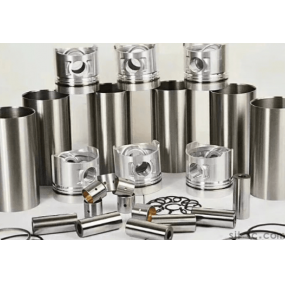
- Automotive Industry: Engine parts, transmission housings, and brackets
- Electronics: Heat sinks, device housings, and connectors
- Aerospace: Lightweight structural components requiring high accuracy
- Industrial Equipment: Pumps, valves, and machine parts
Because of its flexibility and accuracy, this technology is now a standard choice in many advanced manufacturing sectors.
How EMAR Supports High-Precision CNC Die Casting Solutions
In real production environments, choosing the right partner is just as important as choosing the right technology. EMAR specializes in delivering reliable CNC Die Casting Product Processing Technology solutions for global clients.
With advanced CNC equipment, experienced engineering support, and strict quality inspection systems, EMAR helps customers reduce production risks and improve part consistency. From prototype development to mass production, EMAR focuses on stable machining performance and practical engineering results rather than unnecessary complexity.
By combining die casting expertise with precision CNC machining, EMAR supports industries that require both speed and accuracy in their supply chain.
Conclusion
Modern manufacturing demands more than just fast production—it requires precision, reliability, and repeatability. CNC Die Casting Product Processing Technology provides a complete solution by combining the strengths of die casting and CNC machining.
With proper process control, tooling selection, and quality inspection, manufacturers can significantly improve product performance and reduce costs. Companies like EMAR continue to support this development by offering practical and high-quality machining services tailored to real industrial needs.