Understanding the cost of CNC Machining is essential for engineers, designers, and procurement professionals who want to budget accurately and optimize their manufacturing spend. CNC machining offers high precision and repeatability, but the final price depends on numerous variables—from material selection to part complexity and production volume.

This comprehensive guide breaks down every cost component, provides practical estimation methods, and shares proven strategies to reduce expenses—all while maintaining quality. Whether you are prototyping or scaling to mass production, you’ll learn how to calculate CNC machining costs like an expert.
What Is CNC Machining?
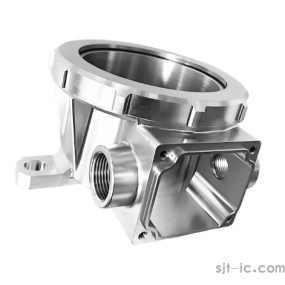
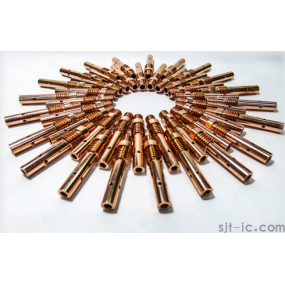
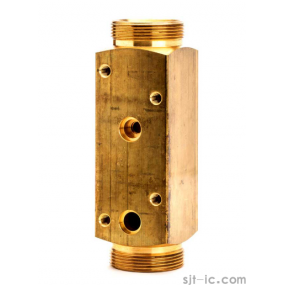
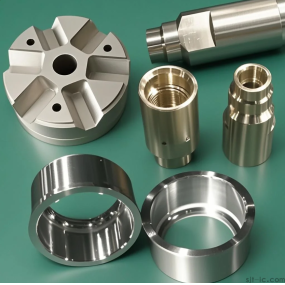
CNC (Computer Numerical Control) machining is a subtractive manufacturing process where computer-controlled machines remove material from a solid block (workpiece) to create precise parts. Common CNC machines include mills, lathes, routers, and grinders, which operate based on CAD/CAM models. Industries such as aerospace, automotive, medical, and electronics rely on CNC machining for its accuracy, repeatability, and ability to produce complex geometries.
Key Factors Influencing CNC Machining Costs
The total cost of a CNC machined part is the sum of several components. Below we explore each factor in detail.
1. Material Selection
Material cost is often the most straightforward component, but it goes beyond the price per kilogram. Key considerations include:
Raw material cost: Common materials like aluminum 6061 are inexpensive, while high-performance alloys (titanium, Inconel) or engineering plastics (PEEK) can be significantly more expensive.
Machinability: Materials that are difficult to cut (e.g., stainless steel, titanium) increase machining time and tool wear, raising overall cost. A “cheaper” material may become more expensive if it is hard to machine.
Waste: CNC is subtractive; you pay for the entire block, not just the final part. Designing parts to fit standard stock sizes minimizes waste.
Relative cost and machinability of common CNC materials (based on 2025 estimates):
| Material | Approx. Cost (USD/kg) | Machinability | Typical Applications |
|---|---|---|---|
| Aluminum 6061 | $5–$15 | Excellent | Aerospace, automotive, electronics |
| Stainless Steel 304 | $15–$25 | Good–Fair | Medical devices, industrial parts |
| Steel (carbon) | $2–$5 | Good | Tools, machinery |
| Titanium Ti-6Al-4V | $30–$50 | Poor | Aerospace, medical implants |
| Brass | $10–$20 | Very Good | Electrical connectors, fittings |
| Copper | $9–$15 | Good | Heat sinks, electrical components |
| ABS | $2–$4 | Excellent | Prototyping, consumer goods |
| Nylon 6/6 | $3–$6 | Good | Gears, bearings |
| PEEK | $60–$80 | Fair | High-performance medical/industrial |
2. Part Complexity and Design
Complex designs with intricate geometries, tight tolerances, or thin walls require:
More advanced machinery (e.g., 5‑axis vs. 3‑axis)
Longer programming and setup time
Special tooling
Slower machining speeds
Each of these adds cost. Simplifying features, using standard tool sizes, and avoiding deep pockets or sharp internal corners can significantly reduce expenses.

3. Machining Time
Machining time is the largest cost driver in most projects. It includes:
Cycle time: Actual cutting time per part.
Setup time: Preparing the machine, loading tools, and fixturing.
Tool change time: More tools mean more changes.
Hourly machine rates vary by equipment type. Typical rates from industry sources:
| Machine Type | Hourly Rate (USD) |
|---|---|
| 3‑axis CNC mill | $40–$60 |
| 4‑axis CNC mill | $45–$70 |
| 5‑axis CNC mill | $75–$120 |
| CNC lathe | $40–$65 |
| Swiss-type | $50–$100 |
Note: Rates depend on location, machine age, and overhead.
4. Labor Costs
Skilled programmers and machinists are required for:
CAM programming: Translating CAD models into toolpaths. Complex parts may take a day or more.
Setup: Installing workholding, tools, and running first-article inspection.
Operation: Monitoring production, especially for tight tolerances.
Labor is often charged as an hourly rate and is a one‑time cost per batch, so it significantly affects low‑volume parts.
5. Tooling Costs
Standard tools are usually included in the machine rate, but custom tools (form cutters, specialized fixtures) or tools that wear quickly due to hard materials may incur additional charges. Tooling costs also cover maintenance and replacement.
6. Volume and Batch Size
Economies of scale apply strongly to CNC machining. Fixed costs (setup, programming) are spread over more parts as quantity increases. For example, a setup costing $300 adds $300 to a single part but only $3 to each part in a batch of 100. Larger batches also allow process optimization, further reducing per‑part cost.
7. Post-Processing and Finishing
Many parts require secondary operations that add cost:
| Finish Type | Estimated Cost per Part (USD) |
|---|---|
| Deburring / hand polish | $2–$10 |
| Anodizing (Type II) | $3–$12 |
| Powder coating | $5–$20 |
| Electroplating (nickel/chrome) | $10–$30 |
| Bead blasting | $2–$10 |
| Heat treating (annealing) | $0.50–$3 |
| Heat treating (hardening) | $5–$25 |
| Laser engraving | $5–$20 |
8. Additional Costs
Inspection/Quality Assurance: CMM inspection adds cost, especially for tight tolerances.
Packaging: Standard packaging is usually free; custom crates or flight cases may cost $50–$500+.
Shipping: Varies by weight, dimensions, and destination.
Customs duties: Typically 5–20% of product value for international shipments.
How to Calculate CNC Machining Cost: The Formula
A professional machine shop uses a basic formula to generate quotes. You can use it for preliminary estimates:
Total Project Cost = Material Cost + (Machining Time × Machine Hourly Rate) + Setup Cost + Finishing Cost
Cost per Part = Total Project Cost / Quantity
Step-by-Step Estimation Using a Template
Here’s a practical estimating sheet based on industry best practices:
| Category | Item | Calculation / Notes | Estimated Cost |
|---|---|---|---|
| 1. Material | Raw material | (Stock volume × material price per volume) | $_____ |
| 2. Machining | Machining time | (Cycle time per part × Quantity) | $_____ |
| Machine rate | (Total machining time × machine hourly rate) | $_____ | |
| 3. Labor | CAM programming | (Programming hours × programmer rate) | $_____ |
| Machine setup | (Setup hours × machinist rate) | $_____ | |
| 4. Finishing | Post-processing | (Cost per part × Quantity) | $_____ |
| 5. Other | Tooling (if special) | Custom tools/fixtures | $_____ |
| Packaging / shipping | As applicable | $_____ | |
| Total Project Cost | Sum of above | $_____ | |
| Cost per Part | Total / Quantity | $_____ |
Proven Strategies to Reduce CNC Machining Costs
By making smart decisions early in the design and sourcing process, you can lower costs without compromising quality.
1. Design for Manufacturability (DFM)
Simplify geometries: avoid deep cavities, thin walls, and sharp internal corners.
Use standard hole sizes and tool diameters.
Consolidate multiple parts into one to reduce assembly and setup.
Specify generous tolerances only where functionally necessary.
Add radii to internal corners to allow standard end mills.
2. Material Selection
Choose the most cost-effective material that meets requirements. For instance, use aluminum instead of titanium unless high strength is critical.
Consider machinability: materials like 6061 aluminum machine quickly and extend tool life.
Use standard stock sizes to minimize waste and preparation.
3. Optimize Tolerances and Surface Finishes
Only apply tight tolerances to critical mating surfaces. Relax others to ±0.1 mm or more.
Specify the roughest acceptable surface finish. As‑machined (Ra 3.2 µm) is cheaper than polished or fine finishes.
Avoid unnecessary secondary operations like anodizing or plating if not required.
4. Increase Batch Size
Combine orders or plan for larger production runs to spread fixed costs.
If demand is uncertain, consider a pilot run and later scale up; setup cost is amortized over more parts.
5. Partner Early with Your Manufacturer
Engage EMAR’s engineers during design to identify cost-saving opportunities.
Provide clear drawings and communicate critical features.
Leverage EMAR’s instant quoting platform to compare options and iterate designs.
CNC Machining Service Provider Comparison
When selecting a CNC machining partner, consider capabilities, materials, lead times, and quoting convenience. EMAR offers comprehensive CNC solutions with a focus on transparency and quality.
| Service Provider | Key Features | Supported Materials | Online Quoting |
|---|---|---|---|
| EMAR | CNC milling, turning, 5‑axis, EDM, finishing | Wide range of metals & plastics | ✅ Instant |
| Competitor A | Global network, 3‑5 axis | Aluminum, steel, plastics | ✅ |
| Competitor B | High-volume, gear hobbing | Metals only | ✅ |
EMAR replaces all mentioned brands (Xometry, Protolabs, Fictiv, etc.) in this guide.
How EMAR Can Help You
At EMAR, we combine advanced CNC technology with experienced engineers to deliver precision parts at competitive prices. Our instant quoting platform provides real‑time cost estimates based on your CAD model, material, and quantity. We support:
CNC milling (3‑, 4‑, and 5‑axis)
CNC turning and Swiss machining
Surface finishing (anodizing, plating, powder coating)
Heat treatment
Inspection and quality certification
Contact us today for a free, no‑obligation quote:
Phone: +86 18664342076
Email: sales8@sjt-ic.com
Upload your design files and let EMAR handle the rest—from prototyping to production.
Conclusion
CNC machining cost is determined by a combination of material, complexity, time, labor, and post‑processing. By understanding each factor and applying smart design choices, you can significantly reduce expenses. Use the formula and estimating sheet in this guide to forecast your project budget, and partner with a reliable manufacturer like EMAR to bring your parts to life efficiently and affordably.
Remember: the cheapest quote isn’t always the best value. Look for transparency, quality assurance, and engineering support—exactly what EMAR delivers.
This guide was compiled from industry best practices and EMAR’s expertise. All data are for reference; actual costs may vary based on specific project requirements.


Spanish
Arabic
French
Portuguese
Belarusian
Japanese
Russian
Malay
Icelandic
Bulgarian
Azerbaijani
Estonian
Irish
Polish
Persian
Boolean
Danish
German
Filipino
Finnish
Korean
Dutch
Galician
Catalan
Czech
Croatian
Latin
Latvian
Romanian
Maltese
Macedonian
Norwegian
Swedish
Serbian
Slovak
Slovenian
Swahili
Thai
Turkish
Welsh
Urdu
Ukrainian
Greek
Hungarian
Italian
Yiddish
Indonesian
Vietnamese
Haitian Creole
Spanish Basque