Spanish
 Arabic
 French
 Portuguese
 Belarusian
 Japanese
 Russian
 Malay
Malay Icelandic
 Bulgarian
 Azerbaijani
 Estonian
 Irish
Irish Polish
 Persian
 Boolean
 Danish
 German
 Filipino
 Finnish
 Korean
 Dutch
Dutch Galician
 Catalan
 Czech
Czech Croatian
 Latin
Latin Latvian
 Romanian
 Maltese
 Macedonian
 Norwegian
 Swedish
 Serbian
 Slovak
 Slovenian
 Swahili
 Thai
Thai Turkish
 Welsh
Welsh Urdu
Urdu Ukrainian
 Greek
Greek Hungarian
 Italian
 Yiddish
 Indonesian
 Vietnamese
 Haitian Creole
 Spanish Basque

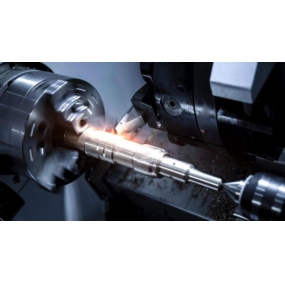
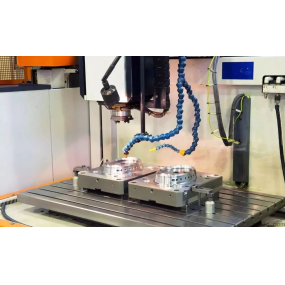
The modern smartphone is a marvel of engineering, combining sleek aesthetics with powerful internal technology. At the heart of this innovation lies a critical manufacturing process: CNC Machining. From the durable metal frame to intricate internal components, CNC (Computer Numerical Control) technology is the backbone of precision manufacturing in the consumer electronics industry. This article explores the role of CNC machining in mobile phone parts production, detailing the materials, processes, and solutions that define high-quality smartphone manufacturing.
Why CNC Machining is Essential for Smartphone Manufacturing
Smartphones are among the most complex consumer devices, requiring components with exceptionally tight tolerances and flawless finishes. CNC machining offers the high precision, repeatability, and material versatility needed to meet these demands. As a leading manufacturer, EMAR specializes in providing high-quality, precision-machined components that meet the rigorous standards of modern mobile devices.
Key Benefits of CNC Machining in Mobile Phone Production
High Precision and Accuracy: Smartphone components require tolerances as tight as a few microns. CNC machining ensures perfect alignment and fit for parts like housings, buttons, and connectors.
Material Versatility: From aluminum alloys like 6063 and 7075 to stainless steel and high-performance plastics, CNC machining works with the materials required for strength, weight, and aesthetics.
Complex Geometries: Modern smartphones feature intricate designs, including thin walls, antenna slots, and precise cutouts. CNC machining excels at producing these complex shapes.
Repeatability: The process is ideal for high-volume production, ensuring every part meets the same strict quality standards.
Rapid Prototyping: CNC machining allows manufacturers to quickly produce prototypes for testing and refinement, accelerating the time-to-market for new designs.
Key Smartphone Parts Manufactured by CNC Machining
CNC machining is used to produce a wide array of critical smartphone components:
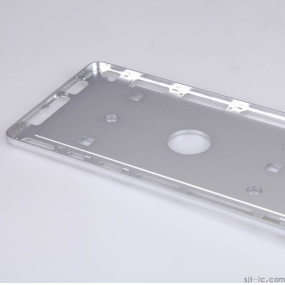
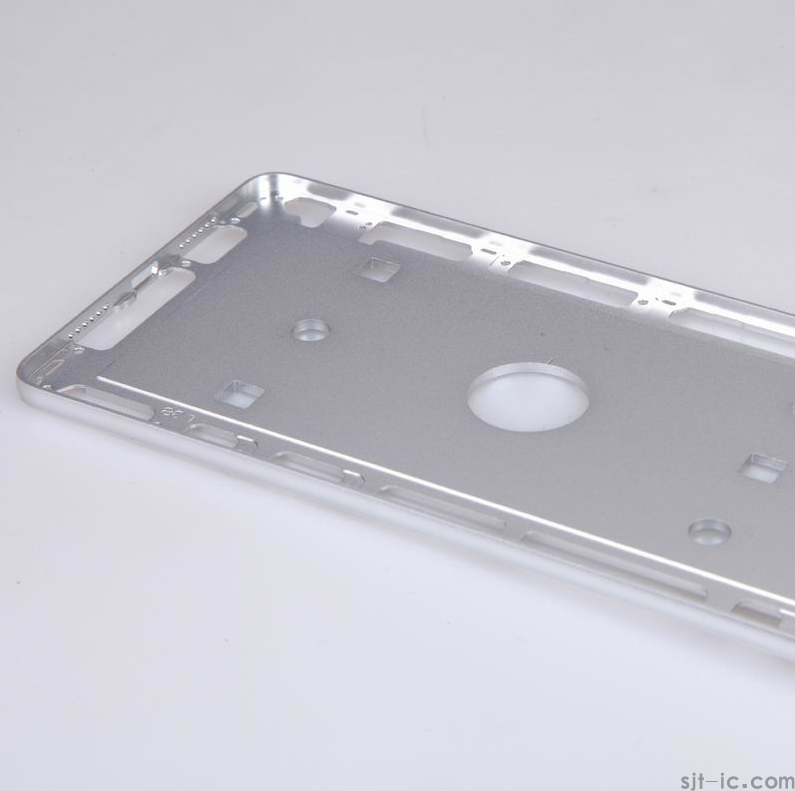
Casings and Housings: The outer frame of a smartphone is often crafted from aluminum alloy to provide a premium look, lightweight durability, and structural integrity.
Middle Chassis: This structural core supports internal components like the motherboard, battery, and camera modules. It requires extreme precision to ensure all parts align correctly.
Buttons and Connectors: Power buttons, volume rockers, and various connectors are machined to exacting standards for smooth operation and reliable connectivity.
Camera Modules and Housings: The camera housing must be precisely machined to ensure the lens fits correctly and maintains proper focus.
Internal Brackets and Heat Sinks: CNC machining creates mounting brackets and heat dissipation components that keep internal parts secure and cool.
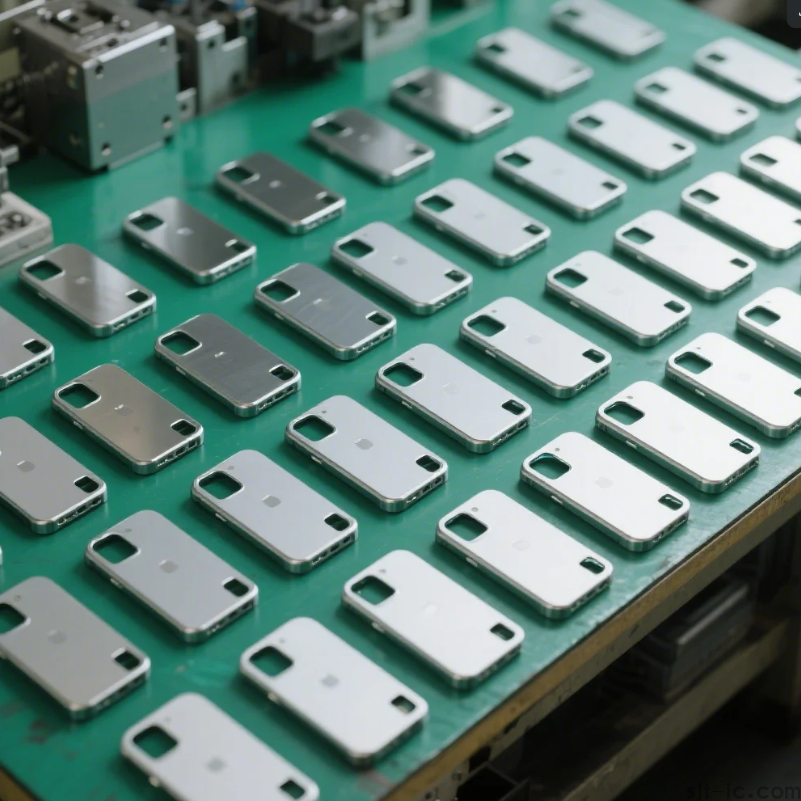
The Manufacturing Process: From Raw Material to Finished Part
The production of a high-quality mobile phone middle frame or case is a complex journey. EMAR employs a detailed, multi-stage process to ensure superior results.
1. Material Selection and Preparation
Aluminum alloys are the preferred choice for their balance of strength, weight, and aesthetic appeal. AL6063 and AL7075 are commonly used. The process often begins with aluminum extrusion, where raw aluminum is formed into a regular plate, increasing its density and hardness for machining.
2. CNC Roughing
The initial stage involves rough milling the inner cavity and positioning columns. This step removes the bulk of the material and establishes a stable reference for subsequent precision work.
3. Milling Antenna Slots and Nano-Injection Molding
One of the biggest challenges with metal bodies is signal interference. To solve this, antenna slots are milled into the frame. The part then undergoes a T-treatment, which creates nano-scale pores in the aluminum surface. This is followed by nano-injection molding, where specialized plastic materials like PBT, PPS, or PPA are injected into the grooves under high temperature and pressure. This process bonds the metal and plastic at a molecular level, creating a seamless structure that supports 5G antenna requirements and wireless charging.
4. CNC Finishing
After nano-injection, the part undergoes finishing operations to achieve the final shape and surface. This includes fine milling of curved surfaces and sides, creating the final form of the phone's body.
5. Surface Treatment: Polishing, Sandblasting, and Anodizing
To achieve the desired look and durability, the component goes through several finishing steps:
Polishing and Sandblasting: Polishing creates a mirror-like finish, while sandblasting produces a uniform matte or fine reflective surface.
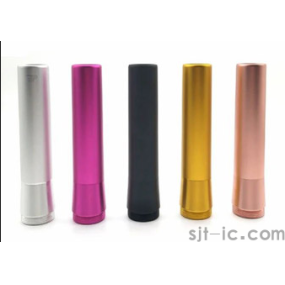
Anodizing: This electrochemical process creates a durable, corrosion-resistant oxide layer on the metal surface. It also allows for precise coloring, from classic black and silver to vibrant hues.
6. High-Gloss Processing (Diamond Cutting)
For a premium aesthetic, high-speed CNC machines equipped with diamond tools cut precise, reflective edges on the frame. This process, often guided by laser alignment tools, creates a striking visual effect by enhancing light refraction.
7. Final CNC Operations and Assembly
The final stages involve a secondary anodizing step for added durability, followed by CNC milling of conductive positions to ensure proper grounding. Finally, assembly nuts are inserted for mounting internal components like the motherboard.
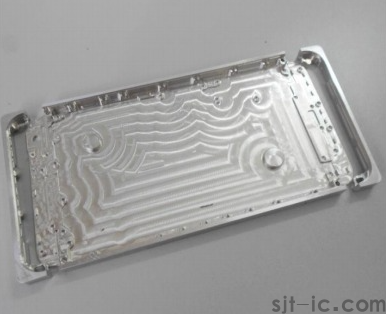
Key Challenges and Solutions in CNC Machining of Mobile Phone Parts
Manufacturing high-precision mobile phone parts comes with distinct challenges. EMAR employs advanced strategies to overcome them.
Thin Walls and Deformation: Many phone chassis have sections as thin as 0.4mm, which are prone to deformation and punctures. To counter this, manufacturers use optimized machining routes, roughing and finishing front and back sides sequentially, and employ vacuum fixtures that hold the part securely without applying external force.
Tiny Threaded Holes: Modern smartphones often require miniature M1.2 threaded holes for assembly. Standard tapping can cause positional deviations. The solution is to use customized milling tools to achieve a positional accuracy of up to 0.1mm.
Complex Structural Features: Sharp corners and intricate grooves for camera modules and other components can be difficult to achieve with standard CNC tools. In some cases, EDM (Electrical Discharge Machining) is used to create precise structural features, followed by expert manual finishing to ensure a smooth surface.
Cutting Fluid Management: The quality of the final surface is highly dependent on the cutting fluid. Regular monitoring of pH levels and changing the fluid every three months prevents corrosion and ensures a smooth, defect-free finish.
The Future: Combining CNC Machining with Die Casting
While full CNC machining offers the highest quality, it can be material-intensive. To balance quality with cost-effectiveness for high-volume production, many manufacturers combine die casting with CNC finishing. This hybrid approach involves first die-casting a near-net shape and then using CNC machining for the final, high-precision features. This reduces material waste and machining time while maintaining the tight tolerances required for a premium product.
Conclusion
CNC machining is an indispensable technology in smartphone manufacturing. It provides the precision, versatility, and efficiency required to create the complex, high-quality components that define modern mobile devices. From the initial roughing stage to the final anodizing and diamond cutting, each step demands expertise and meticulous attention to detail.
EMAR stands at the forefront of this industry, with over 10 years of experience in CNC machining. Our senior design and production teams are dedicated to providing perfect modification suggestions, quick quoting, and fast delivery. We take 100% responsibility for quality, ensuring that every component meets the highest standards.
Contact EMAR Today
Ready to bring your smartphone designs to life with precision CNC machining? Contact us to discuss your project.
Phone: +86 18664342076
Email: sales8@sjt-ic.com