Spanish
 Arabic
 French
 Portuguese
 Belarusian
 Japanese
 Russian
 Malay
Malay Icelandic
 Bulgarian
 Azerbaijani
 Estonian
 Irish
Irish Polish
 Persian
 Boolean
 Danish
 German
 Filipino
 Finnish
 Korean
 Dutch
Dutch Galician
 Catalan
 Czech
Czech Croatian
 Latin
Latin Latvian
 Romanian
 Maltese
 Macedonian
 Norwegian
 Swedish
 Serbian
 Slovak
 Slovenian
 Swahili
 Thai
Thai Turkish
 Welsh
Welsh Urdu
Urdu Ukrainian
 Greek
Greek Hungarian
 Italian
 Yiddish
 Indonesian
 Vietnamese
 Haitian Creole
 Spanish Basque

In the world of manufacturing, precision, efficiency, and reliability are paramount. As industries evolve and demands grow, the need for advanced machining solutions becomes increasingly apparent. Among the various machining techniques available, CNC (Computer Numerical Control) machining stands out as a cornerstone of modern manufacturing.
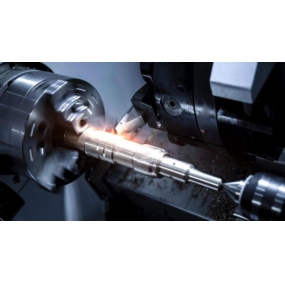
CNC Machining is a manufacturing process in which pre-programmed computer software dictates the movement of factory tools and machinery. Using this method versus manual machining can lead to improved accuracy, increased production speeds, enhanced safety, efficiency, and cost savings. From prototyping to production, CNC machining offers a myriad of advantages that make it indispensable for meeting the diverse needs of today’s industries.
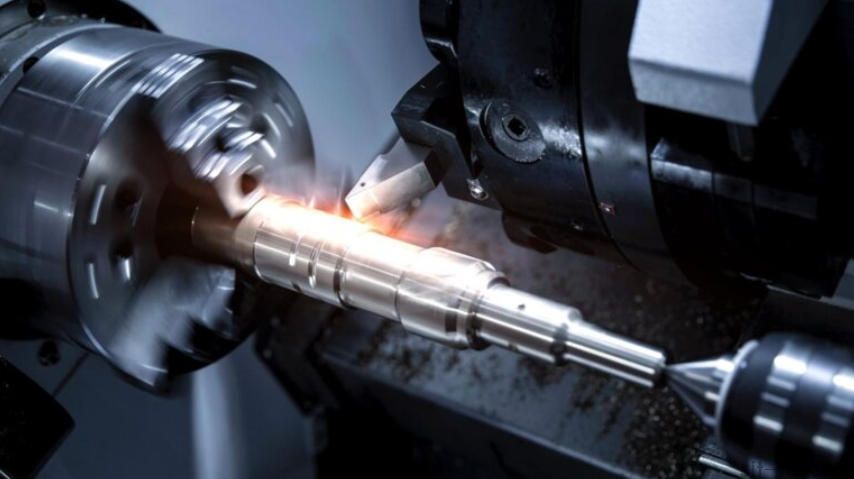
Here is a detailed look at the key benefits of incorporating CNC machining into your operations.
Unmatched Precision and Accuracy
One of the most significant benefits of using CNC machining compared with manual operations is its unparalleled precision. CNC machining ensures precision that is difficult to achieve with manual machining. Every cut, shape, and detail is executed with exact accuracy. Because CNC machines follow precise computer instructions, their results are identical each time and match the digital model closely, allowing the same product to be replicated flawlessly time and time again.
This capability greatly reduces human error, as the machines rely on computer instructions for fabricating parts. It is possible to achieve tight tolerances and create parts that meet precise specifications without the need for constant attention from a skilled operator. This consistency and accuracy is especially crucial for industries that demand high-quality standards, such as aerospace, medical, and automotive manufacturing.
Zero Defects and Consistency
Since precision turning machines operate autonomously and without manual intervention, they bypass the possibility of human errors seeping into the manufacturing process that often lead to defects. With codes and software programs governing the end-to-end process, CNC machines can deliver greater accuracy without flaws.
These inputs remain immutable during the entire production process, cycle after cycle, unless changed deliberately. This ensures reproducibility and consistency in every part produced, regardless of batch size or production volume. This reliability is crucial for industries with stringent quality control requirements, ensuring uniformity across all parts.
Increased Production Speed and Efficiency
CNC machining is renowned for its high efficiency and productivity. By utilizing computer-controlled automation, CNC machines significantly increase production speed without compromising quality. When CNC machines are used, operators can be much more efficient because the machines can use their fastest settings to match increased demands.
Unlike human operators who require rest and breaks, CNC machines can run for 24 hours a day, 365 days a year. They don’t need a break for coffee or lunch. This ability to run continuously with minimal downtime maximizes output and optimizes production schedules. This efficiency translates into faster turnaround times, reduced lead times, and increased output, allowing manufacturers to meet tight deadlines and customer demands with ease.
Cost-Effectiveness
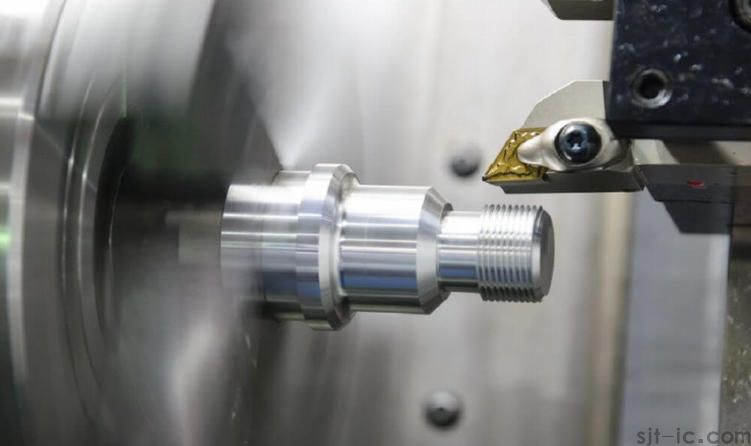
While the initial setup costs may be higher than traditional machining methods, CNC machining is highly cost-effective in the long run. There are several factors that contribute to lower production costs:
Reduced Labor Costs: Traditional machining typically requires one operator per machine, leading to higher labor costs. CNC machines, on the other hand, only need minimal supervision, as one skilled operator can manage multiple machines simultaneously.
Reduced Material Waste: The high accuracy of CNC machines reduces the likelihood of errors and defective products, which helps eliminate unnecessary waste and lowers material costs.
Lower Operational Costs: The high output rate, minimal mistakes, and low production costs of CNC machining make it cost-effective. Over time, these efficiencies translate into substantial cost savings for businesses.
Enhanced Safety
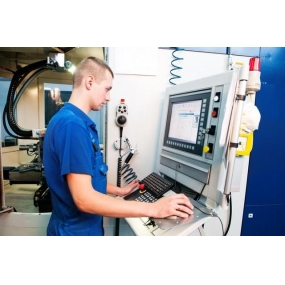
CNC machines are designed with safety as a priority. By largely eliminating the human element from the process of turning a workpiece into a completed component, CNC machining reduces safety risks on the shop floor.
CNC machines isolate machines from humans and mitigate the risk that crops up otherwise. They operate behind protective guards or within enclosed, transparent safety doors, keeping operators at a safe distance from moving parts. Human intervention is limited to a supervisory role where operators can remotely monitor the execution of the software programs. This design greatly reduces the risk of workplace injuries, such as cuts or exposure to harmful materials, compared to traditional manual machining where operators work in close proximity to the equipment.
Ability to Create Complex Geometries
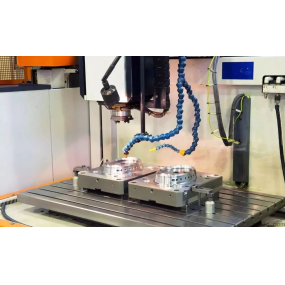
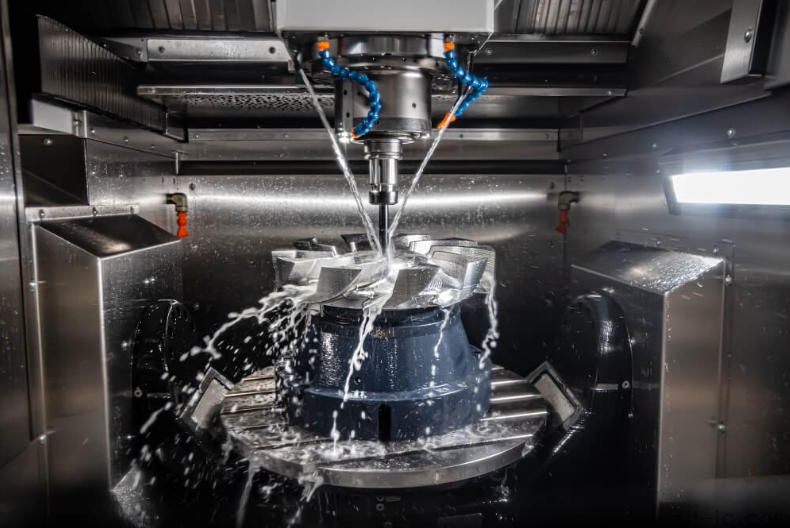
CNC machining excels at producing complex geometries and intricate designs that would be challenging or impossible to achieve with conventional machining methods. With multi-axis capabilities and advanced tooling options, CNC machines can contour, shape, and machine intricate features with precision and consistency.
With the right software, a CNC machine can produce a workpiece of virtually any size, shape, or texture. This capability opens new possibilities for innovative product designs and engineering solutions. CNC milling machines with sophisticated design software can produce complex shapes that a regular manual machine cannot duplicate.
Versatility in Materials
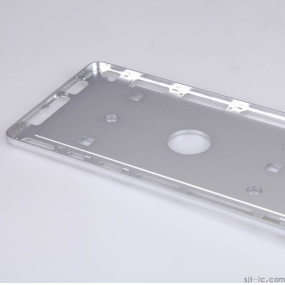
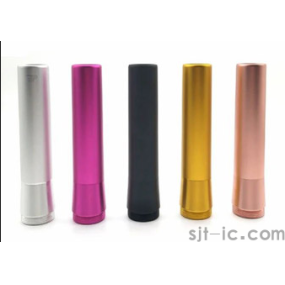
CNC machining offers versatility in materials, allowing manufacturers to work with a wide range of metals, plastics, composites, and other materials. From aluminum and stainless steel to titanium and brass, CNC machines can effectively machine virtually any material with ease. Whether you want to process metals and plastics, glass and ceramics, woods and composites, or any other equivalent, modern equipment is up to the task. This flexibility enables manufacturers to choose the most suitable material for their specific application, whether it’s for aerospace, automotive, medical, or consumer electronics industries.
Reduced Waste and Energy Consumption
CNC machining minimizes material waste through its precision and accuracy. CNC machines run on software programs that undergo iterative optimization to develop the best way to turn a component without waste. When programs are properly verified, CNC machines make very few cutting errors.
Additionally, CNC machining can use less electricity than older processes, reducing overall energy consumption. CNC systems can be more efficient because of optimized tool paths and reduced idle time. By cutting down on waste and energy usage, CNC machining injects sustainability into manufacturing operations.
Design Flexibility and No Prototypes Necessary
Another advantage of CNC machining is its design flexibility, allowing manufacturers to iterate, modify, and refine designs quickly and cost-effectively. With CAD/CAM software integration, designers can easily create and simulate complex geometries, optimize tool paths, and visualize the machining process before production begins.
The modern design software for CNC machines removes the need to produce a prototype or model before executing a project. You don’t have to actually produce a physical prototype, which costs time and money, nor do you have to create revisions to the prototype—except through the software. This capability allows manufacturers to save weeks or months of production time.
Scalability
CNC machining offers scalability, enabling manufacturers to ramp up production or scale down as needed to meet fluctuating demand levels. What makes CNC machines different from conventional machines and manual production processes is that a CNC machine can be programmed to produce one single item or large quantities. Whether producing a few prototypes for testing or thousands of parts for mass production, CNC machines can adapt to varying production volumes with minimal lead time and setup effort.
Low Maintenance
CNC machines typically require minimal levels of maintenance. Generally, the service involves changing the cutting implements at the indicated interval and a small amount of light cleaning. Because CNC machines are usually built to last, they remain relevant for years or even decades after their initial launch, especially with new integrations and upgrades.
Conclusion
By now, it is abundantly clear that precision components produced by CNC machines are far superior to their manual counterparts. CNC machining is a form of manufacturing that uses computer-controlled machine tools to create parts and products, offering greater accuracy, more precise control, and higher efficiency.
From unmatched precision and versatility in materials to high efficiency, cost-effectiveness, and design flexibility, CNC machining empowers manufacturers to produce high-quality parts with speed, accuracy, and consistency. With its ability to handle complex geometry, scale production seamlessly, and enhance workplace safety, CNC machining is poised to remain at the forefront of modern manufacturing.
Contact EMAR for Custom Machining Services
When precision, efficiency, and repeatability are paramount, CNC machining offers significant advantages over manual processes. At EMAR, we leverage advanced CNC machining to deliver high-quality, custom solutions with tight tolerances.
For more information on our machining services and capabilities, contact us or request a quote today.
Phone: +86 18664342076
Email: sales8@sjt-ic.com