Spanish
 Arabic
 French
 Portuguese
 Belarusian
 Japanese
 Russian
 Malay
Malay Icelandic
 Bulgarian
 Azerbaijani
 Estonian
 Irish
Irish Polish
 Persian
 Boolean
 Danish
 German
 Filipino
 Finnish
 Korean
 Dutch
Dutch Galician
 Catalan
 Czech
Czech Croatian
 Latin
Latin Latvian
 Romanian
 Maltese
 Macedonian
 Norwegian
 Swedish
 Serbian
 Slovak
 Slovenian
 Swahili
 Thai
Thai Turkish
 Welsh
Welsh Urdu
Urdu Ukrainian
 Greek
Greek Hungarian
 Italian
 Yiddish
 Indonesian
 Vietnamese
 Haitian Creole
 Spanish Basque

CNC (Computer Numerical Control) machining is a cornerstone of modern valve manufacturing. By using programmed software to control tools and machinery, this process produces high-precision valve components with tight tolerances, complex geometries, and consistent quality. From valve bodies to stems, discs, and seats, CNC Machining ensures reliability in critical industries such as aerospace, defense, oil and gas, chemical processing, and water treatment.
At EMAR, we leverage advanced CNC machining capabilities to deliver custom valve components that meet strict specifications. This article explores the techniques, materials, and processes involved in CNC machining of valve parts.
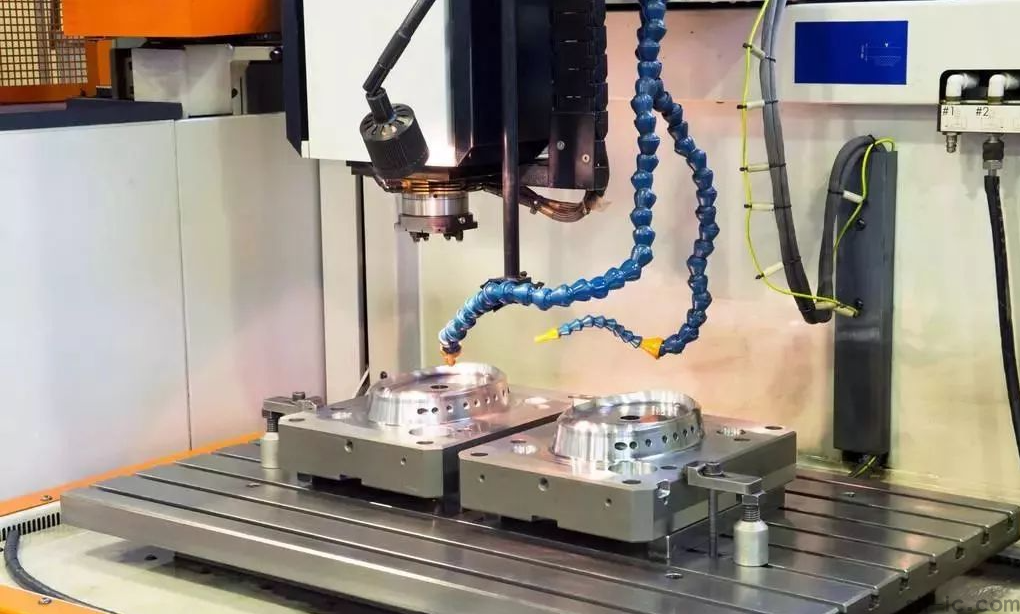
The Benefits of CNC Machining for Valve Components
CNC machining is the preferred manufacturing process for custom valve bodies and components because it provides high precision, flexibility, and scalability. Key benefits include:
Tight tolerances: CNC machining provides precise bore alignment, port dimensions, and sealing surfaces critical for valve performance. Tolerances as tight as ±0.005 mm can be achieved.
Complex internal features: Multi-axis CNC machining allows for intricate internal channels and cross-drilled passages without sacrificing strength or integrity.
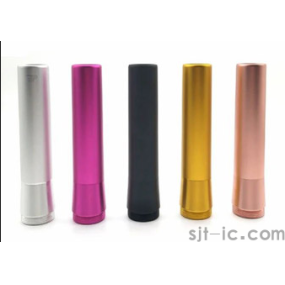
Material versatility: CNC machining can be performed on a variety of materials, including aluminum, stainless steel, titanium, and specialty alloys.
Consistency and repeatability: Once programmed, CNC machines produce identical parts repeatedly with minimal variation, making the process ideal for both prototype development and full production runs.
Key Valve Components and Their CNC Machining Methods
1. Machining the Valve Body
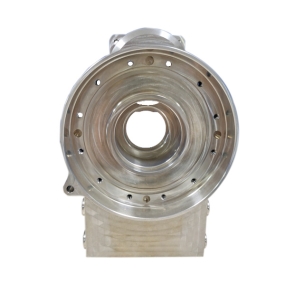
The valve body is the primary structural component, housing internal parts and connecting to the piping system. It typically requires a combination of CNC processes.
Processes:
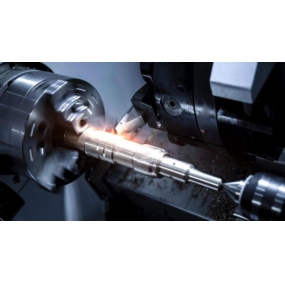
Rough Turning/Milling: A CNC lathe or milling machine removes excess material from the outer diameter and faces.
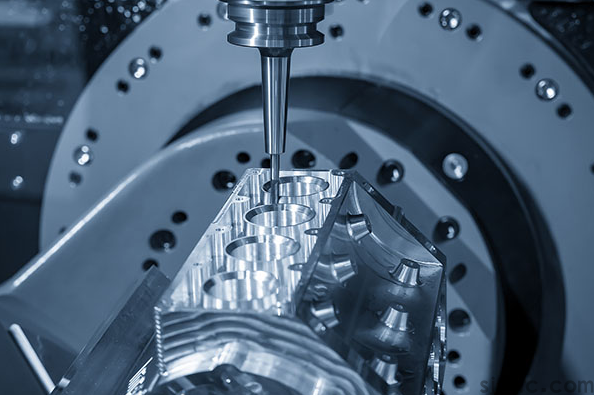
Drilling and Boring: Internal cavities and ports are machined using CNC drilling and boring tools. Coolant is essential to prevent work hardening, especially with materials like 316 stainless steel.
Threading: Threaded ports for connections are machined using CNC thread milling or tapping.
Finish Milling: Flange surfaces and sealing faces are finish-milled to achieve a smooth surface finish.
Key Considerations:
Use rigid fixturing to minimize vibration during heavy material removal.
Monitor tool wear, as valve body materials can be abrasive.
Perform in-process inspections using CMM to verify critical dimensions.
2. Machining the Valve Stem
The valve stem transmits motion from the actuator to the disc or gate, requiring high precision to ensure smooth operation and leak-tight sealing.
Processes:
Turning: A CNC lathe shapes the stem’s outer diameter and length.
Thread Cutting: Threads for actuator connection are cut using a single-point threading tool or thread mill.
Keyway Milling: Keyways for torque transmission are milled using a CNC milling machine.
Polishing: The sealing area is polished to a fine surface finish using a CNC grinding machine or superfinishing process.
Key Considerations:
Minimize deflection during turning by using steady rests for slender stems.
Use high-precision tools to achieve tight tolerances on sealing surfaces.
3. Machining the Valve Disc
The valve disc (or gate) controls flow by opening or closing the passage. Its geometry varies by valve type, such as wedge-shaped for gate valves or circular for butterfly valves.
Processes:
Rough Turning/Milling: The disc’s basic shape is formed using a CNC lathe or milling machine.
Profile Milling: Complex contours are machined using multi-axis CNC milling machines.
Drilling: Holes for stem attachment are drilled with high positional accuracy.
Surface Grinding: Sealing surfaces are ground to a fine finish using a CNC surface grinder.
Key Considerations:
Use multi-axis machines to minimize setups and maintain concentricity.
Inspect sealing surfaces for flatness and apply coatings if required for wear resistance.
4. Machining the Valve Seat
The valve seat forms a seal with the disc, requiring exceptional surface finish and dimensional accuracy. Seats can be integral or separate components.
Processes:
Boring: For integral seats, the sealing area is bored using a CNC boring tool.
Profile Turning: The sealing angle or radius is machined using a form tool.
Lapping: The sealing surface is lapped to a mirror-like finish using a CNC lapping machine.
Inspection: Profilometers and CMMs verify surface finish and dimensional accuracy.
Key Considerations:
Use high-precision tooling to achieve mirror-like finishes.
Control temperature during lapping to avoid material distortion.
5. Machining the Valve Bonnet
The bonnet encloses internal components and provides a seal for the stem, typically including a flange, central bore, and packing gland.
Processes:
Turning: The outer diameter and flange are turned on a CNC lathe.
Drilling and Boring: The central bore and bolt holes are machined with precise positional accuracy.
Threading: Threads for body connection are cut using a CNC thread mill.
Surface Milling: The flange face is milled to a smooth finish.
Key Considerations:
Use rigid setups to prevent distortion during heavy milling.
Inspect flange flatness and apply anti-galling compounds to threads during assembly.
Materials Used for CNC Machined Valve Parts
Material selection is critical for the performance and durability of valve components. At EMAR, we machine a wide range of materials, including:
Aluminum alloys: For lightweight and corrosion-resistant designs, often used in oil field components.
Stainless steel: For strength and chemical resistance in industrial valves.
Titanium: For high strength-to-weight ratios, particularly in aerospace and defense applications.
Specialty alloys: For extreme temperatures or pressures, such as Inconel and Hastelloy.
We work with customers to select the right material based on the valve’s operating environment, pressure requirements, and industry compliance standards.
Advanced CNC Machining Capabilities
EMAR utilizes state-of-the-art CNC equipment to manufacture valve components with efficiency and precision. Our capabilities include:
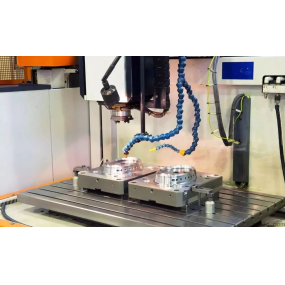
Precision multi-axis machining: 5-axis CNC mills allow for machining multiple sides of a part in a single setup, improving accuracy and reducing lead times.
Palletized automation: Automated, unattended manufacturing with pallet changers reduces setup time and increases efficiency.
Horizontal lathes: For turning, facing, boring, drilling, reaming, threading, grooving, and knurling of valve parts.
Live tooling: Enables milling, drilling, and tapping operations on CNC lathes without removing the workpiece from the machine.
For example, we recently utilized a horizontal CNC mill with pallet changing to process a wafer-style check valve component in a single operation—reducing machine time and lowering the part cost by 36%. In another project, we used tombstone vices to hold eight cast valve bodies at once, milling slots efficiently with order quantities exceeding 10,000 pieces.
Types of Valves Manufactured
Through CNC machining of castings, forgings, and bar stock, EMAR produces components for a wide variety of industrial valves, including:
Gate valves: Used for on/off service with unobstructed flow when fully open. Types include cast steel bolted bonnet, forged steel, stainless steel, cryogenic, and API-6D designs.
Globe valves: Designed for regulating or throttling fluid flow. Types include cast steel bolted bonnet, forged steel, Y-pattern, and cryogenic globe valves.
Swing check valves: Permit flow in one direction only to prevent backflow. Types include cast steel, forged steel, stainless steel, and marine swing check valves.
Other valves: Ball valves, butterfly valves, wafer valves, and diaphragm valves for applications in defense, food and beverage, fluid control, water/wastewater, and oil and gas.
From Design to Production
At EMAR, we collaborate with customers every step of the way, from the initial design phase through final production. The process typically involves:
Design: Valve components are designed using CAD software.
Programming: The design is translated into G-code, which dictates every movement of the cutting tools.
Machining: CNC lathes and mills perform turning, milling, drilling, and other operations with continuous sensor measurements to ensure parts are manufactured to specification.
Quality Control: Rigorous inspection using CMMs, profilometers, and other precision measuring tools ensures every component meets strict tolerances and surface finish requirements.
CNC machining enables rapid prototyping, design optimization, and smooth transition to production runs, reducing overall development time while maintaining precision and accuracy.
Quality and Experience
With over 40 years of experience in precision machining, EMAR continues to support aerospace, defense, oil and gas, and industrial customers with high-quality, custom-machined valve components. We are committed to continuous improvement, automation, and quality assurance to ensure that every valve body and component we produce meets the highest standards for performance and reliability.
Contact Us
Whether you need a custom valve body for a mission-critical aerospace application or high-volume production of industrial valve components, EMAR has the expertise and technology to deliver.
Contact us today to discuss your custom valve design and manufacturing requirements.
EMAR
Phone: +86 18664342076
Email: sales8@sjt-ic.com