Spanish
 Arabic
 French
 Portuguese
 Belarusian
 Japanese
 Russian
 Malay
Malay Icelandic
 Bulgarian
 Azerbaijani
 Estonian
 Irish
Irish Polish
 Persian
 Boolean
 Danish
 German
 Filipino
 Finnish
 Korean
 Dutch
Dutch Galician
 Catalan
 Czech
Czech Croatian
 Latin
Latin Latvian
 Romanian
 Maltese
 Macedonian
 Norwegian
 Swedish
 Serbian
 Slovak
 Slovenian
 Swahili
 Thai
Thai Turkish
 Welsh
Welsh Urdu
Urdu Ukrainian
 Greek
Greek Hungarian
 Italian
 Yiddish
 Indonesian
 Vietnamese
 Haitian Creole
 Spanish Basque

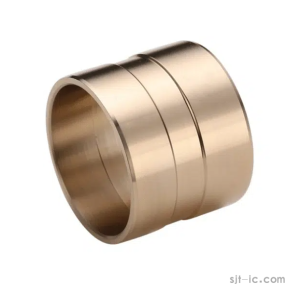
Copper bushings—also known as plain bearings or sleeve bearings—are essential components in industrial machinery, marine equipment, hydraulic systems, pumps, and heavy-duty rotating equipment. They reduce friction between moving parts, support rotating shafts, and ensure smooth, reliable operation. With CNC Machining, manufacturers can produce high-precision copper bushings that meet tight tolerances and demanding performance requirements.
At EMAR, we specialize in custom CNC machined copper bushings, from simple cylindrical sleeves to complex flanged designs. Our team leverages extensive experience in machining bronze, brass, and other copper alloys to deliver precision parts on your schedule. For any questions about machining copper components, call us at +86 18664342076 or email sales8@sjt-ic.com.
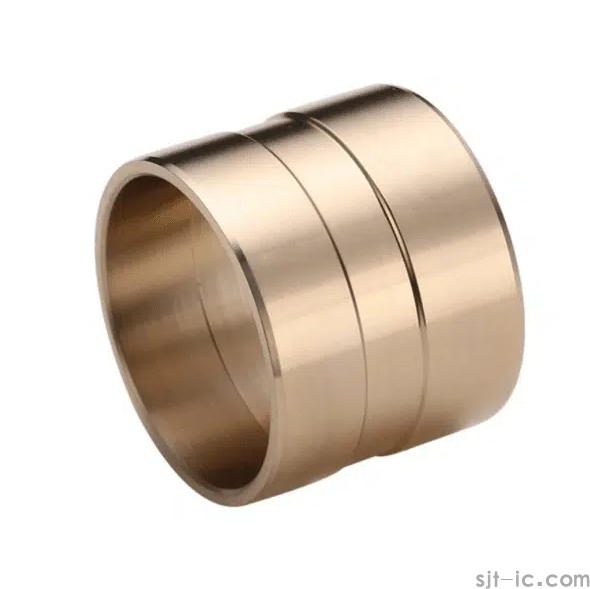
What Is a Copper Bushing?
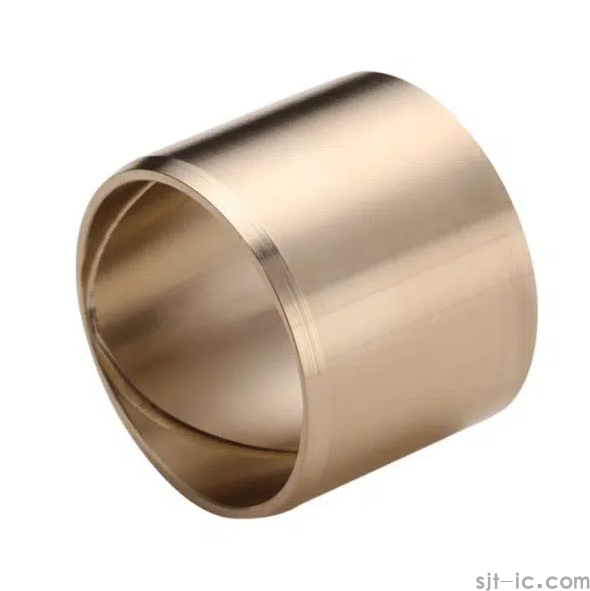
Copper bushings (also called copper alloy bearing sleeves) are cylindrical components with no moving parts. They rely on a sliding action and are often self‑lubricating or externally lubricated. Copper bushings are used in rotating, sliding, reciprocating, or oscillating motions. Standard configurations include:
Cylindrical bushings (plain sleeve)
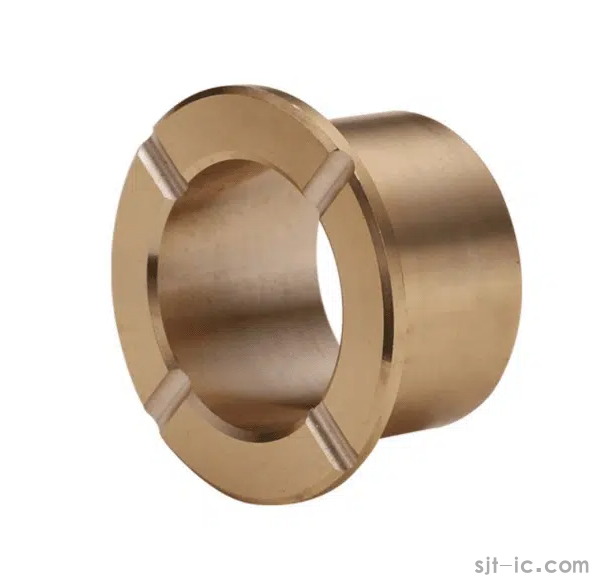
Flanged bushings (integrated flange for axial load support)
Thrust washers and flanged thrust washers
Sliding plates
Split bushings for easy installation
Custom designs can include features such as holes, grooves, notches, tabs, and specific oil‑groove patterns.
Copper Alloys for CNC Machining Bushings
Choosing the right copper alloy is the first step in producing a high‑performance bushing. Different alloys offer varying strength, machinability, corrosion resistance, and wear properties.
Pure Copper (C110, C101, C102)
Pure copper provides the highest electrical and thermal conductivity. It has good corrosion resistance but low mechanical strength. Machining pure copper is challenging due to its softness, burr formation, and stringy chips. It is used for electrical connectors, bus bars, and heat exchangers rather than heavy‑load bushings.
Brass (C260, C360, C464)
Brass offers excellent machinability (especially C360 free‑cutting brass), moderate strength, and good corrosion resistance. It is ideal for valve components, gears, fittings, and fasteners. However, its electrical conductivity is lower than pure copper.
Bronze (C932, C954, C863)
Bronze is the most common material for industrial bushings. It provides high strength, excellent wear resistance, and good corrosion resistance. Key bronze alloys include:
C93200 (SAE 660 bronze): Widely used bearing bronze with good machinability and wear resistance.
C95400 aluminum bronze: High strength and excellent corrosion resistance, especially in marine environments.
C86300 manganese bronze: Superior strength and impact resistance for heavy‑load machinery.
Tin bronze alloys: Good sliding performance for pumps, valves, and hydraulic equipment.
Bronze is harder to machine than brass, requiring sharp tools and controlled speeds.
Tellurium Copper (C14500)
Tellurium copper combines high electrical conductivity with improved machinability over pure copper. It is used in electrical contacts, switchgear, and welding applications.
Beryllium Copper (C17200, C17500)
Beryllium copper offers very high strength, fatigue resistance, and good corrosion resistance. It is used in aerospace connectors, non‑sparking tools, and springs. Machining requires proper ventilation due to potentially harmful dust.
C95200 Aluminum Bronze
C95200 (ASTM designation) is a high‑strength aluminum bronze containing 8.5–11.5% aluminum and 2.5–4.5% iron. It provides exceptional corrosion resistance in seawater and chemical environments, high wear resistance, and good machinability. It is ideal for marine bushings, pump components, and heavy machinery.
Material Comparison Table
| Material | Strength | Electrical Conductivity (% IACS) | Machinability | Corrosion Resistance | Typical Bushing Application |
|---|---|---|---|---|---|
| Pure Copper | Low | Very high | Poor | High | Electrical/thermal (not heavy load) |
| Brass | Moderate | Medium | Excellent | Moderate | Fittings, valves |
| Bronze | High | Medium | Moderate | High | Bearings, pumps, marine |
| Tellurium Copper | Moderate | High | Very good | High | Electrical components |
| Beryllium Copper | Very high | Medium | Moderate | High | Aerospace, springs |
Tips for Machining Bronze Bushings
Machining bronze and copper alloys requires careful attention to tooling, speeds, feeds, and cooling.
Know the Bronze Type
Bearing bronze (with 6‑8% lead) is often the best choice for bushings because it is durable in high‑friction or high‑wear applications. Other types include silicon bronze, phosphor bronze, aluminum bronze, manganese bronze, and copper‑nickel bronze.
Use Quality Cutting Tools
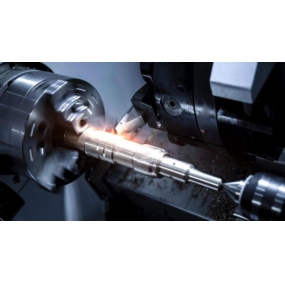
Using top‑quality cutting tools at the right speed and feed is essential to achieve precision measurements. Carbide or diamond‑coated tools help resist wear and maintain sharp edges. Proper coolant application minimizes heat buildup and prevents material from sticking to the tool.
Address Machining Challenges
Soft materials (pure copper): Burr formation and dimensional issues; use sharp tools and finishing passes.
Ductile materials: Long, stringy chips can jam tools; employ chip breakers.
Hard bronzes: Tool wear is a concern; use coated tools and controlled speeds.
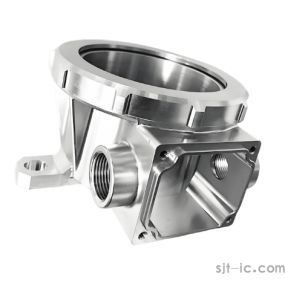
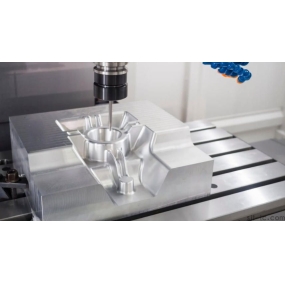
For complex geometries like flanged bushings or oil‑groove designs, CNC turning and milling with precise programming ensure tight tolerances (typically ±0.01 mm to ±0.02 mm for precision components).
CNC Machining Process Flow for Copper Bushings
The manufacturing process of a copper bushing involves several stages:
Material Selection – Choose the appropriate copper alloy based on load, speed, environment, and lubrication conditions.
Mold Preparation (for cast bushings) – A mold is created with a cavity in the desired shape. Many high‑performance bushings are produced by centrifugal casting, which distributes molten metal evenly along the mold wall, producing dense, defect‑free castings with reduced porosity and improved mechanical properties.
Melting and Casting – The copper alloy is melted in a furnace and poured into the mold. Centrifugal casting is especially suitable for cylindrical parts like bushings.
Cooling and Solidification – The casting cools and solidifies into a rough blank.
Rough Machining – Excess material is removed using CNC lathes and mills to achieve approximate dimensions.
Precision Machining – The part is finished to tight tolerances and smooth surfaces (surface finishes can reach Ra 0.2‑0.4 µm). Operations include turning, milling, drilling, threading, and tapping.
Heat Treatment (if required) – Annealing or tempering improves hardness and strength.
Surface Finishing – Polishing, grinding, or coating enhances appearance, corrosion resistance, and friction properties.
Quality Inspection – Dimensional checks, surface finish verification, and mechanical property tests ensure compliance with specifications.
Assembly or Packaging – Finished bushings are assembled into products or packaged for shipment.
Recycled copper material from machining chips is often melted for re‑use.
Types of Copper Bushings
Based on design and lubrication method, copper bushings can be classified as:
Plain cylindrical bushings – Most common, installed in housings to provide a smooth sliding surface for rotating shafts.
Flanged bushings – Include an integrated flange for axial load absorption; used in pumps, motors, and gear systems.
Thrust bushings and washers – Support axial loads and prevent excessive friction in rotating machinery.
Split bushings – Easier to install and remove, ideal for large industrial equipment.
Self‑lubricating bushings – Contain solid graphite or other lubricants embedded in the copper alloy, reducing the need for external lubrication. Common grades include JDB‑1U, JDB‑1US1, etc.
Oil‑groove bushings – Feature axial or helical grooves (e.g., 30‑45° angles) to distribute lubricant evenly.
Applications of Copper Bushings
Copper bushings are used across many industries due to their wear resistance, corrosion resistance, and load‑bearing capacity.
Marine equipment and ship propulsion systems – Propeller hubs, stern tube bearings, rudder bushings (especially C95200 aluminum bronze for seawater resistance).
Hydraulic cylinders and pump systems – Valve guides, pump bodies, cylinder bushings.
Industrial gearboxes and heavy machinery – Pivot bushings for excavators, loaders, wear plates.
Construction and mining equipment – High‑load, low‑speed applications.
Automotive and transportation systems – Steering systems, transmission components.
Aerospace – Landing gear components, actuators, structural bushings.
Chemical and petrochemical – Valve stems, pump parts exposed to corrosive fluids.
Electrical equipment – Where conductivity and sliding are both required.
Signs of Bushing Failure and How to Fix Them
Understanding failure modes helps in selecting the right bushing and maintenance schedule.
Peeling
Small areas of peeling or flaking caused by hairline cracks, often due to insufficient lubrication or foreign matter infiltration. Remedy: Re‑evaluate lubrication type and methods; enhance sealing to prevent contamination.
Flaking
Caused by improper handling, heavy loads, rust, contamination, or low lubrication. Also due to reduced hardness, improper mounting, or inadequate shaft precision. Remedy: Verify the correct bushing type, re‑evaluate application conditions, design, clearance, and lubrication methods.
Scuffing & Smearing
Rough surface with deposits; often from inadequate lubrication, entrapped foreign particles, or excessive axial loading. Remedy: Re‑evaluate lubricant, lubrication methods, and preload.
Spalling
Result of poor mounting or removal practices, excessive radial load, poor lubrication, or slippage. Remedy: Correct preload, improve operating conditions, and address mounting/removal methods.
Copper Bushings vs. Rolling Bearings
| Feature | Bushings (Sleeve Bearings) | Rolling Bearings |
|---|---|---|
| Design | Purposefully designed | Readily available |
| Cost | Generally cost‑effective | Larger bearings lower overall cost; small bearings higher relative cost |
| Life span | Not statistically predictable; can be unlimited | Finite, statistically predictable |
| Versatility | High (materials, configurations) | Limited to standard sizes and materials |
| Maintenance | May require periodic maintenance; more abuse tolerant | Minimal maintenance; very sensitive to abuse |
| Friction | Higher friction (but can approach zero under favorable conditions) | Low friction |
| Installation | Little help required | Requires expert installation |
Why Choose EMAR for Custom Copper Bushings?
At EMAR, we specialize in custom copper and bronze bushings produced by centrifugal casting and precision CNC machining. Our components are widely used in marine infrastructure, hydraulic equipment, heavy machinery, and industrial automation worldwide.
We offer:
Custom dimensions (ID, OD, length) and tight tolerances
Specific features (flanges, oil grooves, graphite plugs, keyways)
Wide range of copper alloys: C93200, C95400, C86300, C95200, C17200, and more
Material certification to ASTM, EN, DIN, or JIS standards
Engineering support to help you select the right alloy and manufacturing process
Whether you need a standard plain bushing or a custom‑designed flanged sleeve, EMAR delivers precision and durability.
Contact us today:
Phone: +86 18664342076
Email: sales8@sjt-ic.com
Let our engineering team review your design and recommend the most suitable copper alloy and machining process for your application.