Spanish
 Arabic
 French
 Portuguese
 Belarusian
 Japanese
 Russian
 Malay
Malay Icelandic
 Bulgarian
 Azerbaijani
 Estonian
 Irish
Irish Polish
 Persian
 Boolean
 Danish
 German
 Filipino
 Finnish
 Korean
 Dutch
Dutch Galician
 Catalan
 Czech
Czech Croatian
 Latin
Latin Latvian
 Romanian
 Maltese
 Macedonian
 Norwegian
 Swedish
 Serbian
 Slovak
 Slovenian
 Swahili
 Thai
Thai Turkish
 Welsh
Welsh Urdu
Urdu Ukrainian
 Greek
Greek Hungarian
 Italian
 Yiddish
 Indonesian
 Vietnamese
 Haitian Creole
 Spanish Basque

CNC Machining Automotive Parts: The Ultimate Guide to Precision, Efficiency, and Innovation
The automotive industry lives on the edge of a micron. A deviation of a fraction of a millimeter in a cylinder head or an EV battery housing can ripple into noise, vibration, thermal runaway, or catastrophic failure. For procurement engineers, design teams, and supply chain managers, “good enough” is never good enough. That is why CNC machining automotive parts has become the backbone of modern vehicle manufacturing—from internal combustion engines to the latest electric vehicle platforms. This guide compresses decades of machining expertise into one definitive resource, covering materials, applications, tolerances, costs, and how to select a manufacturing partner that can deliver repeatable precision at scale.
What Is CNC Machining and How Does It Serve Automotive Manufacturing?
Computer Numerical Control (CNC) machining is a subtractive manufacturing process in which pre-programmed computer software dictates the movement of cutting tools to shape a solid workpiece. Unlike additive methods, CNC removes material—milling, turning, drilling, grinding, and routing—until the exact geometry is achieved. In practice, the rigid boundary between milling and lathe work has blurred: today’s multi-axis machining centers can perform complex surfacing, boring, and contouring in a single setup.
In automotive production, this deterministic control translates directly into safety and performance. Every batch of brake calipers, transmission gears, or motor housings must exhibit inter- and intra-batch interchangeability. CNC machining meets that demand by keeping tolerances consistent from first article to millionth part. The same CNC program used for a functional prototype can be scaled to full production without altering the base process, dramatically reducing time-to-market and validation risk.
Key Advantages of CNC Machining for Automotive Parts
Unmatched Precision and Tight Tolerances
Automotive CNC machining routinely holds tolerances of ±0.01 mm, with critical surfaces on cylinder heads, camshafts, and EV cooling plates pushed down to ±0.005 mm. This precision ensures proper sealing, rotating assembly clearance, and thermal interface flatness—factors that directly influence horsepower, emissions, battery safety, and durability.
High Repeatability at Any Volume
Whether you need 50 or 500,000 units, computer-controlled machining guarantees that the first part and the last part are identical. Repeatability eliminates scrap, rework, and field failure traced to dimensional drift. For automotive assembly lines that rely on just-in-time part interchangeability, this consistency is non-negotiable.
Speed and Automation
Modern CNC cells run lights-out, with robotic arms loading raw stock and unloading finished components. Automated tool changers, in-machine probing, and multi-axis simultaneous cutting slash cycle times. While complex 5-axis parts inherently take longer than simple prismatic parts, the overall throughput easily outpaces manual or conventional methods, especially in medium- to high-volume production.
Material Versatility
One CNC machine can process aluminum alloys, stainless steel, titanium, engineering plastics like PEEK and Ultem, and even composites. This allows a single supplier to deliver structural brackets, high-temperature sensor housings, and high-strength drivetrain components under one quality system—streamlining vendor management for automotive OEMs and Tier 1 suppliers.
Complex Geometries Made Manufacturable
Deep internal channels, splines, undercuts, and organic surfacing that are impossible with 3-axis milling become routine on 5-axis and mill-turn centers. Automotive parts such as turbocharger housings, hypoid gears, and intake manifolds benefit from multi-axis strategies that maintain wall thickness and surface finish without requiring multiple setups.
Seamless Prototyping to Production
Because CNC uses the same digital toolpath logic from prototype to mass production, engineers can test fully functional metal or plastic prototypes within days. Once validated, scaling up only involves optimizing fixturing and tool life—there is no process translation gap as experienced when moving from 3D printing to die casting.
Cost-Effectiveness Over the Product Lifecycle
Although industrial CNC machines require significant capital investment, they eliminate dedicated jigs, fixtures, and hard tooling for each part revision. Material waste is minimized by near-net-shape programming, and automation reduces direct labor. For complex, safety-critical components, the long-term cost of CNC is often lower than casting plus extensive secondary finishing.
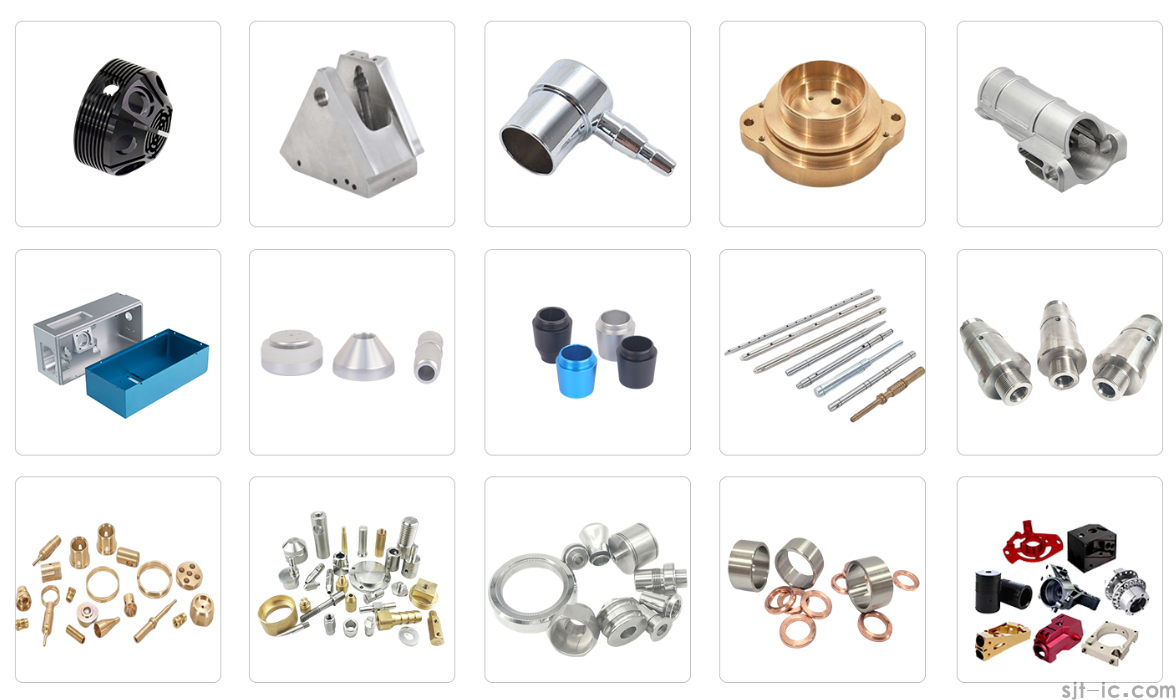
Applications of CNC Machining Across the Vehicle
The reach of automotive CNC machining extends to virtually every subsystem of a vehicle. Below are the key production and prototyping areas where CNC delivers irreplaceable value.
Powertrain and Engine Components
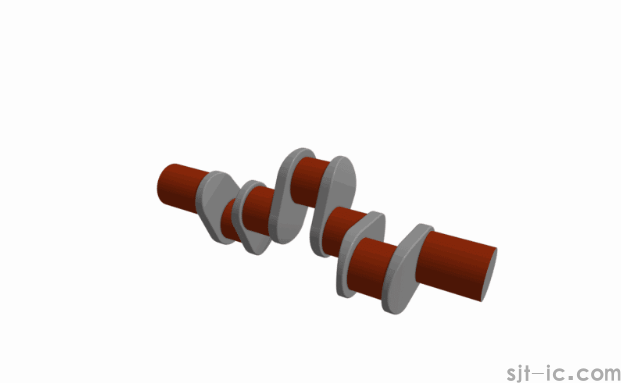
Cylinder heads, engine blocks, crankshafts, camshafts, pistons, valves, connecting rods, timing gears, and turbocharger housings all rely on CNC for finishing or full machining from solid. Castings and forgings produce near-net shapes, but hybrid CNC processes ensure journal roundness, bore concentricity, and sealing face flatness to within microns. Starter motors and alternator housings also benefit from CNC precision.
Transmission and Drivetrain Parts
Gears, gearboxes, shafts, differential housings, clutch components, and constant velocity joints require precise tooth profiles and low surface roughness to reduce friction and noise. Multi-axis CNC hobbing, broaching, and grinding produce the splines and internal bores that make smooth shifting and power transfer possible. Drive axle hypoid and bevel gears are classic CNC-dependent parts.
Suspension and Steering Components
Control arms, tie rods, ball joints, steering knuckles, and wheel hubs must maintain exact geometric alignment under extreme loads. CNC machining ensures these safety-critical components meet strength and dimensional specifications batch after batch, delivering the predictable handling that drivers expect.
Brake System Parts
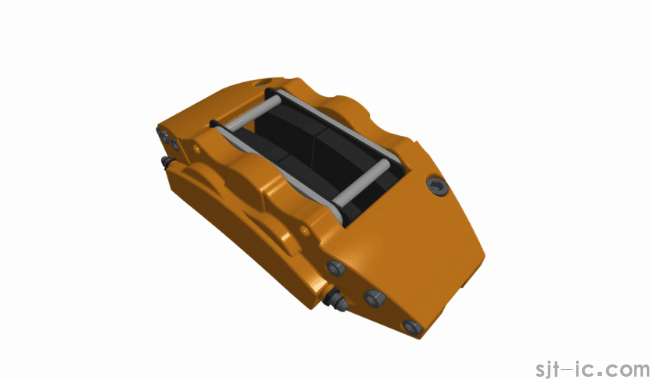
Brake calipers, rotors, master cylinders, and brackets are machined to precise bore diameters and flatness to guarantee consistent braking torque and heat dissipation. Lightweight aluminum alloys such as 6061-T6 are frequently used here, with CNC providing the structural integrity and corrosion resistance required.
Electric Vehicle (EV) Components
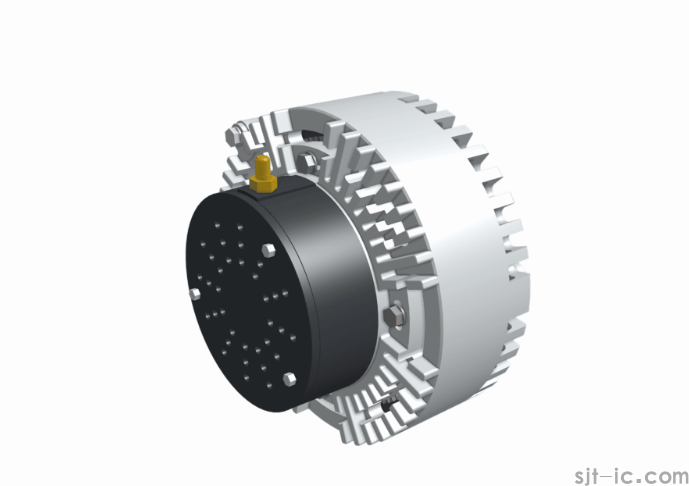
The shift to electrification has expanded CNC’s footprint. Battery housings require large-area flatness to properly seat thermal interface materials; cooling plates need intricate internal channels for optimal heat transfer; motor housings demand strict bore concentricity for rotor clearance. High-strength aluminum (7075) and titanium (Ti-6Al-4V) appear in performance EV drivetrains, where CNC delivers the required precision without adding weight.
Interior, Exterior, and Trim Components
Dashboard panels with cutouts for speedometers, gas gauges, and indicator lights are milled from solid plastic blocks, ensuring perfect alignment and a premium fit. Door handles, grilles, emblems, decorative accents, and acrylic lighting prototypes all leverage CNC for rapid turnaround and intricate detailing. Custom textures, logos, or serial numbers can be engraved directly during the machining cycle.
Electrical and Electronic Housings
Sensor housings, connectors, control module enclosures, and instrument cluster components require dimensional stability and thermal resistance. Engineering plastics like PEEK and Ultem are CNC-machined to protect sensitive electronics under the hood and inside the cabin.
Exhaust, Chassis, and Body Components
Exhaust manifolds, headers, catalytic converters, and mufflers benefit from CNC-optimized port matching and flange flatness. Structural brackets, frame members, mounting points, and body panels are machined for accurate fit-up, contributing to overall vehicle rigidity and crashworthiness.
Custom Parts and Vintage Restoration
When a component is obsolete or a one-off upgrade is needed—such as a bespoke gear shift, a racing engine block, or a restoration part for a classic car—CNC machining combined with reverse engineering can reproduce the exact geometry. Short lead times and no minimum order quantity make it the go-to solution for limited runs and custom modifications.
Materials Used in Automotive CNC Machining
A material’s machinability directly impacts cost and lead time. Automotive engineers typically select from the following:
6061-T6 Aluminum: Excellent strength-to-weight ratio, corrosion resistance, and machinability. Used for brackets, housings, and interior panels.
7075 Aluminum: Higher strength than 6061, comparable to mild steel, but requires sharp tooling and careful chip evacuation. Common in EV motor and structural components.
Titanium (Ti-6Al-4V): Exceptionally strong and corrosion-resistant, but demands low-feed, high-speed machining techniques. Found in high-performance drivetrain parts and race applications.
Stainless Steel: Good corrosion resistance and moderate machinability, ideal for shafts, gears, and fasteners.
Carbon and Alloy Steels: Used for crankshafts, connecting rods, and brake components, typically machined from forgings.
Engineering Plastics (PEEK, Ultem, Acrylic): Thermally resistant and electrically insulating, they serve sensor housings, lighting prototypes, and interior features.
Composites (Carbon-Fiber-Reinforced Polymers): Lightweight structural components in EVs and performance cars, machined with specialized dust extraction and diamond-coated tooling.
CNC Machining vs. 3D Printing for Automotive Parts
Additive manufacturing has become a powerful complement to subtractive methods, but the two processes serve different primary purposes. CNC machining removes material to achieve maximum strength and surface finish from billet or near-net shapes; 3D printing builds parts layer by layer, excelling at ultra-lightweight lattice structures and highly customized, low-volume geometries.
For interior panels and non-structural brackets, both methods can produce usable parts. However, for safety-critical components such as brake brackets, steering knuckles, and engine internals, the isotropic properties and dimensional stability of CNC-machined metal are often mandatory. An increasing trend is the hybridization of both technologies: 3D-printed near-net preforms finished by CNC machining to achieve tight tolerances and smooth surfaces, capturing the benefits of each.
From Prototype to Mass Production: Scalability and DFM
One of CNC’s strongest operational advantages is scalability. The same CAD file, CAM toolpath logic, and machining strategy used for a single functional prototype can be replicated across a fleet of machines for full-rate production. There is no process change, no new tooling qualification, and no geometrical uncertainty.
To keep costs controllable, Design for Manufacturability (DFM) is essential. Key DFM guidelines include:
Specify tight tolerances only on functional surfaces. Over-dimensioning non-critical features dramatically increases machining time.
Design with standard tool diameters and internal corner radii in mind to avoid non-standard or high-chatter tooling.
Minimize deep pockets, blind cavities, and extreme aspect ratios that require long-reach tools.
Standardize thread sizes and hole diameters to reduce tool changes.
Obtaining DFM feedback from your machining partner early in the design phase catches impractical features before they become costly first-article failures.
How to Select the Right CNC Machining Partner
Choosing a CNC supplier is about much more than unit price. Look for:
Certifications and Quality Assurance: ISO 9001, and where applicable, IATF 16949 or AS9100D. In-machine probing, CMM inspection reports, and first-article inspection protocols ensure part conformance.
Tolerance Capability: Confirm the supplier’s standard tolerance band (e.g., ±0.01 mm) and their ability to hold tighter tolerances when required, supported by documented capability studies.
Multi-Axis and Material Expertise: A machine park that includes 3-axis, 5-axis, and mill-turn centers, plus experience with your specified alloys and plastics.
Communication and DFM Support: Direct engineer-to-machinist communication before production reduces risk and accelerates launch.
Scalability and Secondary Services: A single source that can handle one-off prototypes, medium batches, and large-scale production, along with finishing, assembly, and ultrasonic cleaning, simplifies your supply chain.
EMAR: Your Precision CNC Machining Partner for Automotive Parts
EMAR embodies these selection criteria, offering a comprehensive CNC machining service tailored to the demanding automotive sector. With advanced 3-axis, 4-axis, and 5-axis machining centers and a broad material inventory—including 6061-T6 and 7075 aluminum, stainless steel, titanium, and high-performance plastics—EMAR can take your design from concept to delivered parts with exceptional speed.
What sets EMAR apart is a commitment to upfront engineering support. Our technical team provides free DFM evaluations against your CAD drawings, suggesting improvements that optimize cost and machinability before the first chip is cut. With standard tolerances of ±0.01 mm and the ability to hold finer tolerances where function demands, we ensure that every automotive component meets rigorous specification.
Quality control is woven into our entire workflow. In-process inspections, first-article reporting, and full dimensional inspection reports are available on request. We serve prototype quantities (1 unit) to high-volume production runs and offer secondary operations such as anodizing, assembly, and ultrasonic cleaning, all under one roof. Our intent is simple: give you confidence in every part, eliminate production delays, and build a long-term partnership based on reliability.
Contact our engineering team today to discuss your project or receive an instant quote:
Phone: +86 18664342076
Email: sales8@sjt-ic.com
Future Trends in Automotive CNC Machining
Automotive manufacturing is being reshaped by electrification, autonomy, and sustainability. CNC machining is evolving in step. Increased automation—integrating robotics, AI-driven toolpath optimization, and IoT-connected machine monitoring—enables fully autonomous “lights-out” production with real-time tool wear detection and predictive maintenance. The fusion of 3D printing and CNC hybrid cells will produce near-net preforms and finish them in one clamping. Sustainable machining strategies, including minimum quantity lubrication, near-net shape programming, and swarf recycling, are reducing the environmental footprint. These trends will further cement CNC machining as the precision backbone of next-generation vehicle architectures.
Conclusion
CNC machining automotive parts is more than a manufacturing process—it is the foundation of vehicle safety, performance, and innovation. It delivers the microns of precision that keep engines running smoothly, brakes stopping reliably, and EV batteries operating within thermal limits, all while ensuring unbroken repeatability across global supply chains. By leveraging the right materials, advanced multi-axis strategies, and early DFM collaboration, automotive companies can cut lead times, control costs, and eliminate quality escapes. When you partner with an experienced manufacturer like EMAR, you gain more than parts—you gain a precision-driven extension of your engineering team. Reach out today to turn your automotive component designs into production reality.