Spanish
 Arabic
 French
 Portuguese
 Belarusian
 Japanese
 Russian
 Malay
Malay Icelandic
 Bulgarian
 Azerbaijani
 Estonian
 Irish
Irish Polish
 Persian
 Boolean
 Danish
 German
 Filipino
 Finnish
 Korean
 Dutch
Dutch Galician
 Catalan
 Czech
Czech Croatian
 Latin
Latin Latvian
 Romanian
 Maltese
 Macedonian
 Norwegian
 Swedish
 Serbian
 Slovak
 Slovenian
 Swahili
 Thai
Thai Turkish
 Welsh
Welsh Urdu
Urdu Ukrainian
 Greek
Greek Hungarian
 Italian
 Yiddish
 Indonesian
 Vietnamese
 Haitian Creole
 Spanish Basque

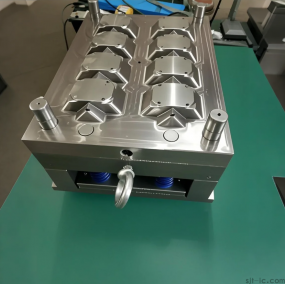
The automotive industry stands at a pivotal technological crossroads as electrification pushes production demands beyond conventional manufacturing limits. Modern vehicles require thousands of precisely molded components spanning everything from complex battery enclosures to the subtle contour lines of door panels and grilles. As this complexity intensifies, the tooling that shapes these components has never been more critical. For manufacturers navigating these heightened expectations, CNC Machining for automotive molds has become indispensable, transforming how the world's most critical production tools are designed, manufactured, and optimized.
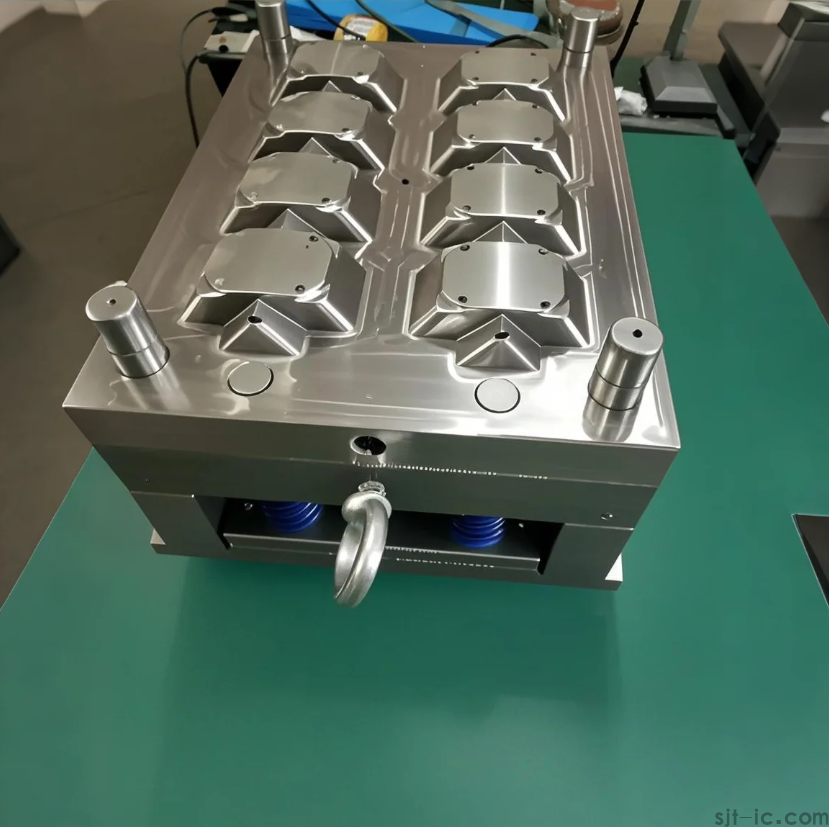
The automotive mold market is experiencing significant expansion in response to these demands. Recent analysis indicates that the automotive mold market grew from USD 46.64 billion in 2025 to USD 49.44 billion in 2026, with projections showing continued growth at a CAGR of 6.70% to reach USD 73.46 billion by 2032. This growth is further supported by the broader dies and molds market, valued at USD 37.6 billion in 2025 and projected to reach USD 57.3 billion by 2035 at a CAGR of 4.79%. Much of this expansion is fueled by the rapid electrification of the automotive sector, with electric vehicle-related mold demand surging by 33% as manufacturers race to develop lightweight, efficient platforms. In fact, over 48% of automotive components now rely on high-performance tooling for metal stamping or plastic injection molding, underscoring just how essential precision mold-making is to the entire industry.
The Critical Role of CNC Machining in Automotive Mold Manufacturing
At the core of modern tool-making lies precision. Automotive mold manufacturing demands exceptional accuracy, durability, and efficiency to meet the rigorous standards of the industry. The production of intricate cavity geometries, intricate cooling channel designs, and mirror-like surface finishes all rely on advanced CNC machining services. Unlike traditional manual processes or lower-precision methods, CNC machining offers an incomparable combination of speed, repeatability, and tolerance control.
One of the primary advantages of utilizing CNC for automotive molds is the ability to achieve micron-level precision in a single setup. Modern high-precision CNC machining centers routinely achieve positional accuracy of ±0.002mm, with surface roughness controlled to Ra ≤ 0.4μm. Many CNC machining service providers globally now configure their machining operations around achieving these tight tolerance ranges, utilizing advanced equipment such as high-speed spindle systems and proprietary thermal-stability designs. This precision is paramount for automotive applications: a poorly machined mold directly translates into defective plastic or metal parts, leading to assembly issues, quality rejects, and costly production downtime.
Five-Axis Machining: Unlocking Complex Automotive Mold Geometries
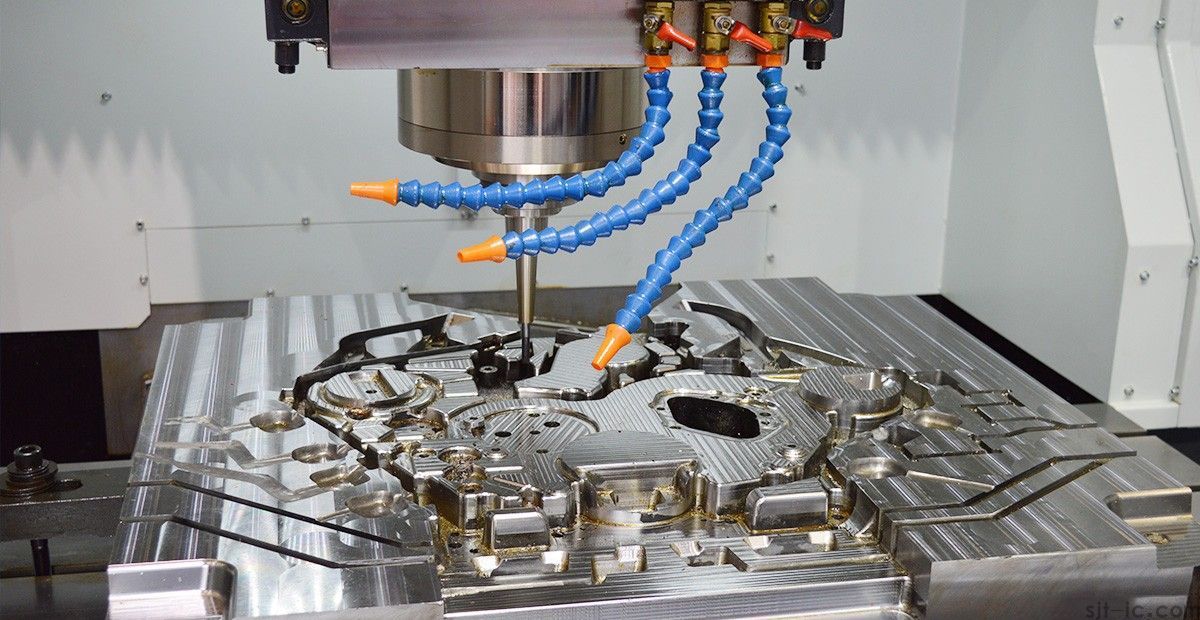
While three-axis CNC systems have long been the industry workhorse, the intricate surfaces found in modern dashboards, headlamp lenses, and steering wheel components demand the advanced capabilities of five-axis machining. By adding two rotary axes to the traditional three linear axes, five-axis machining enables cutting tools to approach the workpiece from almost any angle—crucial for achieving complex undercuts, deep cavities, and smooth flow surfaces in a single setup. This sophisticated approach reduces the need for multiple fixtures and manual intervention, cutting lead times significantly while improving dimensional consistency. Many forward-looking mold shops have accelerated their adoption of these systems, recognizing that five-axis linkage has become a decisive factor in securing complex automotive mold projects.
Five-axis CNC also plays a vital role in high-speed and high-efficiency operations. These systems are especially suitable for complex surface applications in automotive lighting and grille components, where surface finish and geometric accuracy are non-negotiable. With dynamic toolpath optimization made possible by advanced CAM software, five-axis machining can reduce empty tool travel and boost overall efficiency by over 20% while maintaining tolerance control within ±0.005mm. Whether it's a large bumper mold or a precision connector cavity, five-axis CNC technology delivers the combination of speed and sophistication that modern automotive manufacturing demands.
Material Selection and Tooling Strategies for Durable Automotive Molds
The choice of mold material directly impacts tool life, thermal stability, and resistance to wear and corrosion. For automotive applications operating under high heat and repeated mechanical cycling, selecting the appropriate steel grade is not a one-size-fits-all decision.
Pre-hardened steels such as P20 or 718H, which offer a desirable balance of hardness (30–36 HRC) and ease of machining, are widely utilized for moderate-volume plastic injection mold applications. They maintain dimensional stability during repeated heating and cooling cycles, minimizing the risk of warping or premature cracking over time. For high-volume production scenarios where extended mold life is paramount, hot-work tool steels become the material of choice. H13 tool steel, with its capacity to withstand continuous operating temperatures up to 650°C and hardness in the range of 42–48 HRC, is specifically engineered for high-temperature die casting and injection mold applications found throughout the automotive supply chain. Leading manufacturing facilities increasingly specify H13 cores for engine bracket molding and other structural applications, where this material has been documented to extend mold life by up to 30% over one million cycles. Additionally, stainless options such as S136 find their niche in high-gloss interior trim components requiring mirror-quality finishes and strong corrosion resistance.
Equally important to material selection is the tooling strategy employed throughout the production cycle. In high-speed machining (HSM) operations, carbide cutting tools operating at speeds exceeding 20,000 RPM can achieve mirror-quality surface finishes that significantly reduce or eliminate the need for time-consuming manual polishing. Manufacturing teams that deploy multi-stage roughing, semi-finishing, and finishing procedures achieve not only higher throughput but also reduced residual stress within the mold structure. Comprehensive material selection and precision tool deployment ultimately lower the total cost of mold ownership by extending service intervals and reducing per-unit production costs across the mold's usable lifespan.
Advanced Process Integration: Precision, Sustainability, and Efficiency
Beyond the cut of the tool, achieving world-class CNC machining for automotive molds requires a holistic view of process integration. Many advanced facilities now deploy a combination of CNC milling alongside complementary technologies such as electrical discharge machining (EDM) and wire cutting to manage the most demanding features. EDM remains essential for processing high-hardness materials and creating ultra-fine textures—such as synthetic leather grains for interior trim—that CNC tools alone cannot replicate. This integrated approach ensures that every nuance of the mold design is faithfully reproduced in the final tooling.
Cooling efficiency is another crucial factor in mold performance. Conformal cooling channels—precise internal waterways that follow the exact contour of the mold cavity—can be fabricated using advanced CNC drilling and EDM techniques. These optimized channels improve heat dissipation and have been shown to reduce injection molding cycle times by up to 30%, lowering per-unit production costs and improving overall throughput. Additionally, the broader manufacturing ecosystem is shifting toward greener operations. Next-generation CNC equipment is designed to reduce energy consumption by 25% and cutting fluid usage by 40%, while digital twin technology now reduces trial cutting costs by up to 60%. These advancements collectively shorten the time from mold design to market-ready components, giving automotive manufacturers a crucial competitive advantage.
Industry-Specific Tolerances and Quality Assurance
Precision in mold-making is not merely about achieving small numbers under ideal conditions—it is about maintaining those tolerances consistently across complex geometries and production environments. Industry certifications such as IATF 16949 establish baseline performance expectations for automotive manufacturing equipment, specifying positional tolerances of ±0.025mm for components such as transmission housings. In many high-performance mold facilities, however, on-machine tolerances are held substantially tighter than industry-minimum specifications.
Quality assurance extends well beyond the initial machining phase. Comprehensive quality control systems integrate advanced coordinate measuring machines (CMM) that verify all critical mold dimensions against the original CAD model with repeatability measured in single-digit micron increments. In-process inspection methodologies catch deviations early in the manufacturing cycle, while IoT-enabled real-time monitoring tracks injection pressure, temperature, and cooling rates during mold trials to dynamically optimize process parameters and predict the formation of defects such as weld lines or warpage. Organizations that invest in rigorous post-process verification and digital data collection not only meet automotive supplier mandates but also fundamentally reduce the risk of costly mold rework and delayed production start-ups.
Modern Industry Trends Shaping the Future of Automotive Tooling
The landscape of automotive mold manufacturing continues to evolve at an accelerated pace. The most impactful trend shaping today's industry is the widespread adoption of intelligent, interconnected factories. Forecasts project that more than 45% of CNC equipment globally will be IIoT-connected in 2026, with the integration of 5G connectivity and CNC control systems yielding an average 22% increase in overall equipment effectiveness. Edge computing modules embedded directly into CNC controllers reduce data processing latency to under 10 milliseconds, enabling real-time tool wear monitoring, adaptive feed rate adjustments, and proactive anomaly detection across entire production fleets.
Hybrid manufacturing approaches are also gaining ground. The integration of metal 3D printing with subtractive CNC finishing allows tooling suppliers to fabricate complex mold inserts with internal conformal cooling channels that would be impossible to produce by machining alone. This hybrid methodology shortens mold proofing cycles dramatically and unlocks new possibilities for lightweighting and thermal management in automotive applications. Tools and production lines are no longer simply pieces of equipment—they are data-generating assets that inform and improve the entire manufacturing workflow.
Understanding that customer requirements vary widely, EMAR has established itself as a strategic partner for manufacturers navigating this complex landscape. With deep expertise in precision manufacturing and access to advanced CNC, EDM, and grinding equipment, EMAR works with clients to select optimal material grades, design conformal cooling strategies, and implement rigorous inspection protocols that meet IATF 16949 and ISO standards. Throughout the lifecycle of each project, the EMAR technical team remains focused on delivering repeatable, high-quality mold solutions that reduce cycle times and extend tooling longevity.
Conclusion
The production of automotive molds requires far more than just subtractive cutting. It demands a harmonious blend of advanced CNC machining technologies, deep materials science, process integration, and data-driven quality assurance. As the global automotive industry accelerates its transition toward more complex, higher-performance vehicles, the demands placed on mold tooling will only intensify.
From five-axis complex surface milling to the strategic selection of H13, P20, and stainless tool steels, the journey from raw steel billet to production-ready tooling is complex yet increasingly streamlined through advanced automation and intelligent manufacturing systems. For manufacturers aiming to reduce lead times, improve part quality, and future-proof their supply chain, partnering with a knowledgeable and precision-focused supplier is essential.
Contact EMAR today to discuss your automotive mold requirements. Our engineering team is ready to assist with material selection, process planning, and high-precision CNC machining tailored to your exact specifications.
Phone: +86 18664342076
Email: sales8@sjt-ic.com