Spanish
 Arabic
 French
 Portuguese
 Belarusian
 Japanese
 Russian
 Malay
Malay Icelandic
 Bulgarian
 Azerbaijani
 Estonian
 Irish
Irish Polish
 Persian
 Boolean
 Danish
 German
 Filipino
 Finnish
 Korean
 Dutch
Dutch Galician
 Catalan
 Czech
Czech Croatian
 Latin
Latin Latvian
 Romanian
 Maltese
 Macedonian
 Norwegian
 Swedish
 Serbian
 Slovak
 Slovenian
 Swahili
 Thai
Thai Turkish
 Welsh
Welsh Urdu
Urdu Ukrainian
 Greek
Greek Hungarian
 Italian
 Yiddish
 Indonesian
 Vietnamese
 Haitian Creole
 Spanish Basque

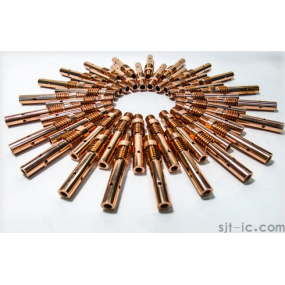
Copper Parts CNC Custom Machining – Precision Engineered for Conductivity & Performance
Introduction
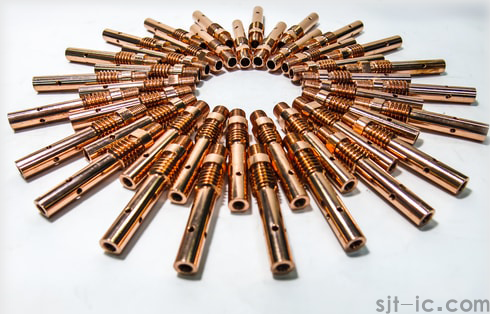
When electrical and thermal performance can’t be compromised, few materials match the raw capability of copper. But turning copper into high-precision components takes more than just a standard machine shop—it demands deep process knowledge, the right tooling strategies, and rigorous quality systems. At EMAR, we specialize in copper parts CNC custom machining that meets the tightest tolerances for aerospace, medical, electronics, and automotive industries. Our AS9100D and ISO 9001:2015 certified facility combines multi-axis CNC milling, turning, and Wire EDM to deliver components ranging from prototype connectors to full-scale production busbars. In this guide, we cover the copper grades we machine, design best practices, finishing options, and the applications where machined copper truly excels. Whether you need a single complex housing or thousands of heat sinks, you’ll find the technical detail and manufacturing capability to move your project forward.
Why Copper Is a Go-To Material for Precision CNC Machining
Copper’s value in engineering starts with its physical properties. It offers the highest electrical conductivity among non-precious metals and second only to silver thermally. That’s why you see it in power distribution, high-frequency RF systems, and any application where current density or heat dissipation is critical. Yet copper also brings a handful of secondary benefits that expand its use well beyond electrical contacts:
Corrosion resistance – Copper naturally resists moisture and many chemicals, which makes it durable in harsh environments without plating.
Ductility and malleability – It can be formed into complex geometries without fracturing, giving CNC programmers more freedom with thin walls and fine details.
Antimicrobial nature – Copper surfaces kill bacteria and viruses, a property that makes the material highly relevant for medical equipment and frequently touched components.
Aesthetics – The warm reddish-orange finish appeals to premium industrial and consumer products, and it can be further enhanced with polishing or patina treatments.
For procurement engineers, the message is simple: one material solves electrical, thermal, mechanical, and hygiene requirements simultaneously, often reducing part count and assembly complexity.
Copper Alloys EMAR Machines – And When to Choose Each
Pure copper isn’t a single grade; small chemistry differences dramatically change machinability and performance. EMAR routinely machines the following alloys, matching material choice to the functional and budgetary demands of the project.
C101 Oxygen-Free Copper (OFE)
99.99% pure copper with extremely high conductivity (96.5% IACS) and excellent impact toughness. It’s the preferred grade for high-end vacuum electronics, waveguides, and particle accelerator components. The downside is machinability: C101 is notoriously “gummy” and demands razor-sharp carbide tooling, aggressive chip evacuation, and frequent tool changes to avoid built-up edge. If your application requires ultimate electrical performance, C101 is the answer—but expect a slightly longer cycle time compared to other grades.
C110 Electrolytic Tough Pitch (ETP) Copper
At 99.90% purity, C110 remains the most widely used copper alloy globally. It retains high conductivity (101.5% IACS) and delivers better machinability than C101 because of the controlled oxygen content that acts as a chip breaker. For busbars, electrical terminals, heat sink bases, and general industrial parts, C110 provides the ideal balance of performance and cost. When design optimization is critical, using C110 instead of C101 for non-ultra-high-vacuum applications can substantially reduce machining costs.
T2 Copper
T2 is the grade of choice in many high-volume power delivery and electronics projects. It provides high electrical and thermal conductivity with machinability that most floors find more forgiving than either C101 or typical C110. T2 tends to form shorter, more manageable chips when parameters are dialled in, which means less downtime for chip clearing and better surface finish consistency. If your product demands both performance and repeatability in production quantities, T2 often hits the sweet spot.
Beryllium Copper C17200
An entirely different family: C17200 is a precipitation-hardening alloy that combines high strength (comparable to many steels) with reasonable conductivity. It excels in springs, electrical contacts, and non-sparking safety tools. Important: machining beryllium copper produces toxic dust—EMAR runs these jobs under strictly controlled engineering and PPE protocols to ensure operator safety and environmental compliance.
Other Copper Alloys We Work With
Our experience extends well beyond pure coppers. We regularly machine brasses (copper-zinc) for improved strength and corrosion resistance, phosphor bronzes (copper-tin) for wear-resistant gears and bearings, nickel-silvers for superior corrosion performance in marine environments, and copper-nickel alloys like CuNi 90/10 for severe saltwater applications. If your design calls for a custom alloy, our applications engineers can recommend a grade that balances machinability, performance, and cost.
Copper CNC Machining Capabilities at EMAR
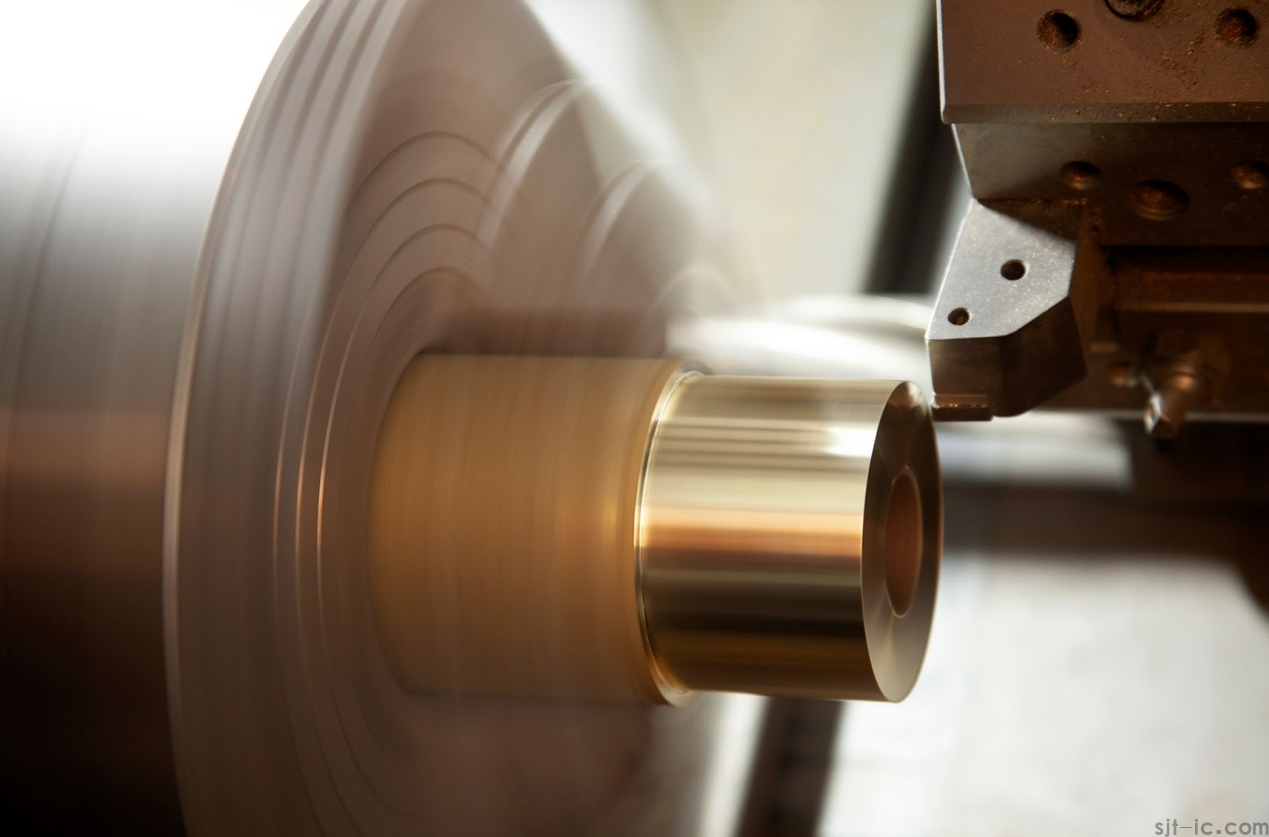
Bringing a copper part to life requires more than general-purpose equipment. EMAR’s shop integrates the right machinery and secondary operations under one roof to keep lead times short and quality consistent.
Multi-Axis CNC Milling & Turning – 3-axis and 5-axis machining centres handle complex organic geometries, angled features, and parts that would require multiple setups on traditional mills. Vertical and horizontal milling, CNC lathes with live tooling, and advanced turning centres let us perform drilling, boring, knurling, reaming, face milling, peripheral milling, and tapered milling with precision.
Wire EDM & Sinker EDM – For intricate cavities, sharp internal corners, or extremely fine features that conventional cutting tools can’t reach, we use 4-axis Wire EDM with wire diameters from 0.006″ to 0.012″ and sinker EDM for blind cavities. The non-contact thermal process eliminates mechanical stress and punches through even the most stubborn copper grades.
Brazing, Welding & Assembly – Many copper components need to join with other metals or form part of a larger assembly. EMAR offers in-house brazing, welding, and basic assembly services, so you receive a complete, ready-to-install component.
Dimensional Capabilities Snapshot
| Metric | Standard |
|---|---|
| Max Part Size (Milling) | 25.5 in. x 25.5 in. x 11.8 in. (larger sizes case-by-case) |
| Min Part Size | 0.019 in. |
| Typical Tolerance | ±0.001 in. (depending on geometry and alloy) |
| Min Wall Thickness | 0.030 in. (0.5 mm achievable with optimized design) |
These figures represent our baseline; tighter tolerances can be discussed during the quoting phase. Every copper part passes through a dedicated quality control workflow, and we ship with inspection reports and material certifications when required. Our certifications include ISO 9001:2015, AS9100D, ISO 13485, and RoHS compliance—so aerospace and medical buyers can move from RFQ to approved supplier with full confidence.
How to Cut Copper on a CNC Machine: Best Practices That Matter
The machining challenges copper presents are well known: built-up edge, stringy chips, rapid tool dulling, and the tendency to smear rather than shear. Over years of running copper jobs of all sizes, EMAR has locked in the process parameters that deliver clean finishes, dimensional stability, and tool life.
Tool Material & Geometry
Carbide is the tool material of choice, with TiN, TiAlN, or DLC coatings to reduce adhesion.
A high rake angle (18°–25°) and a sharp, polished cutting edge are non-negotiable; they shear the material cleanly instead of compressing it.
2-flute end mills dominate in copper machining because they provide larger gullets for chip evacuation, reducing the risk of re-cutting and built-up edge.
Feeds, Speeds & Depth of Cut
Copper responds well to high RPMs and moderate chip loads. A typical starting window for carbide tooling is surface speeds of 150–300 m/min and chip loads of 0.05–0.15 mm/tooth, adjusted for tool diameter and rigidity. Shallower depths of cut on smaller tools prevent deflection and work-hardening from chip recirculation.
Chip Control & Heat Management
Copper’s ductility causes long, ribbon-like chips that wrap around tools and scratch finished surfaces. We combat this with:
Higher chip loads to encourage the material to break into short segments rather than rub.
Air blast or flood coolant acting both as lubricant and chip carrier, preventing tiny particles from welding onto the cutting edge.
Mist systems with silica-based coolant that provides a milk-like viscosity are particularly effective at reducing heat without flooding the workpiece.
Workholding & Design for Manufacturability
Copper’s softness means it can deform under poor workholding. Use soft jaws or custom fixtures to distribute clamping force, and keep tool stick-out to the absolute minimum. Designers should aim for wall thicknesses above 0.5 mm and avoid deep, unsupported pockets; chatter and deflection increase dramatically when unsupported sections get too tall.
Troubleshooting Common Pitfalls
Built-up edge (BUE): Increase speed, reduce feed, and verify edge sharpness. Coolant concentration often needs adjusting.
Work-hardened surface: Happens when chips are recut. Ensure immediate chip evacuation with forceful air or coolant.
Accelerated tool wear: Copper doesn’t abrade tools like steel; it adheres and eventually pulls coating off. Expect to change tools more frequently than with aluminum, and factor that into cycle time estimates.
While the learning curve is real, a properly dialled-in CNC copper process is stable and repeatable, producing parts with excellent surface finishes straight off the machine.
Complementary Techniques: CNC Machining vs. Alternative Methods
For the majority of copper part designs, CNC machining delivers the best combination of precision, finish, and turnaround, but it’s worth understanding where alternative processes fit.
| Method | Strengths | Limitations | Best For |
|---|---|---|---|
| CNC Milling/Turning | High precision, smooth finishes, fast lead times | Tool wear if unmanaged; careful chip control required | Prototypes, connectors, heat sinks, production runs |
| Wire/Sinker EDM | Excellent for thin features, sharp internal corners; no mechanical stress | Slower; higher cost per part | Intricate cavities, fine slots, sharp corner reliefs |
| Laser Cutting | Fast for 2D profiles; minimal tooling | Thicker stock problematic; heat-affected edges | Flat brackets, simple outlines, sheet metal parts |
| Chemical Etching | Ideal for ultra-thin foils | Limited to thin gauge; slower for thicker stock | PCB traces, thin copper shims, EMI gaskets |
At EMAR, we often combine CNC milling with Wire EDM for parts that need precise internal sharp corners alongside milled external faces—giving you the best of both worlds without multiple vendors.
Surface Finishes & Post-Processing for Copper Machined Parts
Because copper is frequently used for its conductivity, many generic shop finishes degrade performance. EMAR focuses on treatments that maintain or even enhance the surface while providing the required protection and appearance.
Electropolishing – Removes a microscopic layer (0.0001″–0.0025″), leaving an ultra-smooth, reflective surface. It improves corrosion resistance without any measurable impact on conductivity.
Silver and Gold Plating – Precious metal plating prevents oxidation while preserving low contact resistance, making it ideal for connectors, spring contacts, and high-frequency components.
Electroless Nickel Plating – Provides a hard, corrosion-resistant coating for mechanical structures where conductivity is not required on the surface.
Passivation & Cleaning – Removes surface contaminants without altering dimensions, crucial for vacuum and semiconductor applications.
Powder Coating, Bead Blasting & Polishing – When aesthetics or environmental sealing matter more than conductivity, we offer a full suite of mechanical and coating options.
Every finish we apply is validated to suit the part’s end-use environment, whether it’s a sterile medical setting, a saltwater marine installation, or a high-voltage power system.
Where Machined Copper Parts Make the Difference
Electrical & Power Distribution
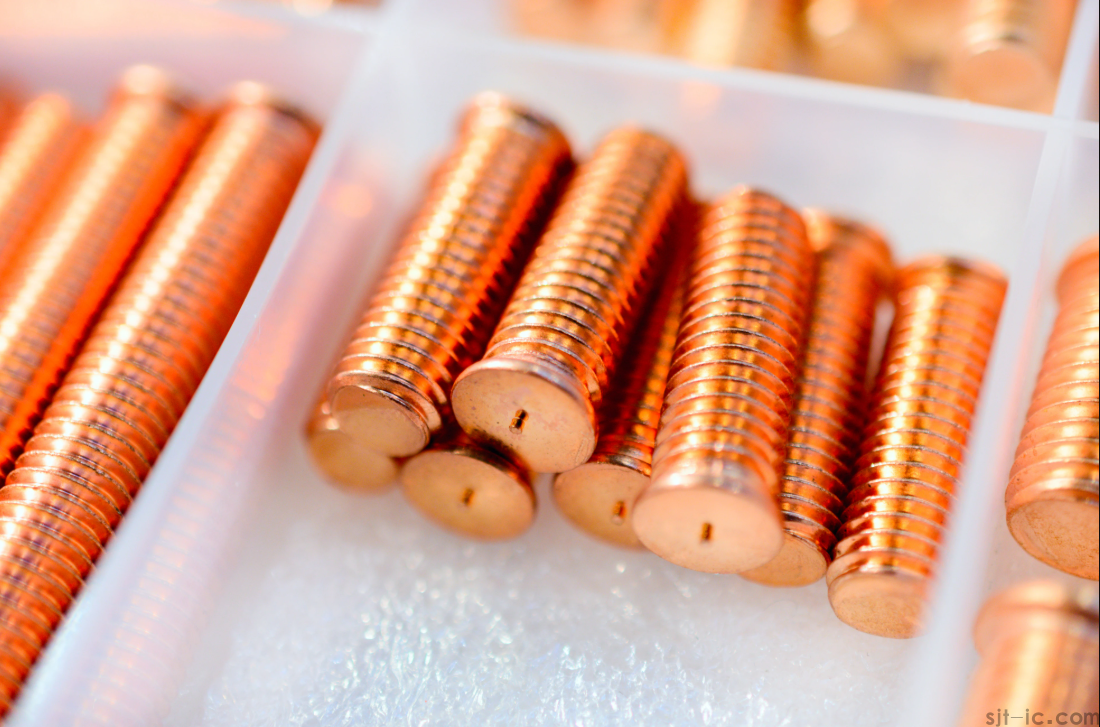
High-current connectors, busbars, grounding plates, and switchgear components rely on copper’s low resistance to minimize heat generation and power loss. CNC custom machining yields precisely dimensioned contact surfaces that mate perfectly, a critical advantage over stamped or cast alternatives.
Thermal Management
Heat sinks, heat exchangers, cold plates, and heat spreaders for power electronics need copper’s thermal conductivity. Machined fin geometries achieve surface area maximization that extrusion or standard profiles can’t match, making custom copper heat sinks vital for high-performance lasers, IGBT modules, and processors.
RF, Microwave & Telecommunications
Waveguides, coaxial components, RF antennas, and radar housings demand not only conductivity but geometrical accuracy at microwave frequencies. CNC machining offers the tight tolerances and surface finish these applications require, and electropolishing or gold plating provides the final performance edge.
Medical Equipment & Devices
From instrument contacts to antimicrobial handling surfaces, copper’s bio-compatible properties are increasingly specified in medical design. EMAR’s ISO 13485 certification assures traceability and compliance for regulated device manufacturers.
Aerospace & Defense
Copper brackets, hydraulic fittings, sensor housings, and fluid delivery components survive aggressive environments thanks to corrosion resistance. Our AS9100D certification and rigorous QA processes align with the documentation and traceability demands of this sector.
Marine & Automotive
Copper-nickel alloys thrive in seawater piping and marine hardware, while electric vehicle charging systems, battery busbars, and on-board power electronics lean on copper’s conductivity advantage.
Why Partner with EMAR for Copper Parts CNC Custom Machining?
When you send an RFQ to EMAR, you’re not just buying machine time—you’re accessing a dedicated engineering team that understands the metallurgy, tooling, and quality frameworks that make copper projects successful.
Fast Quoting & Turnaround – Upload your CAD file for a prompt, transparent quote. We move quickly from prototype approval to full production without the typical delays of multi-vendor juggling.
End-to-End Capability – CNC milling, turning, Wire EDM, and finishing all happen within our facility. No need to coordinate multiple suppliers.
Certified Quality – ISO 9001, AS9100D, and ISO 13485 certifications mean every part is backed by documented processes and inspection.
Material & Process Consulting – Not sure whether to use C110 or T2? Wondering if electropolishing will affect tolerance? Our applications engineers help you make the right call before metal is cut.
From high-volume energy systems to one-off spaceflight components, EMAR delivers copper parts that perform right out of the box.
Ready to start your next copper machining project? Contact our team at +86 18664342076 or email sales8@sjt-ic.com with your drawings, questions, or ready-to-quote CAD models. Our engineers will get back to you with a comprehensive proposal within one business day.