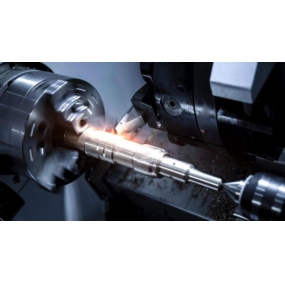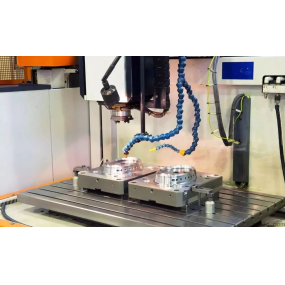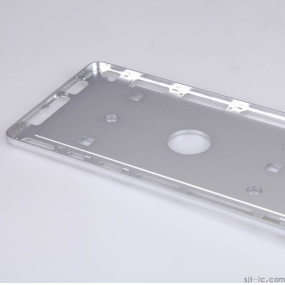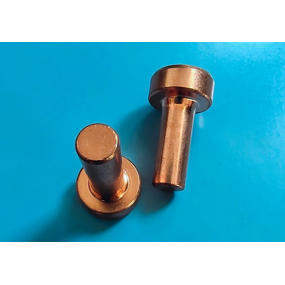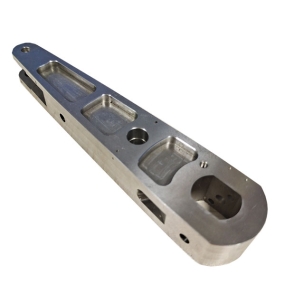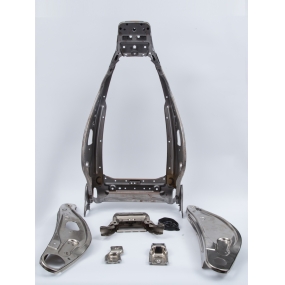

The problem of uneven machining surfaces of mold parts may be caused by various factors, including mold design, machining process, material quality, and operating standards. To address this issue, the following solutions can be taken: 1 Optimize mold design and design mold structure reasonably: Ensure that the structure design of the mold is reasonable, avoid stress concentration during stamping or forming processes, and reduce surface roughness. Improve machining accuracy: Perform high-precision machining on the components of the mold to ensure the precision of the fit between each part, in order to reduce surface unevenness caused by improper fit.  2. Improve the control of machining parameters during the machining process: Strictly control cutting speed, feed rate, cutting depth, and other parameters to ensure the stability and consistency of the machining process. Use appropriate tools and equipment: Choose high-quality and adaptable tools and equipment to reduce vibration and wear during the machining process, and improve the flatness of the machined surface. 3. Selection of high-quality materials: Ensure that the selected mold materials have stable quality, uniform composition, and no impurities or internal defects. High quality materials can improve the hardness and wear resistance of molds, reducing surface roughness. Heat treatment process: Suitable heat treatment is carried out on the mold material, such as quenching, tempering, etc., to improve the hardness and toughness of the material, improve the internal structure of the material, and reduce surface roughness problems. 4. Strengthen professional training on operating standards: Provide professional training to operators to improve their skill level and awareness of operating standards. Ensure that operators strictly follow the operating procedures during the processing to avoid surface unevenness caused by improper operation. Regular maintenance: Regularly maintain and upkeep the mold, such as cleaning the dust and iron filings on the surface of the mold, checking the wear and tear of the mold, etc. Timely detection and resolution of problems can reduce the occurrence of uneven surfaces. 5. Improve environmental conditions and maintain cleanliness: Ensure that the processing environment is clean and tidy, reducing the adhesion of impurities such as dust and iron filings. These impurities may scratch the surface of the mold during the processing, resulting in uneven surfaces. Control temperature and humidity: During the processing, control the temperature and humidity in the workshop to reduce mold deformation and surface unevenness caused by temperature and humidity changes.
Hello! Welcome to EMAR's website!
 English
 » »
» »
 Spanish
 Arabic
 French
 Portuguese
 Belarusian
 Japanese
 Russian
 Malay
Malay Icelandic
 Bulgarian
 Azerbaijani
 Estonian
 Irish
Irish Polish
 Persian
 Boolean
 Danish
 German
 Filipino
 Finnish
 Korean
 Dutch
Dutch Galician
 Catalan
 Czech
Czech Croatian
 Latin
Latin Latvian
 Romanian
 Maltese
 Macedonian
 Norwegian
 Swedish
 Serbian
 Slovak
 Slovenian
 Swahili
 Thai
Thai Turkish
 Welsh
Welsh Urdu
Urdu Ukrainian
 Greek
Greek Hungarian
 Italian
 Yiddish
 Indonesian
 Vietnamese
 Haitian Creole
 Spanish Basque