Spanish
 Arabic
 French
 Portuguese
 Belarusian
 Japanese
 Russian
 Malay
Malay Icelandic
 Bulgarian
 Azerbaijani
 Estonian
 Irish
Irish Polish
 Persian
 Boolean
 Danish
 German
 Filipino
 Finnish
 Korean
 Dutch
Dutch Galician
 Catalan
 Czech
Czech Croatian
 Latin
Latin Latvian
 Romanian
 Maltese
 Macedonian
 Norwegian
 Swedish
 Serbian
 Slovak
 Slovenian
 Swahili
 Thai
Thai Turkish
 Welsh
Welsh Urdu
Urdu Ukrainian
 Greek
Greek Hungarian
 Italian
 Yiddish
 Indonesian
 Vietnamese
 Haitian Creole
 Spanish Basque

In daily life, many stamping parts require precision, delicacy, and precision; What are the processing criteria for precision stamping parts?
1. Precision criteria: The number of processes involved in deep drawing and stamping parts processing is related to material properties, deep drawing height, number of deep drawing steps, as well as deep drawing diameter, material thickness, and other conditions. It needs to be calculated through the deep drawing process before adjustment can be made;
2. Precision criteria: The number of processes involved in the processing of curved stamping parts primarily depends on the degree of disorder in their structural shape, and needs to be determined based on the number, relative direction, and direction of the curved angles; 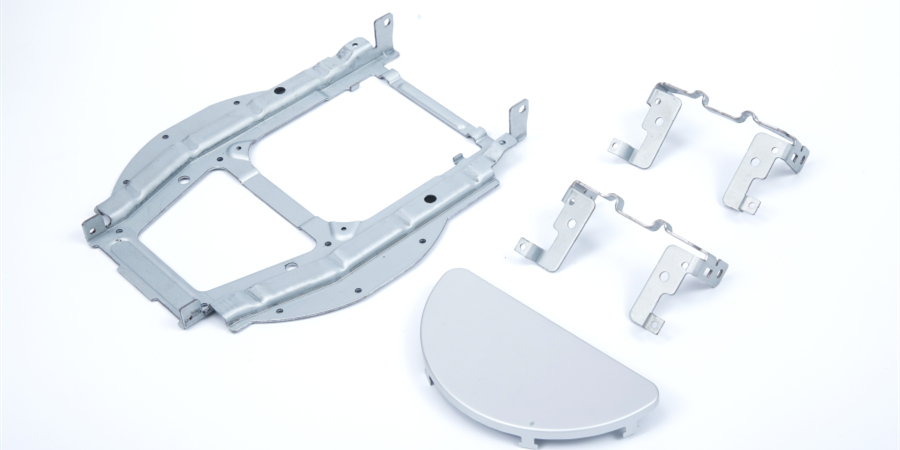 3. Exquisite principle: When precision stamping parts have high requirements for cross-sectional quality and standard accuracy, it is possible to consider adding a trimming process or selecting a precision punching process for diameter after the punching process;
4. Precision criteria: When punching workpieces with simple shapes, a single process mold can be used to complete the process. However, when punching workpieces with messy shapes, the structure and strength of the mold are limited, and the table should be divided into several parts for punching. Multiple stamping processes should be selected, and continuous molds can be used if necessary.
This article is from EMAR Mold Co., Ltd. For more EMAR related information, please click on www.sjt-ic.com,