Spanish
 Arabic
 French
 Portuguese
 Belarusian
 Japanese
 Russian
 Malay
Malay Icelandic
 Bulgarian
 Azerbaijani
 Estonian
 Irish
Irish Polish
 Persian
 Boolean
 Danish
 German
 Filipino
 Finnish
 Korean
 Dutch
Dutch Galician
 Catalan
 Czech
Czech Croatian
 Latin
Latin Latvian
 Romanian
 Maltese
 Macedonian
 Norwegian
 Swedish
 Serbian
 Slovak
 Slovenian
 Swahili
 Thai
Thai Turkish
 Welsh
Welsh Urdu
Urdu Ukrainian
 Greek
Greek Hungarian
 Italian
 Yiddish
 Indonesian
 Vietnamese
 Haitian Creole
 Spanish Basque

HTML
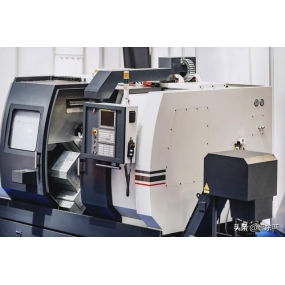
CNC Lathe Machining Center Realizes Automatic Tool Change and Spindle Alignment
Modern manufacturing requires CNC machines to work faster, more accurately, and with less human intervention. Two important technologies that make this possible are automatic tool change and spindle alignment. When a CNC lathe machining center realizes automatic tool change and spindle alignment, it can complete complex machining tasks more efficiently while maintaining high part quality.
Many manufacturers have questions about how these systems actually work. They may wonder how a CNC lathe can change tools automatically, why spindle alignment matters, and how these features improve production results. Understanding these technologies helps companies choose the right machining solutions and avoid problems such as low efficiency, poor accuracy, and frequent machine downtime.
With advanced CNC solutions, companies such as EMAR focus on integrating reliable automatic tool change systems and accurate spindle alignment technology into CNC lathe machining centers to help customers achieve stable and efficient manufacturing performance.
1. Introduction to Automatic Tool Change and Spindle Alignment in CNC Lathe Machining Centers
Automatic tool change and spindle alignment are key functions in modern CNC lathe machining centers. Traditional machining often requires operators to manually replace tools and adjust machine settings. This process takes time and can introduce human errors.
In a CNC lathe machining center, automatic tool change allows the machine to select and replace cutting tools without manual operation. Spindle alignment ensures that the spindle rotates in the correct position and direction, allowing cutting tools to work accurately.
Together, these features improve:
- Machining efficiency: Less time is wasted on manual adjustments and tool replacement.
- Processing accuracy: Correct spindle positioning helps produce parts with stable dimensions.
- Production reliability: Automated processes reduce operator mistakes and improve consistency.
These advantages are especially important in industries such as automotive, aerospace, medical equipment, and precision machinery, where parts must meet strict quality requirements.
2. Automatic Tool Change Mechanism in CNC Lathe
Tool Magazine and Tool Holder System
The automatic tool change mechanism in CNC lathe depends on several important components, including the tool magazine and tool holder system.
The tool magazine works like a storage unit for cutting tools. It keeps different tools needed for machining operations, such as turning tools, drills, boring tools, and milling cutters. Depending on the machine design, the tool magazine may use a disc type, chain type, or other storage structure.
For example, a disc-type tool magazine can rotate to move the required tool into the correct position for replacement. When the CNC system requests a new tool, the magazine quickly indexes to the correct location.
The tool holder system is responsible for securely connecting the tool to the spindle. It may use mechanical locking systems or hydraulic clamping methods to ensure the tool remains stable during high-speed cutting.
The importance of this system is clear: it allows CNC machines to access different tools quickly. A single machining process may require several operations, such as turning a surface, drilling holes, and creating threads. Without automatic tool management, operators would need to stop the machine and replace tools manually, reducing efficiency.
Tool Change Process
The automatic tool change process follows a series of controlled steps:
- Machining command: The CNC control system identifies that a different tool is needed for the next operation.
- Spindle stop: The spindle stops rotating to ensure safe tool replacement.
- Tool return: The current tool moves back to a safe position.
- Tool magazine positioning: The tool magazine rotates and places the required tool in the pickup position.
- Tool replacement: A robotic arm or automatic changing device removes the old tool and installs the new tool.
- Machining restart: The spindle begins operating again with the new tool.
For example, when manufacturing a metal shaft, the CNC lathe may first use a turning tool to reduce the material diameter and then automatically switch to a drill for making holes. The entire transition happens without manual interruption.
This automated process reduces human error and creates a smooth connection between different machining steps.
3. Benefits of Automatic Tool Change in CNC Lathe
Increased Productivity
One of the biggest benefits of automatic tool change in CNC lathe is improved production speed.
In mass production, even a small delay during manual tool replacement can create significant losses. For example, if each metal part requires five different tools, manually changing tools for thousands of parts can consume many working hours.
With an automatic tool change system, the CNC lathe completes tool replacement within seconds. The machine spends more time cutting materials and less time waiting.
This allows manufacturers to:
- Produce more parts in the same working period.
- Reduce labor requirements for repetitive operations.
- Improve delivery speed for customer orders.
Enhanced Precision
Automatic tool change also improves machining accuracy because the CNC system controls tool positioning electronically.
For example, when producing parts that require several different hole sizes, the machine can automatically select the correct drill and position it accurately. This helps maintain consistent hole diameter and depth across many parts.
Stable tool positioning is especially valuable for industries that require strict tolerances, where even small errors can affect product performance.
4. Spindle Alignment Importance in CNC Machining
Ensuring Proper Cutting Force Distribution
The spindle alignment importance in CNC machining comes from its direct effect on cutting performance.
The spindle holds and rotates the cutting tool. When the spindle is correctly aligned, cutting forces are evenly distributed between the tool and workpiece.
If the spindle is misaligned, one side of the cutting tool may receive more pressure than the other side. This can cause:
- Uneven tool wear.
- Higher vibration during machining.
- Lower cutting efficiency.
For example, during a turning operation, an incorrectly aligned spindle may cause the cutting tool to remove more material from one side of the workpiece, resulting in inaccurate dimensions.
Maintaining Dimensional Accuracy
Spindle alignment directly affects the size and shape of finished parts.
The spindle rotation axis must match the intended machining axis. If alignment is incorrect, the machine may produce parts with unwanted problems such as tapered shafts, incorrect diameters, or uneven surfaces.
For example, when producing a long precision shaft, even a small spindle alignment error can create a shaft that is thicker at one end and thinner at the other.
Proper spindle alignment ensures that parts can fit correctly during assembly, which is essential for mechanical equipment and precision products.
5. Impact of Spindle Alignment on Part Quality
Surface Finish Improvement
The impact of spindle alignment on part quality can be seen clearly in surface finish.
A properly aligned spindle allows the cutting tool to move smoothly across the workpiece. A misaligned spindle may create vibration, which can leave unwanted marks or rough areas on the surface.
For example, when machining a precision metal component, spindle vibration caused by poor alignment can create visible cutting lines. Correct alignment helps produce a smoother and more professional surface finish.
A good surface finish improves not only appearance but also product performance. Parts that slide, rotate, or connect with other components usually require smooth surfaces to reduce friction and wear.
Improved Geometric Accuracy
Spindle alignment also affects the geometric accuracy of machined parts.
When alignment is incorrect, parts may have shape problems such as:
- Uneven roundness.
- Incorrect angles.
- Non-parallel or non-perpendicular surfaces.
For example, when machining a square component, spindle misalignment may cause the edges to become slightly uneven, preventing accurate assembly with other parts.
6. Efficient Operation with Automatic Tool Change and Spindle Alignment
Streamlined Machining Process
Efficient operation with automatic tool change and spindle alignment is achieved because both systems solve different production challenges.
Automatic tool change improves workflow by allowing multiple machining operations to happen continuously. Spindle alignment ensures that each operation is completed accurately.
For example, a complex part may require:
- Turning the outside diameter.
- Drilling internal holes.
- Cutting threads.
- Finishing the surface.
The automatic tool change system moves between operations quickly, while spindle alignment maintains machining accuracy throughout the entire process.
Reduced Downtime
Another advantage is reduced machine downtime.
Manual tool replacement requires stopping the machine frequently. Poor spindle alignment can also increase the risk of tool damage, vibration, and machining errors.
By combining automatic tool change with accurate spindle alignment, CNC lathes can operate for longer periods with fewer interruptions. This helps manufacturers maintain production schedules and reduce operating costs.
7. EMAR's Expertise in Implementing These Features in CNC Lathe Machining Centers
Advanced Technology and Equipment
EMAR focuses on developing CNC lathe machining centers with reliable automation and precision control technologies. The company applies advanced tool magazine designs, automatic tool-changing systems, and spindle alignment solutions to improve machining performance.
For example, accurate tool indexing systems help ensure fast and stable tool replacement, while advanced spindle adjustment technologies help maintain machining precision during long production cycles.
These technologies allow customers to achieve higher efficiency, better part quality, and more stable manufacturing results.
Skilled Technical Team
Successful implementation of automatic tool change and spindle alignment requires not only advanced equipment but also professional technical support.
EMAR's technical team understands CNC machining processes and helps optimize machine settings, maintain system performance, and solve operational problems.
Whether improving tool change accuracy or adjusting spindle alignment performance, experienced engineers help ensure that CNC lathe machining centers continue to deliver reliable results.
Conclusion
The ability of a CNC lathe machining center to realize automatic tool change and spindle alignment represents an important step toward efficient and precise manufacturing.
Automatic tool change reduces manual work, improves productivity, and ensures consistent tool positioning. Spindle alignment improves cutting stability, dimensional accuracy, surface finish, and overall part quality.
For manufacturers seeking higher production efficiency and dependable machining results, choosing a CNC machining solution with advanced automation and alignment technology is a practical way to improve competitiveness. With expertise in CNC lathe machining center technology, EMAR helps customers achieve efficient, accurate, and reliable production.