Spanish
 Arabic
 French
 Portuguese
 Belarusian
 Japanese
 Russian
 Malay
Malay Icelandic
 Bulgarian
 Azerbaijani
 Estonian
 Irish
Irish Polish
 Persian
 Boolean
 Danish
 German
 Filipino
 Finnish
 Korean
 Dutch
Dutch Galician
 Catalan
 Czech
Czech Croatian
 Latin
Latin Latvian
 Romanian
 Maltese
 Macedonian
 Norwegian
 Swedish
 Serbian
 Slovak
 Slovenian
 Swahili
 Thai
Thai Turkish
 Welsh
Welsh Urdu
Urdu Ukrainian
 Greek
Greek Hungarian
 Italian
 Yiddish
 Indonesian
 Vietnamese
 Haitian Creole
 Spanish Basque

HTML
CNC Lathe Machining Characteristics and Its Application
CNC lathe machining is one of the most important manufacturing technologies used today. It uses computer-controlled machines to remove material from a workpiece and create accurate parts with complex designs. From automotive components to medical devices and aerospace parts, CNC lathes help manufacturers produce reliable products with high efficiency.
Understanding the CNC lathe machining characteristics and its application helps manufacturers, engineers, and even hobbyists choose the right production method. Many people know that CNC lathes are accurate, but they may not fully understand how these characteristics support different industries. This article explains the main characteristics of CNC lathe machining and shows how they solve real production challenges through practical examples.
1. High-Precision Characteristic of CNC Lathe
One of the most important advantages of CNC lathe machining is its high precision. A CNC lathe uses a computer-controlled system to guide the cutting tool movement. The machine can control cutting speed, tool position, and machining steps with extremely small errors.
The high-precision characteristic of CNC lathe allows manufacturers to produce parts with very tight tolerances. For example, in aerospace manufacturing, a CNC lathe can machine turbine shafts with a tolerance of ±0.01 mm or less. This level of accuracy ensures that the shaft can operate safely under high-speed rotation and extreme conditions.
High precision is especially important in industries where small mistakes can create serious problems. In aerospace, a slightly incorrect dimension may affect flight safety. In medical manufacturing, an inaccurate component may affect the performance of a surgical instrument or implant.
By using advanced CNC equipment and professional machining methods, companies like EMAR help customers achieve stable and accurate production results for demanding applications.
2. Repeatability in CNC Lathe Applications
Another key CNC lathe characteristic is repeatability. After engineers complete the CNC program and machine setup, the equipment can produce the same part again and again with consistent dimensions and quality.
For example, when producing thousands of bolts, a CNC lathe can maintain the same diameter, thread pitch, and surface finish for every piece. This reduces differences between individual parts and makes assembly easier.
The importance of repeatability in CNC lathe applications is especially clear in mass production. Without consistent machining, manufacturers would need more inspection time and may experience higher rejection rates. CNC repeatability helps reduce quality control costs while improving production efficiency.
This makes CNC lathes suitable for industries that require large quantities of identical components, including automotive, machinery, and electronics manufacturing.
3. Complex-Shape Machining with CNC Lathe
Modern CNC lathes are not limited to simple cylindrical parts. With multi-axis control and advanced programming, they can create complex shapes that are difficult to produce using traditional machines.
Complex-shape machining with CNC lathe allows manufacturers to produce parts containing multiple features, such as cylindrical sections, conical surfaces, grooves, threads, and curved contours in one machining process.
For example, a custom mechanical component may require a combination of a round shaft section, a tapered area, and a precision thread. A CNC lathe can complete these features accurately without moving the part between different machines.
This capability gives designers more freedom when developing new products. Engineers can create lighter, stronger, and more functional parts because they are not limited by simple machining methods.
4. High Productivity of CNC Lathe
Manufacturers today need to produce high-quality parts quickly. CNC lathes support this requirement through high cutting speeds, automatic tool changes, and continuous operation.
For example, in an automotive component factory, a CNC lathe can complete turning, drilling, threading, and other operations during one machining cycle. This reduces production time and improves overall efficiency.
High productivity helps companies meet customer demand, shorten delivery times, and improve market competitiveness. Compared with manual machining, CNC lathe production can achieve faster output while maintaining stable quality.
5. Flexibility in CNC Lathe Machining
Although CNC lathes are widely used for mass production, they are also flexible enough for small-batch and custom manufacturing. Engineers can modify CNC programs to create different part designs without rebuilding the entire production process.
For example, a manufacturer producing different sizes of shafts can quickly adjust the CNC program to change dimensions, thread designs, or machining paths. This saves time and reduces setup costs.
The flexibility of CNC lathe machining allows manufacturers to respond quickly to changing customer requirements. It is especially useful for prototype development, customized products, and industries where product designs change frequently.
6. CNC Lathe in Automotive Production
The automotive industry is one of the largest users of CNC lathe technology. Vehicle components require excellent accuracy, strength, and reliability because they directly affect safety and performance.
Engine Components
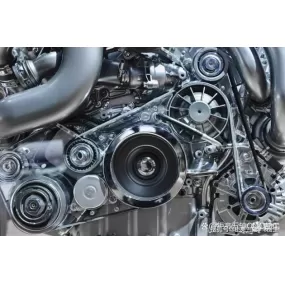
CNC lathes are commonly used to manufacture engine parts such as crankshafts, camshafts, and pistons. These components require precise dimensions because they must work together smoothly inside the engine.
For example, a piston must have accurate diameter control to maintain proper sealing and reduce friction. CNC Machining ensures consistent quality during large-scale production.
Transmission Parts
Transmission components, including gears, shafts, and bushings, also depend on CNC lathe machining. Proper dimensions and surface finishes help these parts transfer power efficiently and reduce wear.
The combination of precision, repeatability, and productivity makes CNC lathes an ideal choice for automotive manufacturers.
7. CNC Lathe Use in Medical Device Manufacturing
Medical device manufacturing requires extremely high standards because products directly affect human health. CNC lathes provide the accuracy and surface quality needed for medical applications.
Surgical Instruments
CNC lathes are used to produce surgical instruments such as forceps, scalpels, and drill bits. These tools require precise shapes, smooth surfaces, and reliable performance.
A small dimensional error in a surgical tool can affect its usability. CNC machining helps manufacturers maintain strict quality standards and produce safe medical equipment.
Implantable Devices
CNC lathe technology is also used to machine implant components, including parts for hip and knee replacements. These components require accurate shaping and excellent surface finishes to support proper function inside the body.
The ability of CNC lathes to achieve complex designs and tight tolerances makes them valuable in medical device manufacturing.
8. CNC Lathe Applications in Aerospace Industry
The aerospace industry requires parts that can withstand extreme temperatures, pressure, and mechanical stress. CNC lathe machining plays an important role in producing these high-performance components.
Turbine Shafts and Blades
Aircraft turbine components must have precise dimensions to maintain balance and efficiency during high-speed operation. CNC lathes provide the accuracy needed for machining turbine shafts and related components.
Structural Components
Aerospace manufacturers also use CNC lathes to produce lightweight but strong parts such as bolts, nuts, and brackets. The repeatability of CNC machining ensures that every component meets strict aerospace standards.
9. CNC Lathe in General Machinery Manufacturing
CNC lathes are widely used in general machinery manufacturing because many machines depend on rotating components with accurate dimensions.
Shafts and Axles
Shafts and axles produced by CNC lathes require precise machining to ensure smooth rotation and reduce wear. Accurate surface finishing improves equipment life and operating reliability.
Fasteners and Connectors
Fasteners and connectors are often produced in large quantities. CNC lathe repeatability ensures that each piece has consistent size and quality, allowing easy assembly across different machines.
10. EMAR's Proficiency in CNC Lathe Machining
Choosing the right machining partner is important for achieving reliable production results. EMAR has strong experience in CNC lathe machining and provides professional solutions for different industrial applications.
Advanced Technology
EMAR uses advanced CNC machining equipment designed for high-speed and high-precision production. The company applies modern machining technology, including multi-axis machining capabilities, to handle complex part designs and demanding customer requirements.
This advanced technology helps customers receive parts with stable quality, accurate dimensions, and efficient production performance.
Skilled Team
In addition to advanced equipment, experienced engineers and machinists are essential for successful CNC machining. EMAR's professional team understands machining processes, tool selection, programming, and quality control methods.
Their experience helps optimize production processes, reduce machining problems, and deliver components that meet or exceed customer expectations.
Conclusion
The CNC lathe machining characteristics and its application show why CNC technology has become a foundation of modern manufacturing. High precision, repeatability, complex-shape machining ability, productivity, and flexibility allow CNC lathes to support industries ranging from automotive and medical manufacturing to aerospace and general machinery.
By understanding these characteristics, manufacturers can make better decisions about production methods and improve product quality. With advanced equipment and professional machining experience, companies such as EMAR continue to provide reliable CNC lathe solutions for customers requiring accurate and efficient part manufacturing.