Spanish
 Arabic
 French
 Portuguese
 Belarusian
 Japanese
 Russian
 Malay
Malay Icelandic
 Bulgarian
 Azerbaijani
 Estonian
 Irish
Irish Polish
 Persian
 Boolean
 Danish
 German
 Filipino
 Finnish
 Korean
 Dutch
Dutch Galician
 Catalan
 Czech
Czech Croatian
 Latin
Latin Latvian
 Romanian
 Maltese
 Macedonian
 Norwegian
 Swedish
 Serbian
 Slovak
 Slovenian
 Swahili
 Thai
Thai Turkish
 Welsh
Welsh Urdu
Urdu Ukrainian
 Greek
Greek Hungarian
 Italian
 Yiddish
 Indonesian
 Vietnamese
 Haitian Creole
 Spanish Basque

HTML
Analysis of Defective Problems of Stretching Parts in Precision Stamping Parts Processing Plant
In precision stamping manufacturing, stretching parts are widely used in industries such as automotive, electronics, aerospace, and household equipment. These parts are created by stretching sheet metal into specific shapes through stamping processes. Because many products depend on the accuracy and strength of these components, even small defects can affect the performance and appearance of the final product.
For a precision stamping parts processing plant, understanding the Analysis of Defective Problems of Stretching Parts in Precision Stamping Parts Processing Plant is important for improving production quality. Common problems such as cracking, wrinkling, and thinning may increase waste, raise production costs, and delay delivery. By understanding the causes, identification methods, and solutions, manufacturers can prevent defects before they become serious issues.
Why Stretching Parts Are Important in Precision Stamping
Stretching parts are formed by forcing metal sheets to flow and change shape under pressure. They are often used when manufacturers need lightweight but strong components. For example, automotive body panels, electronic equipment covers, and aerospace structural parts often require stretching processes.
However, stretching involves large material deformation. If the material, stamping parameters, or die design are not properly controlled, defects may appear. These defects can affect product strength, appearance, and assembly accuracy. Therefore, finding effective methods for identifying stretching part defects and controlling production conditions is a key task for precision stamping companies.
Common Defective Problems in Stretching Parts
1. Cracking Problems
Cracking is one of the most serious stretching defects. It occurs when the metal cannot withstand the stress created during the stamping process. When the stretching force exceeds the material's forming ability, the surface may break.
For example, during the production of automotive body panels, if the stretching force is too high or the selected material has poor ductility, cracks may appear on the panel surface. These cracks can make the part unusable and increase production waste.
How to identify cracking:
- Visible thin lines or broken areas appear on the surface of the part.
- Magnifying tools can be used to find small cracks that are difficult to see with the naked eye.
- Quality inspectors can check high-stress areas such as corners and deep stretching sections.
2. Wrinkling Problems
Wrinkling happens when the metal sheet cannot flow smoothly during stretching. Instead of forming a flat surface, the material creates folds or waves. This problem is usually related to improper material flow or insufficient blank-holding force.
For example, when producing metal cups through stretching, if the blank-holding force is too low, the edge area may become loose and form wrinkles.
How to identify wrinkling:
- Irregular folds or ripples can be seen on the surface of the stretching part.
- The part may fail to meet appearance requirements.
- Wrinkles may also affect assembly accuracy and product performance.
3. Thinning Problems
Thinning refers to a reduction in material thickness in certain areas after stretching. This happens when some sections of the material experience excessive deformation.
For example, when producing deep-drawn electronic equipment housings, some areas may stretch more than others. These areas become thinner and may have reduced strength.
How to identify thinning:
- Use measurement tools such as micrometers to check thickness at different locations.
- Compare actual thickness values with design requirements.
- Pay special attention to corners and deep-drawing areas where thinning often occurs.
Causes of Stretching Part Defects
Material-Related Causes
1. Incorrect Material Selection
One of the main causes of stretching part defects is choosing unsuitable materials. Different metals have different strength, flexibility, and forming abilities. If the material cannot handle the stretching process, defects are likely to occur.
For example, if a manufacturer selects a brittle material for a complex-shaped stretching part, the material may crack during forming because it cannot withstand enough deformation.
A precision stamping parts processing plant should consider factors such as:
- Material strength.
- Ductility and flexibility.
- Required part shape.
- Final product application.
2. Material Inconsistency
Even when the correct material is selected, inconsistent material quality can create problems. Variations in sheet thickness or mechanical properties can cause uneven stretching.
For example, if one area of a metal sheet is thicker than another area, the thicker section may resist deformation while thinner areas stretch more easily. This creates stress concentration and may lead to cracking or thinning.
Process-Related Causes
1. Improper Stamping Parameters
Stamping parameters, including stretching force, speed, and blank-holding force, directly influence part quality. Incorrect settings can create process-related stretching part defects.
Examples include:
- Excessive stretching force causing cracks.
- Low blank-holding force causing wrinkles.
- Incorrect stretching speed causing uneven material flow.
For example, when producing a circular stretching part, setting the stretching force too high may cause the material to break before reaching the required shape.
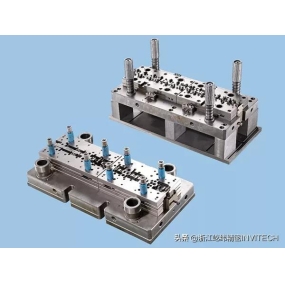
2. Incorrect Die Design
The stamping die controls how the material flows during forming. Poor die design can create unnecessary stress and lead to defects.
Common die-related problems include:
- Sharp corners that create stress concentration.
- Incorrect die clearance.
- Poor surface finish that increases friction.
For example, if a die used for a rectangular stretching part has sharp corners, cracks may appear at those corners because the material receives excessive stress in those areas.
Solutions for Stretching Part Defects
Material-Related Solutions
1. Proper Material Selection
Choosing the correct material is one of the most effective solutions for stretching part defects. Engineers should select materials according to the part shape, stretching depth, strength requirements, and final application.
For parts requiring both strength and good formability, manufacturers may choose suitable alloys or specially developed sheet materials. Proper material selection reduces cracking risk and improves production stability.
2. Material Inspection and Control
Strict incoming material inspection helps prevent defects before production begins. A precision stamping parts processing plant should check:
- Sheet thickness accuracy.
- Surface quality.
- Material hardness.
- Mechanical properties.
By controlling raw material quality, manufacturers can reduce unexpected defects and improve the consistency of stretching parts.
Process-Related Solutions
1. Optimizing Stamping Parameters
Manufacturers should adjust stamping parameters according to the material and product requirements. Testing, simulation, and production experience can help find the best settings.
For example, stamping simulation software can predict how the metal will flow under different conditions. Engineers can adjust stretching force and blank-holding force before mass production, reducing trial costs and defects.
2. Improving Die Design
A high-quality die is essential for producing reliable stretching parts. Advanced CAD/CAM technology allows engineers to design dies with correct radii, clearance, and surface quality.
A well-designed die improves material flow, reduces stress concentration, and helps prevent cracks, wrinkles, and thinning problems.
EMAR's Expertise in Handling Stretching Part Defects
For companies facing repeated stretching part quality problems, professional technical support can greatly improve production results. EMAR has experience in precision stamping manufacturing and focuses on analyzing and solving stretching part defects through engineering methods.
The EMAR technical team can study defect patterns and identify whether problems come from materials, stamping parameters, or die structures. This approach helps customers find the real cause instead of only treating surface problems.
Advanced Technology for Defect Prevention
Modern equipment and technology play an important role in defect control. EMAR applies advanced inspection methods, precision stamping equipment, and process analysis techniques to improve stretching part quality.
For example, simulation technology can help predict possible deformation problems before production starts. This allows engineers to optimize the process early and reduce material waste.
With professional experience, technical analysis, and quality-focused manufacturing methods, EMAR helps precision stamping parts processing plants improve product reliability and reduce the cost caused by defective stretching parts.
Conclusion
Stretching part defects are caused by many factors, including unsuitable materials, inconsistent raw materials, incorrect stamping parameters, and poor die design. Understanding the causes of stretching part defects, learning effective methods for identifying stretching part defects, and applying proper solutions for stretching part defects can greatly improve manufacturing quality.
For precision stamping companies, defect prevention is more effective than defect correction. Through careful material control, optimized processes, and professional technical support, manufacturers can produce high-quality stretching parts that meet strict industry requirements.