Spanish
 Arabic
 French
 Portuguese
 Belarusian
 Japanese
 Russian
 Malay
Malay Icelandic
 Bulgarian
 Azerbaijani
 Estonian
 Irish
Irish Polish
 Persian
 Boolean
 Danish
 German
 Filipino
 Finnish
 Korean
 Dutch
Dutch Galician
 Catalan
 Czech
Czech Croatian
 Latin
Latin Latvian
 Romanian
 Maltese
 Macedonian
 Norwegian
 Swedish
 Serbian
 Slovak
 Slovenian
 Swahili
 Thai
Thai Turkish
 Welsh
Welsh Urdu
Urdu Ukrainian
 Greek
Greek Hungarian
 Italian
 Yiddish
 Indonesian
 Vietnamese
 Haitian Creole
 Spanish Basque

HTML
Main Technical Requirements for Parts Processing in Shenzhen Machinery Processing Plant
In modern manufacturing, parts processing quality directly affects the performance, safety, and service life of final products. For machinery processing plants in Shenzhen, meeting strict technical requirements is essential because their parts are widely used in industries such as automotive, aerospace, electronics, medical equipment, and industrial machinery.
The Main technical requirements for parts processing in Shenzhen machinery processing plant include precision control, material selection, processing technology, surface treatment, and assembly compatibility. Understanding these requirements helps customers choose reliable processing partners and ensures that every part can work correctly in its final application.
Professional companies such as EMAR have accumulated experience in Shenzhen parts processing and understand that high-quality machining is not only about producing a part shape but also about controlling every technical detail from material selection to final assembly.
1. Why Technical Requirements Matter in Shenzhen Parts Processing
Many customers focus only on price and delivery time when choosing a machinery processing plant. However, technical requirements determine whether the finished parts can actually meet the working conditions of the equipment.
For example, a small mechanical component used in an automotive engine may look simple, but it must have accurate dimensions, suitable material strength, and a smooth surface. If one requirement is ignored, the whole system may experience problems such as noise, vibration, overheating, or early failure.
Therefore, Shenzhen machinery processing plants need to control every stage of production, including:
- Design drawing analysis and tolerance review
- Material inspection and selection
- Processing method planning
- Surface quality control
- Final assembly testing
2. Precision Requirements in Shenzhen Parts Processing
Precision requirements in Shenzhen parts are one of the most important technical standards. Precision determines whether a part can fit correctly with other components and operate smoothly.
Dimensional Precision
Dimensional precision means controlling the size of a part within a specific tolerance range. Even a small size difference can influence the performance of a machine.
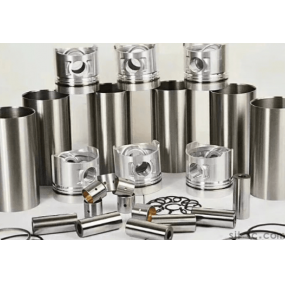
For example, when producing an automotive engine piston, the piston diameter must be carefully controlled. If the diameter is too large, friction between the piston and cylinder increases, causing overheating and reducing engine efficiency. If the diameter is too small, gas leakage may occur and reduce engine power.
In some applications, the required tolerance may be around ±0.05mm or even tighter. High dimensional accuracy ensures that parts can be installed correctly without additional modification.
Form Precision
Form precision refers to how accurately a part maintains its designed shape. It includes features such as flatness, roundness, straightness, and surface profile accuracy.
For example, a plastic injection mold used to produce a smartphone case needs an accurately shaped cavity. If the cavity has incorrect curves or uneven surfaces, the final plastic product may have defects such as uneven thickness or deformation.
Good form precision reduces waste, prevents rework, and improves production efficiency.
3. Material-Related Tech Requirements for Parts Processing
Material-related tech requirements are another key factor affecting part performance. The selected material must match the working environment, load conditions, and product requirements.
Correct Material Selection
Different industries require different materials. A machinery processing plant must understand the purpose of the part before selecting materials.
For example:
- Titanium alloys are often used in aerospace parts because they provide high strength while keeping weight low.
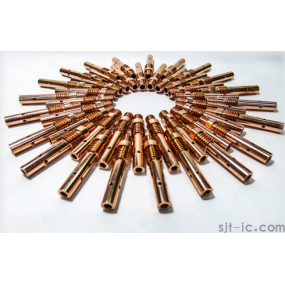
- Copper is widely used in electronic components because of its excellent electrical conductivity.
- Stainless steel is selected for many medical and food equipment parts because it provides corrosion resistance and easy cleaning.
Using unsuitable materials can create serious problems. For example, a load-bearing component made from weak material may break during operation and create safety risks.
Material Quality and Consistency
Material quality must remain stable throughout the entire production batch. A machining factory needs to check important properties such as hardness, chemical composition, and strength.
For example, when producing metal shafts, inconsistent steel hardness may cause some areas to wear faster than others. This creates uneven performance and shortens the service life of the equipment.
Reliable material control helps reduce processing defects such as cracking, deformation, and unexpected failures.
4. Processing Method Tech Needs in Shenzhen Machinery Plants
Processing method tech needs focus on selecting the correct manufacturing process and optimizing production parameters. Different parts require different machining solutions.
Choosing the Right Processing Technology
A suitable processing method improves accuracy, efficiency, and product quality.
For example:
- CNC Machining is suitable for complex parts that require high accuracy, such as turbine blades and precision mechanical components.
- Electrical Discharge Machining (EDM) is useful for producing complex internal structures or hard materials.
- Turning and milling processes are commonly used for shafts, plates, and mechanical housings.
If the wrong processing method is selected, the part may fail to meet design requirements and production costs may increase.
Optimizing Processing Parameters
Machining parameters such as spindle speed, cutting depth, and feed rate must be adjusted according to the material and tool conditions.
For example, during metal turning, an excessively high spindle speed may cause rapid tool wear and poor surface quality. A very low feed rate may reduce production efficiency.
Proper parameter control helps achieve stable quality, longer tool life, and faster production.
5. Surface Finish Tech Demands for Processed Parts
Surface finish tech demands influence both the appearance and working performance of mechanical parts. A good surface finish can reduce friction, improve durability, and prevent contamination.
Surface Smoothness and Cleanliness
The surface of processed parts should be smooth and free from dirt, metal chips, or other contamination.
For example, optical components require very smooth surfaces because roughness can scatter light and reduce optical performance. Medical device parts also need clean surfaces to prevent contamination risks.
A rough surface may increase friction between moving parts, causing faster wear and reducing equipment reliability.
Surface Treatment Requirements
Many parts require additional surface treatments to improve their performance.
Examples include:
- Anti-corrosion coatings for automotive and industrial parts.
- Gold or silver plating for electronic components to improve conductivity.
- Hard coatings to increase wear resistance for frequently used mechanical parts.
Proper surface treatment extends part life and improves product value.
6. Assembly-Related Tech Specs for Processed Parts
Assembly-related tech specs ensure that processed parts can work together correctly in a complete product.
Compatibility with Other Parts
Parts produced by Shenzhen machinery processing plants must match other components in size, position, and function.
For example, in computer manufacturing, the motherboard, processor, and storage devices must have correctly positioned connectors and mounting holes. If the dimensions are incorrect, assembly problems will occur.
In large machinery systems, inaccurate fitting between parts can create vibration, noise, and premature wear.
Assembly-Friendly Design and Processing
Good part design should make assembly easier and faster.
For example, adding chamfers or rounded edges can help parts fit together more smoothly. A polished surface can also reduce resistance during installation.
Assembly-friendly processing reduces labor costs, improves production efficiency, and helps maintain consistent product quality.
7. How Shenzhen Machinery Processing Plants Ensure Technical Requirements
Meeting technical requirements requires cooperation between engineering teams, processing operators, and quality inspectors.
A professional machining plant usually follows these steps:
- Review customer drawings and confirm technical specifications.
- Select suitable materials according to application requirements.
- Create an optimized machining plan.
- Monitor processing accuracy during production.
- Inspect finished parts using measuring equipment.
- Confirm assembly performance before delivery.
Companies like EMAR focus on understanding these technical requirements in Shenzhen parts processing. By combining engineering experience, advanced equipment, and strict quality control, they help customers produce parts that meet different industry standards.
Conclusion
The quality of machinery parts depends on many technical factors, not just the machining process itself. Precision control, correct materials, suitable processing methods, surface quality, and assembly compatibility are all necessary for reliable parts.
Understanding the Main technical requirements for parts processing in Shenzhen machinery processing plant allows businesses to make better manufacturing decisions and avoid problems caused by poor-quality components. A professional processing partner with strong technical knowledge can provide more stable, efficient, and high-quality solutions for different industries.