Spanish
 Arabic
 French
 Portuguese
 Belarusian
 Japanese
 Russian
 Malay
Malay Icelandic
 Bulgarian
 Azerbaijani
 Estonian
 Irish
Irish Polish
 Persian
 Boolean
 Danish
 German
 Filipino
 Finnish
 Korean
 Dutch
Dutch Galician
 Catalan
 Czech
Czech Croatian
 Latin
Latin Latvian
 Romanian
 Maltese
 Macedonian
 Norwegian
 Swedish
 Serbian
 Slovak
 Slovenian
 Swahili
 Thai
Thai Turkish
 Welsh
Welsh Urdu
Urdu Ukrainian
 Greek
Greek Hungarian
 Italian
 Yiddish
 Indonesian
 Vietnamese
 Haitian Creole
 Spanish Basque

Stainless steel is one of the most commonly used machining materials in industries such as medical, aerospace, automotive, and food processing. Its durability, corrosion resistance, and high tensile strength make it an excellent choice for critical components. However, machining stainless steel presents unique challenges due to its toughness, work hardening tendency, and poor thermal conductivity.
This guide compiles essential tips and best practices for successful CNC Machining of stainless steel. Whether you are machining austenitic grades like 304 and 316 or harder grades like 17-4 PH, these insights will help you improve tool life, surface finish, and overall efficiency.
For expert stainless steel machining services, contact EMAR at +86 18664342076 or sales8@sjt-ic.com.
Understanding Stainless Steel Types
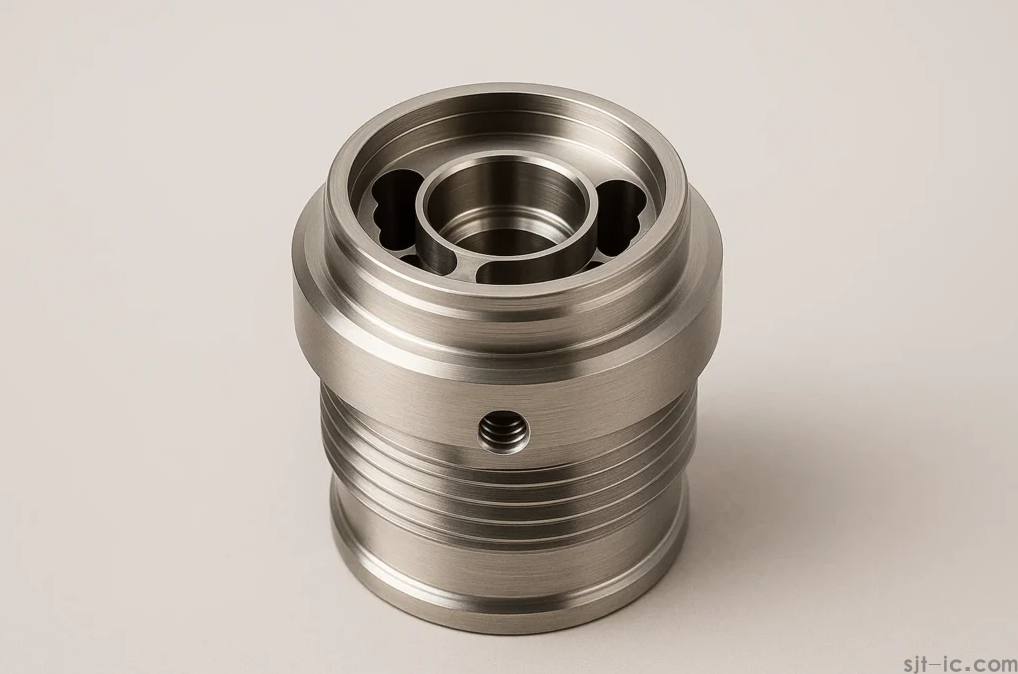
Stainless steel is an alloy of iron and chromium (at least 11% chromium). There are five main classes, each with different machinability characteristics:
Austenitic Stainless Steels
Properties: Non-magnetic, very high corrosion resistance, not heat treatable, high toughness and ductility
Examples: 304, 316, Alloy 20
Applications: Aerospace components, pharmaceutical products, cutlery, food processing equipment
Machinability: Can be difficult due to work hardening; 304 and 316 have poor machinability ratings
Ferritic Stainless Steels
Properties: Magnetic, high corrosion resistance, medium toughness, low weldability
Examples: 409, 430, 439
Applications: Kitchenware, automotive parts, industrial tools
Machinability: Generally easier to machine than austenitic grades; 416 is the easiest stainless steel to machine
Martensitic Stainless Steels
Properties: Magnetic, heat treatable, high hardness
Examples: 416, 420, 440
Applications: Surgical instruments, cutlery, ball bearings, firearms
Machinability: Moderate; requires sharp tools and proper parameters
Duplex Stainless Steels
Properties: Combination of austenitic and ferritic, magnetic, high strength, very high stress corrosion cracking resistance
Applications: Heat exchangers, piping systems, condensers
Precipitation Hardening (PH) Stainless Steels
Properties: Highest strength, heat treatable, excellent corrosion resistance
Examples: 17-4 PH, 15-5 PH
Applications: Aerospace components, marine construction, nuclear plants
Common Challenges in Stainless Steel Machining
Stainless steel is not as easy to machine as materials like aluminum or wood. The primary difficulties include:
| Challenge | Description |
|---|---|
| Work Hardening | Stainless steel hardens rapidly under stress, especially at high speeds, leading to increased tool wear |
| High Cutting Forces | The material's toughness requires more force, accelerating tool wear |
| Heat Generation | Poor thermal conductivity causes heat to concentrate at the cutting edge |
| Chip Control | Produces tough, stringy chips that can jam the machine and scratch surfaces |
| Tool Wear | Abrasive nature causes rapid flank wear, crater wear, and built-up edge |
Overheating is a particular concern because it compromises corrosion resistance. If you see tinted colors on the surface, pickling with hydrochloric or sulfuric acid can restore the oxidation layer.
Best Stainless Steel Machining Processes
Milling
The most common primary machining process. Use high-speed rotating cutting tools on a stationary workpiece. Accuracy is high, but wrong tools or excessive speeds cause rapid tool wear.
Turning
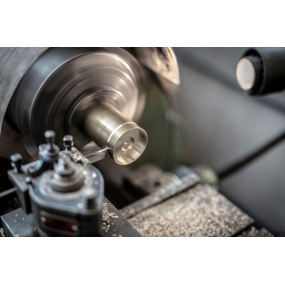
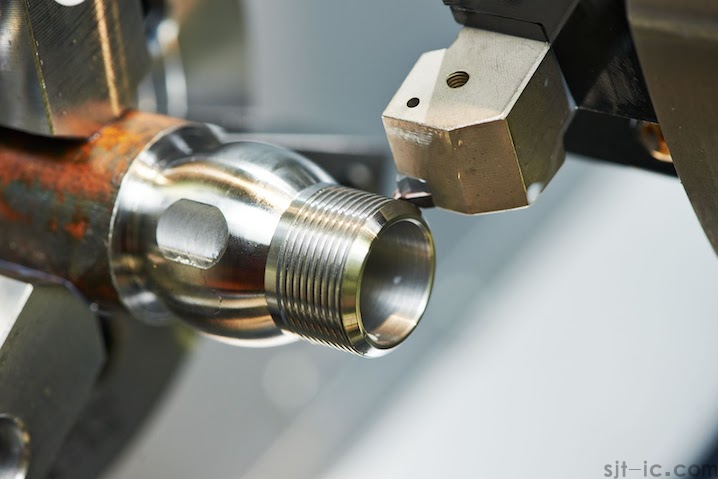
Requires a stationary cutting tool and a rotating workpiece. Common for austenitic stainless steel. Keep tool overhang to a minimum.
Drilling
Secondary process for creating holes. Use peck drilling cycles for deep holes and high-pressure coolant for chip evacuation.
Threading
For mounting screws and fasteners. Requires sharp tools and proper cutting parameters to prevent chatter and burrs.
Laser Cutting
Works only for thin sheets. No tool wear, but expensive and requires skilled labor.
Grinding
Enhances surface finish and removes burrs. Uses abrasive wheels.
EDM (Electrical Discharge Machining)
Uses high-voltage electrical pulses to melt metal. Limited cutting thickness.
Waterjet Cutting
Uses high-pressure water for erosion. Can cut thick sheets but may affect low-corrosion-resistance grades.
Essential Tips for CNC Machining Stainless Steel
1. Use Rigid Machines and Tooling
Stainless steel is exceptionally hard. Ensure your machine, tool holders, and workholding fixtures are extremely robust to prevent chatter and vibration. Any looseness amplifies problems and results in poor machining.
2. Choose the Right Tool Material
Two common options:
Carbide Tools (Cemented Carbide): Made from tungsten carbide, titanium carbide, or tantalum carbide. Faster than HSS, provide better finish, ideal for mass production. Use submicron grain carbide grades for 316L.
High-Speed Steel (HSS): Cheaper, commonly used in drill bits and power saws. Not generally recommended for 316L due to rapid wear.
Coated tools significantly extend tool life. Recommended coatings for stainless steel:
| Coating | Benefits |
|---|---|
| TiAlN (Titanium Aluminum Nitride) | High heat resistance, excellent wear protection |
| AlCrN (Aluminum Chromium Nitride) | Superior oxidation resistance, high hardness |
| TiCN (Titanium Carbonitride) | Good toughness, reduced friction |
| TiN (Titanium Nitride) | Enhanced wear resistance |
3. Optimize Cutting Parameters
Lower cutting speeds with higher feed rates work best to minimize heat generation and work hardening.
Recommended parameters for common grades:
| Grade | Cutting Speed (SFM) | Feed Rate (in/min or IPR) |
|---|---|---|
| 304 | 100 – 200 | 0.005 – 0.008 in/min |
| 316 | 90 – 180 | 0.004 – 0.007 in/min |
| 17-4 PH | 80 – 160 | 0.003 – 0.006 in/min |
For 316L stainless steel specifically:
Cutting speed: 100-150 m/min (general machining), 120-150 m/min for finishing
Feed rate: 0.1-0.2 mm/tooth for milling; 0.05-0.15 mm/rev for turning finishing
Depth of cut: 0.5-2.0 mm for milling; 0.2-0.5 mm for finishing
4. Use Sharp Tooling
Sharp cutting edges reduce cutting forces and prevent work hardening. replace worn tools immediately. Blunt tools cause breakage and ruin workpieces. For stainless steel, tools also require honing of sharp edges.
Tool geometry tips:
Positive rake angles (8-12 degrees) reduce cutting forces
Primary relief angle: 6-8 degrees
Sharp cutting edges for better penetration
Light honing (0.001-0.002 inch radius) to prevent edge chipping
5. Apply Proper Coolant and Lubrication
Coolant is essential for stainless steel machining. It reduces friction, lowers temperature, and washes away chips.
Coolant types:
Emulsified oils (semi-synthetic) – good for general machining
Mineral oils – superior lubrication for heavy cuts
Synthetic – excellent cooling for high-speed operations
Best practices:
Maintain 6-8% concentration for most applications
Use high-pressure coolant (800-1000 PSI) for deep holes and difficult features
Through-tool cooling is preferred for chip evacuation
Flood cooling helps temperature control
Proper coolant strategy can extend tool life by up to 40%.
6. Manage Work Hardening
Work hardening occurs due to plastic deformation during machining. To reduce hardening:
Feed coolant to the cutting tool
Avoid light cuts that rub instead of cut
Maintain constant chip load
Use climb milling when possible
Keep tools sharp
7. Ensure Efficient Chip Evacuation
Stainless steel produces long, stringy chips that can wrap around tools and cause damage.
Solutions:
Use chip-breaking tools and helical chip breakers
For slotting, 4-flute tools allow better chip evacuation
High-pressure coolant forces chip breaking
For deep-hole threading, use "segmented retraction" programming to break chips periodically
8. Control Heat Buildup
Stainless steel's low thermal conductivity causes heat to concentrate at the cutting edge.
Heat management tips:
Maintain moderate cutting speeds
Use adequate coolant flow
Implement peck drilling cycles
Use intermittent feeds
Monitor workpiece for tinted colors indicating overheating
9. Select the Right Flute Count for Milling
Roughing: 4 or 5 flute end mills
Slotting: 4 flute tools (better chip evacuation)
Finishing: 5+ flutes with helix angle over 40 degrees
High Efficiency Milling (HEM): 5-7 flute chipbreaker roughers or variable pitch end mills
10. Maintain Precision and Surface Finish
Quality control measures:
Regular dimensional checks using thread micrometers, ring gauges, or optical projectors
Monitor tool wear patterns (flank wear >0.012 inches requires tool change)
Use in-process probing for automatic compensation
Perform post-processing operations: deburring, passivation, electropolishing, or brushing
For threads: Use full-profile thread cutters, progressive layered cutting (finishing allowance 0.05-0.1mm), and high-pressure internal cooling.
Which Stainless Steels Are Difficult to Machine?
| Grade | Difficulty | Reason |
|---|---|---|
| 316 | Very poor machinability | Requires specialized cutting tools |
| 304 | Difficult | Rapid work hardening (sulfur can be added to help) |
| High Carbon Steel | Difficult | High strength, hardness, and carbide content |
| Low Carbon Steel | Difficult | Softness causes adhesion to cutting tools |
Easiest to machine: 416 stainless steel (400 series generally easier than 300 series)
Thread Turning Specific Tips
For CNC turning of stainless steel threads (e.g., 304, 316, 17-4 PH):
| Parameter | Recommendation |
|---|---|
| Tool Material | Ultra-fine-grain carbide |
| Tool Coating | PVD (TiAlN or AlCrN) |
| Tip Shape | Full-profile thread cutter |
| Cutting Speed (Vc) | 80-150 m/min (lower for austenitic grades) |
| Feed | Equal to pitch (P) |
| Cutting Strategy | Progressive layered cutting |
| Cooling | Internal high-pressure cooling |
Common thread defects and solutions:
Chatter: Use medium-to-high speeds (120-180 m/min) and decreasing depth of cut
Burrs: Apply high-pressure internal cooling (≥7 MPa)
Precision loss: Monitor tool wear and control cutting temperature
For internal threading, chip evacuation is more difficult. Use high-pressure internal coolant toolholders and vibration-resistant holders with added thickness.
Cost Optimization Tips
To reduce manufacturing costs when machining stainless steel:
Material optimization: Nest multiple parts, use remnant materials, implement advanced CAM for optimal utilization (can reduce waste by up to 25%)
Tool management: Implement just-in-time ordering, standardize tool models, monitor tool life
Process parameters: Optimize cutting speed, feed rate, and depth of cut for efficiency
Batch size optimization: Balance setup costs with inventory costs
Preventive tool changes: Change tools before wear causes defects
Advantages and Disadvantages of Stainless Steel
Advantages
Excellent corrosion resistance (does not rust)
Easy to mold, cut, join, and weld with proper tools
Multiple surface finish options for aesthetic appeal
Hygienic – ideal for food and surgical equipment
Durable and long-lasting
Fully recyclable
Disadvantages
Expensive compared to other materials
Easy to dent
Many grades scratch easily
Frequently Asked Questions
Is stainless steel hard to mill?
Not extremely hard, but it requires expertise and the right tool selection. Correct cutting speeds and tight setups are essential.
What is the most common machined stainless steel?
Grade 304 is the most commonly machined due to its high corrosion resistance, durability, ductility, and weldability.
What is the cheapest stainless steel for machining?
Type 409 (ferritic family) is generally the cheapest due to reduced chromium content.
How can I prevent work hardening?
Use lower speeds with higher feed rates, avoid excessive passes, ensure sharp tools, and apply adequate coolant.
How often should I inspect tools?
Frequent inspection is necessary, especially for tougher grades like 316. replace tools at the first sign of wear to prevent costly errors.
Why Choose EMAR for Stainless Steel Machining?
EMAR is a global leader in stainless steel machining services, offering CNC machining, rapid tooling, and sheet metal prototyping. With in-house machinery of the highest quality, EMAR provides advanced machining capabilities without you having to pay for the equipment itself.
Simply provide your designs, and EMAR will produce precision stainless steel parts with exceptional quality and efficiency.
Contact EMAR today:
Phone: +86 18664342076
Email: sales8@sjt-ic.com
For more design tips, reach out to EMAR for expert guidance on your next stainless steel machining project.
Conclusion
CNC machining of stainless steel doesn't have to be difficult. By understanding the material properties of different stainless steel grades, selecting the right cutting tools and coatings, optimizing cutting parameters, and applying proper cooling and chip management strategies, you can achieve high-quality results with excellent tool life and efficiency.
Remember these core principles:
Use rigid machines and sharp, coated carbide tools
Maintain moderate cutting speeds with appropriate feed rates
Apply abundant coolant, preferably high-pressure through-tool
Manage work hardening by avoiding light cuts
Monitor tool wear and replace proactively
Implement these tips from EMAR to transform stainless steel machining from a challenge into a reliable, cost-effective process.