Spanish
 Arabic
 French
 Portuguese
 Belarusian
 Japanese
 Russian
 Malay
Malay Icelandic
 Bulgarian
 Azerbaijani
 Estonian
 Irish
Irish Polish
 Persian
 Boolean
 Danish
 German
 Filipino
 Finnish
 Korean
 Dutch
Dutch Galician
 Catalan
 Czech
Czech Croatian
 Latin
Latin Latvian
 Romanian
 Maltese
 Macedonian
 Norwegian
 Swedish
 Serbian
 Slovak
 Slovenian
 Swahili
 Thai
Thai Turkish
 Welsh
Welsh Urdu
Urdu Ukrainian
 Greek
Greek Hungarian
 Italian
 Yiddish
 Indonesian
 Vietnamese
 Haitian Creole
 Spanish Basque

HTML
Process Specification Design of Shenzhen Machinery Processing Plant
Process Specification Design of Shenzhen Machinery Processing Plant is an important part of modern machinery manufacturing. It creates a clear production roadmap that guides workers, engineers, and quality teams from raw materials to finished parts. A well-designed process specification helps Shenzhen machinery processing plants achieve stable quality, higher efficiency, and better control of production costs.
Many customers and beginners in machinery manufacturing are often confused about how a process specification is created, what information it should include, and why it affects the final product quality. In simple terms, process specification design defines what to do, how to do it, what equipment to use, and how to check the results during machining.
Companies with experience in precision manufacturing, such as EMAR, understand that a practical process specification must connect engineering requirements with real production conditions. This helps ensure that different machinery parts can be manufactured accurately and consistently.
What Is Process Specification Design in Machinery Processing?
Process specification design is the planning work completed before production starts. It describes the complete manufacturing method for a machinery part, including machining steps, equipment selection, processing conditions, and inspection requirements.
For example, when a Shenzhen machinery processing plant produces a precision shaft, the process specification may include:
- Checking the quality and size of raw materials.
- Using a CNC lathe for rough machining.
- Applying heat treatment to improve strength and hardness.
- Using grinding equipment to achieve final accuracy and surface quality.
- Inspecting dimensions before delivery.
Without a clear process specification, different operators may use different methods, which can cause unstable quality, longer production times, and higher manufacturing costs.
Key Elements of Process Specification Design
Understanding the elements of process specification helps manufacturers create a reliable production system. A complete process specification usually contains several important parts.
1. Process Flow Design
Process flow describes the order of manufacturing operations. It explains how a part moves through different production stages from raw material to final product.
For example, when manufacturing a precision-machined shaft, the process flow may include:
- Raw material inspection.
- Rough turning to create the basic shape.
- Heat treatment to improve mechanical properties.
- Precision grinding for final dimensions.
- Final inspection and packaging.
A correct process flow prevents unnecessary movement between machines and reduces production delays. If the order of operations is incorrect, it may create problems such as repeated machining, wasted materials, or damaged parts.
2. Machinery and Equipment Selection
Selecting suitable equipment is another important part of process specification design. Different parts and materials require different machines.
For example:
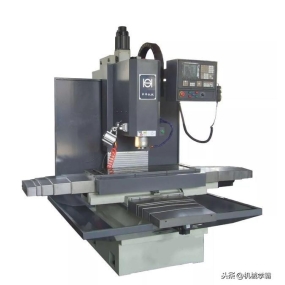
- A multi-axis CNC milling machine may be selected for parts with complex shapes.
- A precision grinding machine may be needed for parts requiring very smooth surfaces.
- A calibrated heat-treatment furnace is necessary when improving material strength.
The correct equipment choice depends on part structure, production quantity, accuracy requirements, and material characteristics. Using unsuitable equipment may result in poor precision, low efficiency, or unnecessary machine wear.
3. Processing Parameters
Processing parameters define the detailed conditions of each machining operation. These parameters control how machines work and directly affect product quality.
For CNC Machining, common parameters include:
- Spindle speed.
- Feed rate.
- Cutting depth.
- Tool selection.
For example, when turning a steel shaft, engineers may set the spindle speed, feed rate, and cutting depth according to the material and required accuracy. Incorrect settings can cause problems such as rough surfaces, incorrect dimensions, and faster tool damage.
4. Quality Control Points
Quality control points define when and where inspections should happen during production. Instead of checking only the finished product, manufacturers inspect important stages throughout the process.
For example, after rough machining a shaft, inspectors may check the diameter to confirm it is within tolerance. Before heat treatment, the material composition may also be tested.
Early inspection helps detect problems before more processing costs are added. This reduces waste and improves overall production reliability.
Why Process Specification Design Is Important
Ensuring Product Quality
The main purpose of process specification design is to maintain stable product quality. By controlling materials, machines, processing conditions, and inspection methods, manufacturers can produce parts that meet customer requirements.
For example, gears used in transmission systems require specific hardness and strength. A detailed heat-treatment process specification ensures that every gear receives the correct treatment and performs reliably.
In industries such as aerospace and medical equipment, strict process control is even more important because small manufacturing errors may affect safety and performance.
Improving Production Efficiency
The importance of process design in Shenzhen is also reflected in production efficiency. Shenzhen machinery processing plants often handle complex and high-volume manufacturing tasks. A well-planned process reduces unnecessary steps and improves resource usage.
For example, a plant producing large quantities of screws can improve output by optimizing forming processes, selecting suitable machines, and reducing adjustment time between production batches.
Meeting Customer Requirements
Different customers have different requirements for size, surface finish, strength, and appearance. Process specification design allows manufacturers to create production methods based on specific needs.
For example, a medical equipment customer may require parts with strict cleanliness and precision standards. The process specification can include special cleaning, inspection, and packaging procedures to satisfy these requirements.
Steps for Designing an Effective Process Specification
1. Understand Part Requirements
The first step is studying the customer's drawings, technical documents, and quality requirements. Engineers need to understand important details such as dimensions, tolerances, materials, and surface requirements.
For example, when producing a hydraulic cylinder component, engineers must know the required diameter, pressure capacity, surface finish, and operating conditions before designing the process.
2. Select Suitable Processing Methods
After understanding the part requirements, engineers choose the most suitable manufacturing methods.
Possible methods may include:
- CNC turning for round parts.
- CNC milling for complex shapes.
- Grinding for high precision surfaces.
- EDM for difficult internal structures.
The selected process should balance quality, cost, production time, and manufacturing difficulty.
3. Define Parameters and Inspection Methods
After selecting the process, engineers define machining parameters and quality checkpoints. This includes selecting cutting conditions, tools, inspection equipment, and acceptance standards.
This step is essential for designing for quality in Shenzhen processing because it ensures every production stage has clear requirements.
4. Review and Improve the Process
A process specification should be reviewed before mass production. Engineers, machine operators, and quality inspectors can provide feedback based on actual production experience.
Continuous improvement helps manufacturers discover problems early and achieve better results. This is also an important method for optimizing processes in Shenzhen plants.
Process Design for Different Machinery Parts
Different machinery parts require different process designs. A successful specification cannot simply use the same method for every product.
- Shaft parts: Usually require turning, heat treatment, grinding, and dimensional inspection.
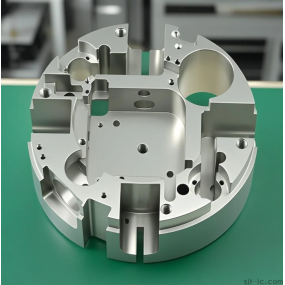
- Complex brackets: Often require CNC milling, drilling, and surface treatment.
- Precision molds: May need high-accuracy machining, polishing, and strict measurement control.
- Medical components: Require additional cleaning and quality verification procedures.
This shows why process design for different machinery parts must consider the unique structure and usage requirements of each product.
Conclusion
Process Specification Design of Shenzhen Machinery Processing Plant is the foundation of reliable manufacturing. It connects engineering knowledge with production practice by defining process flow, equipment selection, machining parameters, and quality control methods.
A carefully designed process specification helps plants improve product quality, reduce production problems, increase efficiency, and satisfy customer expectations. With professional experience in precision manufacturing, EMAR focuses on understanding each customer's part requirements and developing practical process solutions that support stable and efficient machining production.