Spanish
 Arabic
 French
 Portuguese
 Belarusian
 Japanese
 Russian
 Malay
Malay Icelandic
 Bulgarian
 Azerbaijani
 Estonian
 Irish
Irish Polish
 Persian
 Boolean
 Danish
 German
 Filipino
 Finnish
 Korean
 Dutch
Dutch Galician
 Catalan
 Czech
Czech Croatian
 Latin
Latin Latvian
 Romanian
 Maltese
 Macedonian
 Norwegian
 Swedish
 Serbian
 Slovak
 Slovenian
 Swahili
 Thai
Thai Turkish
 Welsh
Welsh Urdu
Urdu Ukrainian
 Greek
Greek Hungarian
 Italian
 Yiddish
 Indonesian
 Vietnamese
 Haitian Creole
 Spanish Basque

HTML
Talk About the Specific Understanding of Shenzhen Precision Parts Processing
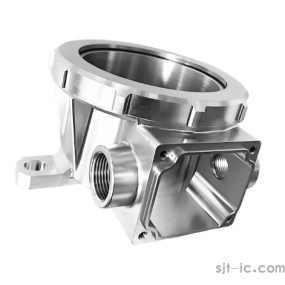
Talk about the specific understanding of Shenzhen precision parts processing requires looking beyond simple manufacturing. It involves understanding how precision parts are designed, processed, inspected, and applied in different industries. Shenzhen has become an important center for precision manufacturing because of its strong industrial supply chain, advanced equipment, skilled engineers, and ability to provide reliable production solutions for global customers.
For companies that need high-accuracy components, understanding Shenzhen precision parts processing can help them choose suitable manufacturing methods, control product quality, and improve production efficiency. From CNC Machining and stamping to strict quality inspection, Shenzhen manufacturers provide complete solutions for industries such as electronics, automotive, medical equipment, aerospace, and automation.
1. Shenzhen Precision Parts Processing: A Key Manufacturing Center
Shenzhen is one of the most important manufacturing cities in China and plays a significant role in the global precision parts supply chain. The city has developed a complete industrial ecosystem that includes material suppliers, machining factories, surface treatment providers, assembly companies, and technology service providers.
The reason many companies choose Shenzhen is not only because of production capacity but also because of its focus on quality and innovation. Precision parts processed in Shenzhen are widely used in products that require high accuracy and reliability. For example, smartphone manufacturers need tiny metal frames and internal components with strict size requirements, while medical equipment companies require parts with excellent surface quality and stable performance.
Companies such as EMAR have accumulated experience in precision manufacturing and continue to improve their understanding of Shenzhen precision parts processing. By combining manufacturing technology with quality management, these companies can provide competitive solutions for customers with different requirements.
2. Main Processing Processes in Shenzhen
Understanding the processing processes in Shenzhen is important because different products require different manufacturing methods. Precision parts are usually produced through a combination of machining technologies, forming processes, and special processing methods.
CNC Machining: The Foundation of Precision Manufacturing
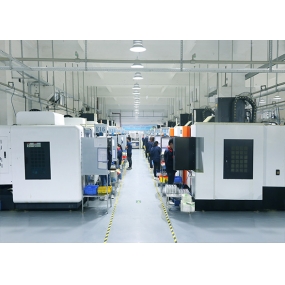
CNC (Computer Numerical Control) machining is one of the most widely used technologies in Shenzhen precision parts processing. CNC machines use computer programs to control cutting tools, allowing manufacturers to produce parts with high accuracy and repeatability.
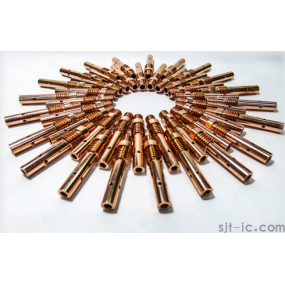
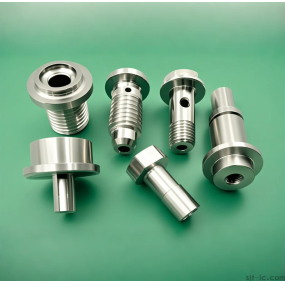
- CNC Turning: In turning operations, the workpiece rotates while a cutting tool removes material. This process is commonly used for cylindrical parts such as motor shafts, screws, and connectors. For example, a motor shaft requires accurate control of diameter and length so that it can rotate smoothly during operation.
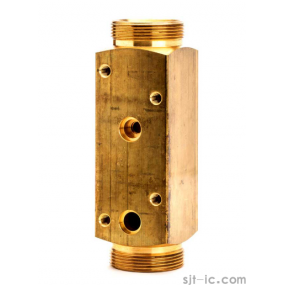
- CNC Milling: Milling is used to create flat surfaces, grooves, holes, and complex shapes. A CNC milling machine can produce detailed mold parts, equipment brackets, and precision mechanical structures with complicated designs.
- CNC Drilling: Drilling creates accurate holes for assembly and connection purposes. For example, a metal mounting bracket may require several precisely positioned holes to ensure correct installation.
Many Shenzhen factories also use multi-axis machining technology. Five-axis CNC machining allows tools to move in multiple directions at the same time, reducing the need for repeated positioning. This is especially useful for complex parts such as aerospace components and precision molds because it improves accuracy and reduces production time.
Stamping and Forming Processes
Stamping is another important method used in Shenzhen precision parts processing, especially for large-volume production of metal components. The process uses a stamping die to press sheet metal into a specific shape.
In the electronics industry, stamped metal shells are commonly used for products such as laptops, smartphones, and electronic devices. The stamping process provides high production efficiency while maintaining consistent size and appearance.
Deep drawing and bending are advanced forming methods. Deep drawing creates deeper metal shapes, such as containers or special housings, while bending forms metal sheets into angles or curves. In the automotive industry, parts such as body panels often require accurate forming control to achieve proper strength and appearance.
Electrical Discharge Machining (EDM)
EDM is an important technology for processing hard materials and complex structures. Unlike traditional cutting methods, EDM uses electrical energy to remove material.
- Wire EDM: A thin electrically charged wire cuts through metal to create highly accurate shapes. It is often used for precision molds and components with complicated internal structures.
- Die-sinking EDM: This method uses a shaped electrode to create detailed cavities in hard materials. It is commonly applied in mold manufacturing and stamping die production.
These advanced methods allow Shenzhen manufacturers to produce parts that are difficult to create using traditional machining methods.
3. Quality Control of Shenzhen Parts
The quality control of Shenzhen parts is a major reason why Shenzhen has gained trust from international customers. Precision manufacturing is not only about producing parts but also about ensuring every part meets strict design requirements.
In-Process Inspection
During production, manufacturers perform inspections to identify problems early. Common inspection methods include dimensional measurement and surface quality testing.
- Dimensional Checks: Tools such as calipers, micrometers, and coordinate measuring machines (CMMs) are used to measure part dimensions. For example, when producing a precision shaft, workers regularly check the diameter and length to prevent errors.
- Surface Finish Inspection: Surface roughness affects performance, appearance, and durability. Optical inspection equipment and surface testers help ensure that parts meet requirements, especially in industries such as medical equipment where smooth surfaces are important.
Final Inspection and Functional Testing
After processing, final inspection verifies whether the finished parts meet customer specifications. Engineers check dimensions, appearance, material quality, and performance.
Functional testing is also important. Mechanical parts may need movement or load testing, while electronic components may require electrical performance testing. For example, an electronic connector must be tested to confirm stable electrical contact before delivery.
4. Technological Advantages in Shenzhen
The technological advantages in Shenzhen come from a combination of advanced equipment, experienced workers, and continuous innovation.
Advanced Manufacturing Equipment
Many Shenzhen precision machining companies use high-performance CNC machines, automated production systems, and advanced inspection equipment. Some high-precision machines can achieve accuracy levels around ±0.01mm, which is necessary for industries requiring extremely tight tolerances.
Advanced EDM equipment, automated measurement systems, and digital manufacturing software also improve production efficiency and consistency.
Skilled Workforce and Innovation Ability
Shenzhen has a large group of experienced engineers, technicians, and production specialists. Their knowledge allows manufacturers to solve complex machining problems and optimize production processes.
At the same time, Shenzhen companies continue to adopt new technologies, including rapid prototyping, additive manufacturing, and intelligent manufacturing systems. This innovation ability helps manufacturers respond quickly to changing market demands.
5. Market Applications of Shenzhen Precision Parts
The market applications of Shenzhen precision parts cover many industries. The city's manufacturing capabilities support both consumer products and high-end industrial equipment.
- Electronics Industry: Precision parts are used in smartphones, tablets, computers, cameras, and industrial electronic devices. Small components must maintain strict accuracy to ensure product performance.
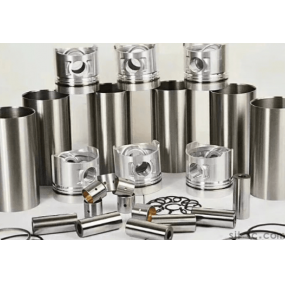
- Automotive Industry: Precision metal parts contribute to vehicle safety, reliability, and performance. Engine components, sensors, and structural parts often require high manufacturing standards.
- Medical Industry: Medical devices require clean, accurate, and reliable components. Precision machining helps produce surgical tools, equipment parts, and diagnostic device components.
- Aerospace Industry: Aerospace components require lightweight materials, complex structures, and extremely high accuracy. Multi-axis machining technology is widely used in this field.
6. Global Position of Shenzhen Processing
The global position of Shenzhen processing has been strengthened by its combination of quality, speed, technology, and cost advantages. International companies often choose Shenzhen suppliers because they can receive customized precision parts with shorter development cycles and competitive manufacturing costs.
Compared with traditional manufacturing areas, Shenzhen has advantages in rapid communication, supply chain integration, and flexible production. A company can complete material selection, machining, testing, and assembly services within a relatively efficient industrial network.
EMAR and other professional precision manufacturing companies continue to participate in this competitive environment by improving production technology, strengthening quality systems, and providing customized solutions. Their development reflects Shenzhen's ability to remain an important global manufacturing partner.
Conclusion
A complete understanding of Shenzhen precision parts processing means understanding the entire manufacturing process, from machining technology and quality control to technological advantages and market applications. Shenzhen has become a global precision manufacturing hub because it combines advanced equipment, skilled professionals, strong supply chains, and continuous innovation.
For companies looking for reliable precision parts suppliers, Shenzhen offers a mature manufacturing environment capable of supporting both small customized projects and large-scale production. With continuous technological development, Shenzhen precision parts processing will continue to play an important role in global manufacturing.