Spanish
 Arabic
 French
 Portuguese
 Belarusian
 Japanese
 Russian
 Malay
Malay Icelandic
 Bulgarian
 Azerbaijani
 Estonian
 Irish
Irish Polish
 Persian
 Boolean
 Danish
 German
 Filipino
 Finnish
 Korean
 Dutch
Dutch Galician
 Catalan
 Czech
Czech Croatian
 Latin
Latin Latvian
 Romanian
 Maltese
 Macedonian
 Norwegian
 Swedish
 Serbian
 Slovak
 Slovenian
 Swahili
 Thai
Thai Turkish
 Welsh
Welsh Urdu
Urdu Ukrainian
 Greek
Greek Hungarian
 Italian
 Yiddish
 Indonesian
 Vietnamese
 Haitian Creole
 Spanish Basque

HTML
Understand the Technical Requirements of Shenzhen Precision Parts Processing
Shenzhen is one of the most important manufacturing centers in the world. With its strong electronics, automotive, medical, aerospace, and mold-making industries, precision parts processing has become a key manufacturing activity in this city. Many products depend on small parts with extremely high accuracy, such as smartphone connectors, medical devices, aircraft components, and automotive engine parts.
To Understand the technical requirements of Shenzhen precision parts processing, manufacturers and customers need to know what standards are required, why these standards matter, and how they change according to different industries. Proper understanding helps avoid common problems such as incorrect dimensions, poor surface quality, material failure, and product assembly issues.
Professional precision machining companies, such as EMAR, focus on controlling every stage of production, from material selection and machining processes to inspection and quality control. Meeting strict technical requirements allows manufacturers to provide reliable and high-quality precision parts for global customers.
Why Are Technical Requirements Important in Shenzhen Precision Parts Processing?
Precision parts are not simply smaller versions of ordinary parts. They must meet strict requirements for size, shape, material performance, and surface quality. Even a small error can affect the operation of the entire product.
For example, a connector used in a high-end smartphone must fit perfectly with the device port. If the size is slightly incorrect, the connection may become unstable. Similarly, an aircraft engine component must maintain extremely accurate dimensions because a small deviation can affect safety and performance.
The technical requirements of precision parts processing help ensure:
- Reliable product performance
- Correct assembly between different components
- Long service life of finished products
- Reduced production problems and customer complaints
- Compliance with industry standards
Dimensional Accuracy Requirements in Shenzhen Precision Parts Processing
Dimensional accuracy in Shenzhen precision parts is one of the most important technical requirements. It refers to how close the actual size of a machined part is to the designed size on the drawing.
Tight Tolerances for High-Precision Applications
Many Shenzhen manufacturers work with very strict tolerance requirements. In industries such as electronics, precision parts may require micron-level accuracy.
For example, a connector used in a high-end smartphone may require a tolerance of around ±0.05mm. This ensures that the connector fits correctly and maintains stable electrical contact. If the tolerance is too large, the final electronic device may experience connection failures.
Different Industries Require Different Tolerances
The required dimensional accuracy depends on the industry and application:
- Aerospace industry: Components such as turbine blades require extremely strict dimensional control. The blade shape must be accurate to maintain engine efficiency and flight safety.
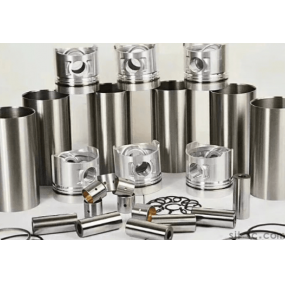
- Automotive industry: Engine components such as pistons need precise dimensions, usually within a few hundredths of a millimeter, to achieve smooth movement inside cylinders.
- Electronics industry: Small components such as connectors and housings require high accuracy to ensure proper assembly and electrical performance.
A reliable precision processing supplier must understand these differences and select suitable machining methods, tools, and inspection equipment.
Surface Finish Requirements in Shenzhen Precision Parts Processing
Surface finish requirements in Shenzhen are another critical factor affecting precision parts quality. Surface finish describes the smoothness and texture of a machined surface.
Why Smooth Surfaces Matter
A smooth surface can improve product performance, reduce friction, and prevent problems caused by rough surfaces.
For example, medical instruments such as surgical tools need very smooth surfaces to prevent bacteria from collecting and to make cleaning easier. A surgical scalpel may require a surface roughness of approximately Ra 0.2-0.4μm.
In electronics manufacturing, smooth surfaces also help improve soldering quality and electrical connections. Uneven surfaces may cause weak connections or production defects.
Industry-Specific Surface Treatments
Different industries use different surface treatment methods:
- Automotive parts: Electroplating or painting is often used to improve corrosion resistance and appearance. For example, chrome-plated car door handles provide both protection and an attractive finish.
- Aerospace parts: Treatments such as anodizing can improve wear resistance and protect parts from corrosion under extreme conditions.
- Medical parts: Surface polishing is often required to achieve safety and cleanliness standards.
Material Requirements for Shenzhen Precision Parts
Material requirements for Shenzhen precision parts directly affect strength, durability, and product reliability. Choosing the wrong material can cause part failure even if the machining accuracy is excellent.
High-Quality Material Selection
Different applications require different materials:
- Aerospace components: Titanium alloys are widely used because they provide high strength while keeping weight low.
- Medical implants: Materials such as stainless steel and titanium alloys are selected because they are strong and compatible with the human body.
- Electronic components: Materials must provide good electrical performance and stability.
Material Compatibility
Material compatibility is also important. When different materials are combined, they must work well together to avoid problems such as corrosion.
For example, in electronic products, the materials of circuit board components and solder must be compatible. Poor material matching may lead to unreliable electrical connections or reduced product life.
Geometric Precision Requirements in Shenzhen Processing
Geometric precision in Shenzhen processing refers to the accuracy of a part’s shape, position, and relationship between different features. A part can have correct dimensions but still fail if its geometry is incorrect.
Complex Geometries Need Advanced Machining
Many precision parts produced in Shenzhen have complex shapes. Mold manufacturing is a good example. A mold used for producing a smartphone case may contain curves, holes, and undercuts that must be machined accurately.
If the mold geometry is incorrect, every plastic part produced from it may have defects.
Form and Position Tolerances
Precision parts also require control of form and position tolerances.
For example, a precision shaft must maintain correct straightness. Features such as keyways and holes must also be positioned accurately compared with the shaft center. This ensures smooth assembly and reliable operation.
Heat Treatment and Mechanical Property Requirements
Precision parts often need specific mechanical properties, including hardness, strength, and wear resistance. Heat treatment is commonly used to improve these properties.
Improving Part Performance Through Heat Treatment
In the automotive industry, gears are often heat-treated to increase hardness and wear resistance. A properly treated gear can handle high torque forces inside a vehicle transmission.
Without suitable heat treatment, parts may wear quickly, deform, or break during operation.
Industry-Specific Heat Treatment Processes
- Aerospace industry: Parts may use solution heat treatment and precipitation hardening to achieve high strength and good flexibility.
- Tool manufacturing: Tool steels are heat-treated to improve cutting ability and service life.
- Automotive industry: Heat treatment improves the durability of moving parts such as gears and shafts.
Inspection Requirements in Shenzhen Precision Parts
Inspection requirements in Shenzhen precision parts are essential for maintaining consistent quality. Precision machining cannot rely only on operator experience; advanced measurement methods are needed.
Strict Inspection During Production
Quality inspection should happen throughout the manufacturing process, not only after production is complete.
For example, after machining a precision shaft, technicians may check the diameter, surface finish, and shape using tools such as micrometers and surface roughness testers. Early inspection helps identify problems before more parts are produced.
Advanced Inspection Equipment
Modern precision processing companies use advanced inspection equipment, including:
- Coordinate Measuring Machines (CMM): Used to measure complex geometries with high accuracy.
- Optical inspection systems: Used to detect small surface defects.
- Microscopes: Used for checking tiny electronic components and micro defects.
Companies like EMAR combine precision machining experience with strict quality control systems to meet demanding technical requirements and deliver reliable precision components.
How to Choose a Shenzhen Precision Parts Processing Partner
When selecting a precision machining supplier in Shenzhen, customers should consider more than just price. A qualified supplier should have:
- Experience with different industry requirements
- Advanced CNC Machining and inspection equipment
- Strong material knowledge
- Strict quality control procedures
- Ability to handle customized precision projects
A professional manufacturer can help customers choose suitable materials, machining methods, tolerances, and inspection standards according to the final application.
Conclusion
Understanding the technical requirements of Shenzhen precision parts processing is essential for achieving high-quality manufacturing results. Dimensional accuracy, surface finish, material selection, geometric precision, mechanical properties, and inspection standards all influence the final performance of precision parts.
Different industries have different expectations, from aerospace components requiring extreme accuracy to medical products requiring safe and smooth surfaces. By working with experienced precision machining companies like EMAR, customers can ensure their parts meet strict quality requirements and perform reliably in real-world applications.