
Briefly Describe the Production Types and Route Principles of Shenzhen Machinery Precision Parts Processing
In Shenzhen machinery precision parts processing, understanding production types and route principles is very important for manufacturers and customers. Different orders have different requirements in terms of quantity, accuracy, delivery time, and cost. Choosing the correct production type and designing a suitable production route can help factories improve efficiency, maintain stable quality, and better meet customer needs.
The keyword Briefly describe the production types and route principles of Shenzhen machinery precision parts processing refers to two important aspects of precision manufacturing: deciding how parts should be produced and planning the best processing steps. For a professional precision parts processing plant, these decisions directly affect production efficiency, product quality, and overall manufacturing costs.
Companies such as EMAR focus on understanding different production situations and selecting suitable processing methods. Whether customers need customized prototypes, medium-volume orders, or large-scale production, a clear production plan and optimized processing route can help achieve reliable results.
Why Production Types and Route Principles Matter in Shenzhen Precision Parts Processing
Shenzhen is an important manufacturing center with many industries requiring high-precision parts, including electronics, automation equipment, medical devices, and aerospace products. Because different industries have different requirements, machinery precision parts processing cannot use the same production method for every project.
For example, a customer developing a new machine may only need several prototype parts for testing. Another customer producing electronic products may require thousands of identical metal components every month. These two situations need completely different production types and processing routes.
A correct production type helps factories arrange manpower, equipment, and materials effectively. A proper production route ensures that every processing step, from raw material preparation to final inspection, is completed in the right order.
Main Production Types in Shenzhen Machinery Precision Parts Processing
Single-Piece Production
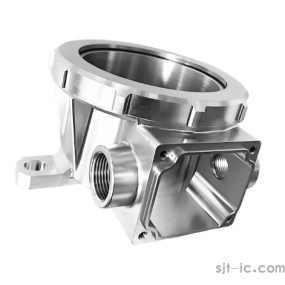
Single-piece production in Shenzhen means manufacturing only one or a small number of precision parts according to specific customer requirements. This type of production is commonly used for prototypes, testing samples, special equipment parts, and highly customized products.
For example, when an aerospace company develops a new aircraft engine component, the first several samples may be produced through single-piece production. These parts often have complex structures and strict accuracy requirements, so the manufacturer needs to carefully control every machining step.
The main characteristics of single-piece production include:
- High flexibility because the processing method can be adjusted according to the part design.
- Suitable for customized parts and prototype development.
- Requires skilled operators and advanced equipment to handle unique requirements.
- The cost per part is usually higher because production quantities are small.
In single-piece production, the processing route is often customized. Engineers may need to select special tools, adjust CNC Machining parameters, or add additional inspection steps to ensure the final part meets the drawing requirements.
Batch Production
Batch production principles refer to producing a certain quantity of identical precision parts in one production cycle. This method is widely used when customers need repeated orders but the quantity is not large enough for full mass production.
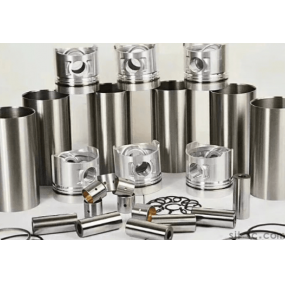
For example, automotive manufacturers may require batches of engine components such as precision shafts or pistons. Each part in the same batch follows the same design specifications and processing standards.
The advantages of batch production include:
- Lower production costs compared with single-piece manufacturing.
- Better use of tools, fixtures, and CNC machine settings.
- More stable production efficiency because processes can be repeated.
- Still maintains some flexibility for future design changes.
However, batch production still requires careful planning. If the processing route is not properly arranged, problems such as long setup time, machine waiting, or inconsistent quality may occur.
Mass Production
Mass production in precision parts means manufacturing large quantities of identical components continuously. It is commonly used in industries with high market demand, such as consumer electronics, automotive parts, and electrical equipment.
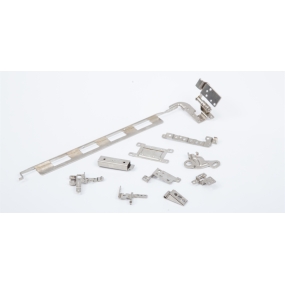
For example, small metal brackets, connectors, and precision structural components used in electronic products are often manufactured through mass production. Because the order quantity is very large, factories usually use automated equipment and highly standardized processes.
The main features of mass production include:
- High production efficiency and lower cost per unit.
- Use of specialized machines, automatic equipment, and fixed tooling.
- Strict process control to maintain consistent quality.
- Production changes may require more time and cost because the process is highly standardized.
In mass production, even a small improvement in the production route can create significant benefits because the same improvement is repeated thousands or millions of times.
Important Route Principles for Precision Parts Processing
Technology-Based Route Design
A technology-based route in Shenzhen means designing the processing sequence according to the technical requirements of the precision part. Different part structures require different machining technologies.
For example, if a part has complex external shapes, CNC turning and milling may be selected as the main processes. If the part contains narrow internal grooves or difficult-to-machine areas, Electrical Discharge Machining (EDM) may be added.
A typical technology-based production route may include:
- Material selection and preparation.
- Rough machining to remove extra material.
- Precision machining to achieve required dimensions.
- Surface treatment if needed.
- Final inspection and packaging.
Choosing the correct technology and processing sequence helps avoid machining problems, reduce waste, and ensure the part reaches the required accuracy level.
Quality-Oriented Route Planning
Quality-oriented route planning focuses on controlling quality throughout the entire manufacturing process instead of checking only at the end.
For precision parts, small errors can affect the performance of the final product. Therefore, inspection points should be arranged at important stages.
Examples include:
- Checking dimensions after rough machining to confirm the part remains within tolerance.
- Inspecting surface quality after finishing operations.
- Performing a complete final inspection before delivery.
A quality-oriented route allows factories to discover problems early. This reduces rework, material waste, and delivery delays while improving customer confidence.
Efficiency-Driven Route Optimization
An efficient production route aims to reduce unnecessary operations and improve manufacturing speed. This includes reducing machine movement, shortening setup time, and arranging equipment logically.
For example, if a factory places CNC milling machines and inspection equipment close together, workers can transfer parts faster and reduce waiting time. Quick tool changes and optimized machine programs can also improve productivity.
Efficiency-driven route optimization helps Shenzhen precision parts processing plants achieve faster delivery, lower production costs, and better competitiveness.
How Production Types and Route Principles Work Together
Single-Piece Production and Route Planning
For single-piece production, the processing route is usually highly customized. Engineers need to focus on technical requirements and detailed quality checks because every part may have unique characteristics.
Although efficiency is important, flexibility and accuracy are usually the top priorities. A professional manufacturer needs strong engineering experience to handle these projects successfully.
Batch Production and Route Planning
In batch production, the route can be standardized for the same group of parts. Factories can prepare specific fixtures, tools, and machine programs to improve efficiency.
At the same time, regular inspections are still necessary to make sure every part in the batch maintains consistent quality.
Mass Production and Route Planning
Mass production requires the highest level of process standardization. The technology route, inspection method, and equipment settings must be carefully controlled.
Because production quantities are large, improving one step of the route can greatly reduce costs and increase output. Strict quality management is also necessary to prevent large numbers of defective products.
How Shenzhen Precision Parts Processing Companies Handle Different Production Needs
A capable precision machining supplier must understand that every customer project is different. Some projects require flexible single-piece production, while others require stable batch manufacturing or high-volume mass production.
EMAR applies professional production planning and processing experience to different manufacturing scenarios. By analyzing part structures, order quantities, material requirements, and quality standards, the company can select suitable production types and create efficient processing routes.
Understanding production types and route principles helps customers communicate their requirements more clearly and helps manufacturers provide better solutions. In Shenzhen machinery precision parts processing, a scientific production method is one of the key factors for achieving high precision, reliable quality, and efficient delivery.