
CNC Machining of Lighting Products: Precision, Quality, and Reliable Manufacturing
The CNC Machining of Lighting Products has become one of the most important manufacturing methods in the modern lighting industry. From decorative lamps to industrial lighting housings, customers expect high precision, smooth surfaces, and long service life. CNC machining helps manufacturers meet these expectations with stable quality and repeatable accuracy.
However, many buyers and designers still face real problems: unstable product quality, poor heat dissipation, high production cost, and difficulty in choosing the right material. This article explains how CNC machining solves these problems in a simple and practical way.
Why CNC Machining Matters in Lighting Products
Lighting products are not only about appearance. They also need strong structure, good heat control, and safe assembly. CNC machining provides tight control over every detail, which is especially important for modern LED lighting systems.
One of the key advantages of CNC machining for lighting products is consistency. Every piece is produced with the same dimensions, reducing assembly issues and improving final product reliability.
- Stable quality for mass production
- High surface finishing for aesthetic designs
- Precise fitting for LED components
- Reduced manual errors in production
Materials Used in CNC Machining Lighting Products
Choosing the right material is critical for performance and durability. Different lighting applications require different mechanical and thermal properties.
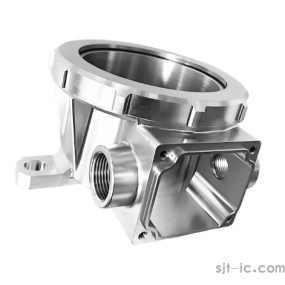
Common materials used in CNC machining lighting products include aluminum alloys, stainless steel, brass, and copper. Among them, aluminum is the most widely used due to its lightweight and excellent heat dissipation performance.
- Aluminum alloys: Best for LED heat sinks and lamp housings
- Stainless steel: High strength and corrosion resistance for outdoor lighting
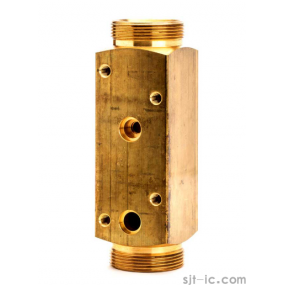
- Brass: Decorative lighting parts with a premium look
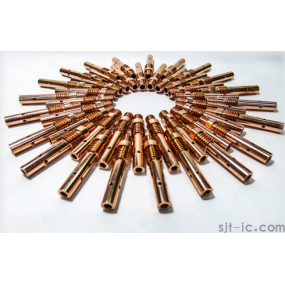
- Copper: Excellent thermal conductivity for high-power lighting systems
Precision Requirements in Lighting Manufacturing
Modern lighting systems require extremely high accuracy. Even a small error can affect assembly or cause uneven lighting performance.
The precision requirements in CNC machining lighting products are usually within tight tolerances, especially for LED heat sinks, optical housings, and connector parts.
High precision ensures:
- Proper LED alignment for uniform light output
- Efficient heat transfer from LED chips
- Easy installation without rework
This is where CNC machining clearly outperforms traditional casting or manual processing methods.
Cost Control and Production Efficiency
Many companies worry about production costs. While CNC machining may seem expensive at first, it actually improves long-term value.
The cost-effectiveness in CNC machining lighting products comes from reduced waste, fewer defects, and faster production cycles. Once the program is set, the machine can produce consistent parts with minimal human intervention.
- Lower scrap rate compared to manual machining
- Reduced assembly time due to accurate parts
- Efficient small and medium batch production
Common Challenges and Practical Solutions
Lighting manufacturers often face challenges such as heat management, complex shapes, and surface finishing requirements. CNC machining solves these problems by offering flexible multi-axis processing.
It allows designers to create complex geometries that improve airflow and heat dissipation, which is very important for LED lifespan.
Professional CNC Support for Lighting Industry
To achieve stable quality and efficient production, choosing a reliable CNC partner is essential. A professional manufacturer can help optimize design, select suitable materials, and control production costs effectively.
:contentReference[oaicite:0]{index=0} provides CNC machining solutions specifically for lighting applications. With experience in precision parts manufacturing, EMAR supports clients from prototype development to mass production.
Their services help customers improve product reliability, reduce production risks, and achieve better cost control in competitive lighting markets.
Conclusion
The CNC Machining of Lighting Products plays a key role in modern lighting manufacturing. It improves precision, supports better material selection, and reduces long-term production costs. For companies aiming to upgrade product quality and efficiency, CNC machining is no longer optional—it is essential.
With the right technical partner, lighting manufacturers can achieve higher performance, better design freedom, and stronger market competitiveness.