CNC Machining Product Parts: A Complete Guide from Design to Quality Production
Modern products need parts that are accurate, reliable, and ready to work with other components. Whether it is a consumer product, industrial device, electronic equipment, or custom tool, poor-quality parts can cause assembly problems, performance failures, and higher production costs. CNC Machining Product Parts provides an effective solution by combining high precision, flexible production, and reliable quality control.
CNC machining uses computer-controlled machines to cut and shape materials into finished parts. Compared with traditional manual machining methods, CNC technology can produce complex designs with consistent accuracy. It is suitable for both prototype development and large-scale manufacturing, helping companies create products faster while maintaining strict quality requirements.
Why CNC Machining Is a Good Choice for Product Parts
Product designers often face challenges such as achieving accurate dimensions, creating complex shapes, controlling costs, and producing parts that fit perfectly during assembly. CNC machining helps solve these problems through advanced automation and precise manufacturing processes.
- High precision for proper fit and function: CNC machines can achieve very tight tolerances, which is important when product parts must connect with other components. Accurate dimensions reduce assembly errors and improve product performance.
- Ability to create complex geometries: Many modern products require unique shapes, curved surfaces, internal channels, or detailed features. CNC machining can handle these challenging designs without limiting product creativity.
- Flexible production volume: CNC machining is suitable for one-off prototypes, small batches, and large production runs. Manufacturers can quickly adjust programs to produce different part designs when needed.
- Stable and repeatable quality: Computer-controlled machining reduces human errors and allows multiple parts to maintain the same specifications.
For businesses looking for reliable production support, experienced manufacturers such as EMAR provide CNC machining services for custom product parts, helping customers move from early design concepts to finished components.
Design Considerations for CNC-Machined Product Parts
A successful CNC machining project starts with a well-planned design. Before production begins, engineers need to understand how the part will be used and how it will interact with the complete product.
Design considerations for CNC-machined product parts include the following important factors:
- Product application: The working environment affects the design. A part used outdoors may need corrosion resistance, while a mechanical component may require higher strength and wear resistance.
- Ergonomics: For products handled by users, designers should consider comfort, weight, grip shape, and ease of operation.
- Component compatibility: The CNC-machined part must match other parts correctly. Designers need to check mounting holes, connection points, movement requirements, and assembly space.
- Manufacturing feasibility: Features such as wall thickness, corner radius, hole depth, and tool access should be considered to avoid unnecessary machining difficulties.
Using CAD models and engineering analysis during the design stage helps identify possible problems before machining begins. This reduces redesign costs and shortens product development time.
Material Selection for Product Part CNC Machining
Choosing the right material directly affects product performance, manufacturing cost, and service life. The best material depends on the part’s function, operating environment, and appearance requirements.
Material selection for product part CNC machining usually considers strength, durability, weight, price, and surface appearance.
- Aluminum: Lightweight and easy to machine, aluminum is commonly used for portable products, electronic housings, and parts requiring good strength with low weight.
- Stainless steel: Stainless steel offers excellent corrosion resistance and durability, making it suitable for medical equipment, food processing parts, and products used in harsh environments.
- Engineering plastics: Materials such as ABS, nylon, and PEEK can provide low weight, chemical resistance, and electrical insulation.
- Heat-resistant materials: Parts located near motors, engines, or other heat-generating components may require materials that maintain performance at high temperatures.
A professional CNC manufacturer can help evaluate material options based on production requirements. EMAR works with different metals and plastics to support various product applications while balancing performance and cost.
CNC Machining Operations Used for Product Parts
Different machining methods are selected according to the part design, material, and required features. Combining multiple operations allows manufacturers to create complete and functional product parts.
Turning Operations
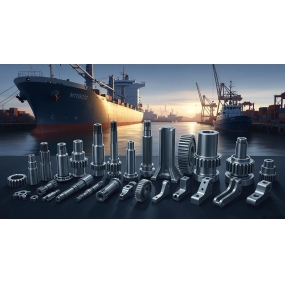
Turning is mainly used for round or cylindrical parts. During this process, the workpiece rotates while a cutting tool removes material. It is commonly used for shafts, pins, connectors, and rotating components.
Milling Operations in Product Part Production
Milling operations in product part production are essential for creating flat surfaces, slots, pockets, contours, and complex 3D shapes. CNC milling machines can move cutting tools along multiple axes to produce detailed product features with high accuracy.
Common milling tools include end mills, face mills, and ball nose cutters. Cutting parameters such as spindle speed, feed rate, and depth of cut must be carefully adjusted according to the material and tool type. Proper settings improve surface quality, extend tool life, and reduce machining time.
Drilling Operations
Drilling creates accurate holes for screws, fasteners, shafts, and assembly connections. Correct drill selection and cutting parameters are important to avoid problems such as oversized holes, rough surfaces, or tool damage.
3D Printing for Supporting Production
For some product development projects, 3D printing can be used for prototypes, testing models, or parts with special structures. It allows designers to quickly evaluate product concepts before moving to CNC machining for final production.
Solving Common CNC Product Part Manufacturing Challenges
Manufacturers often face difficulties when producing product parts, especially when quality requirements are high and delivery schedules are tight. A well-managed CNC process helps overcome these challenges.
Maintaining Consistent Quality
Producing hundreds or thousands of identical parts requires stable machine performance and careful monitoring. CNC programs, tool calibration, and inspection procedures help ensure every part meets the required specifications.
Minimizing Waste in Product Part CNC Machining
Minimizing waste in product part CNC machining helps reduce material costs and improve environmental efficiency. Engineers can optimize part layouts, select suitable raw material sizes, and improve cutting paths to reduce unnecessary material removal.
Advanced CNC programming also helps reduce machining time by creating efficient tool movements and avoiding unnecessary operations.
Meeting Tight Production Schedules
Fast delivery requires good planning from design review to final inspection. CNC machining supports shorter production cycles because digital programs can be reused and adjusted quickly for different orders.
Post-Machining Processes for Better Product Performance
After machining, additional processes may be required to improve appearance, protection, and usability.
- Surface treatment: Processes such as anodizing, polishing, coating, or heat treatment can improve corrosion resistance, hardness, and surface quality.
- Painting: Painting provides color options and improves product appearance for consumer-facing applications.
- Assembly-ready finishing: Deburring, cleaning, threading, and precision finishing ensure parts are ready for final assembly.
These finishing steps help transform machined components into complete product-ready parts that meet both functional and visual expectations.
Quality Control in Product Part CNC Manufacturing
Reliable quality control is essential for CNC machining because even small dimensional errors can affect product performance. Professional manufacturers use multiple inspection steps throughout production.
Quality control in product part CNC manufacturing includes:
- Incoming material inspection: Checking raw materials to confirm they meet required specifications.
- In-process inspection: Measuring critical dimensions during machining to detect problems early.
- Final inspection: Using precision measuring equipment to verify finished parts before shipment.
- Product testing: Checking assembly performance, strength, and function when required.
- Industry standards compliance: Following customer requirements and applicable manufacturing standards to maintain reliable quality.
Manufacturers with strong quality systems, such as EMAR, focus on process control, precision inspection, and customer requirements to deliver dependable CNC-machined product parts.
Choosing the Right CNC Machining Partner for Product Parts
The success of a CNC machining project depends on more than machine capability. Experience in design support, material selection, machining methods, finishing processes, and quality management is equally important.
A reliable CNC machining partner can help customers avoid common production problems, reduce development time, and create product parts that perform as expected. From prototype machining to high-volume production, professional CNC manufacturers provide technical support throughout the entire process.
With advanced equipment, experienced engineers, and a focus on quality, EMAR supports customers who need accurate, efficient, and customized CNC Machining Product Parts for different industries and applications.