How to Choose a Reliable Customized Manufacturer of Stamped Metal Signs
When businesses need durable, professional-looking metal signs, choosing the right customized manufacturer of stamped metal signs is a key decision. A reliable manufacturer can help turn a design idea into a high-quality product that meets appearance, performance, and budget requirements.
However, many buyers face common challenges when selecting a supplier. They may worry about inconsistent quality, unclear pricing, limited customization options, long delivery times, or manufacturers that cannot handle complex designs. Understanding what to look for can help you avoid these problems and choose a partner that supports your long-term needs.
Why Choosing the Right Stamped Metal Signs Manufacturer Matters
Stamped metal signs are widely used in industries such as machinery, electronics, automotive, construction, equipment, and brand identification. These signs must often withstand outdoor environments, repeated use, and strict appearance requirements.
A professional manufacturer does more than produce metal parts. They provide engineering support, material recommendations, production control, and finishing solutions. The right partner can improve product reliability while reducing unnecessary costs and production risks.
Key Factors to Consider When Choosing a Customized Stamped Metal Signs Manufacturer
There are several important factors to consider when choosing a customized stamped metal signs manufacturer. Evaluating these areas before placing an order can prevent quality issues and unexpected expenses.
1. Manufacturing Experience and Technical Capability
Experience is one of the first things to check. A manufacturer with years of stamping experience usually understands how different materials behave during production and how to avoid common problems such as deformation, uneven edges, and inaccurate dimensions.
Check whether the manufacturer can handle:
- Custom stamping designs and complex shapes
- Different metal materials, including aluminum, stainless steel, and steel
- Various thickness requirements
- Surface treatments such as polishing, coating, painting, and engraving
- Prototype development and small or large production runs
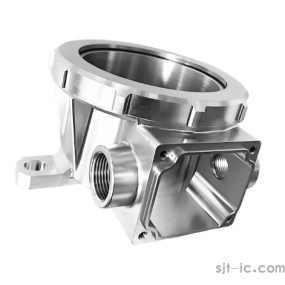
Manufacturers with additional machining capabilities can also provide better support for projects that require high precision. For example, EMAR provides CNC processing services that can complement Metal Stamping projects by improving dimensional accuracy and supporting complex custom components.
2. Quality Control Process
Quality problems can create delays, additional costs, and customer complaints. Therefore, quality control in customized stamped metal signs manufacturing should be a major consideration.
A trustworthy manufacturer should have a clear inspection process covering:
- Raw material inspection before production
- Tooling and mold accuracy checks
- Dimensional inspection during stamping
- Surface finish inspection
- Final product testing before shipment
Ask potential suppliers how they manage quality control and whether they can provide inspection reports or production samples. A transparent quality system shows that the manufacturer takes responsibility for every order.
3. Customization Options and Design Support
Every application may require different sign designs, materials, and finishes. Good manufacturers provide flexible customization options for stamped metal signs instead of offering only standard products.
Common customization services include:
- Custom shapes and sizes
- Embossed or debossed lettering
- Logo stamping
- Laser marking or engraving
- Special coatings for corrosion resistance
- Custom colors and surface textures
A manufacturer that offers design guidance can help improve manufacturability. Early communication between engineers and production teams can reduce tooling problems and shorten development time.
Understanding the Advantages of Different Customized Stamped Metal Signs Manufacturers
The advantages of different customized stamped metal signs manufacturers depend on their equipment, experience, and service capabilities.
- Large-scale manufacturers: Usually have strong production capacity and may provide competitive pricing for high-volume orders.
- Specialized stamping manufacturers: Often provide better technical knowledge for complex metal forming projects.
- Manufacturers with CNC processing capabilities: Can support more precise parts, prototypes, and products with complex structures.
- Integrated suppliers: Can provide stamping, machining, finishing, and assembly services in one place, reducing communication costs.
The best choice depends on your project requirements. A supplier with flexible production capabilities can often provide better solutions than a company focused only on mass production.
How to Control Costs Without Reducing Quality
Many buyers focus only on the initial quotation, but the lowest price is not always the most cost-effective choice. Poor quality can lead to rework, delays, and higher total expenses.
The cost-effectiveness of customized stamped metal signs manufacturing depends on several factors:
- Material selection
- Product design and complexity
- Tooling requirements
- Production volume
- Surface finishing requirements
- Quality management efficiency
A professional manufacturer can suggest design improvements that reduce waste and production difficulty. For example, adjusting a design before tooling begins may lower manufacturing costs while maintaining product performance.
Common Problems Buyers Face and How to Avoid Them
Problem 1: Inconsistent Product Quality
This often happens when suppliers lack proper inspection systems. Always request samples, review manufacturing processes, and confirm quality standards before starting mass production.
Problem 2: Communication Issues During Custom Projects
Custom metal signs require accurate communication about drawings, materials, dimensions, and finishes. Choose a manufacturer that responds clearly and provides technical feedback.
Problem 3: Unexpected Production Costs
Hidden costs may appear from tooling changes, material upgrades, or finishing requirements. A detailed quotation and clear project discussion can help avoid surprises.
Problem 4: Limited Production Capability
Some suppliers may handle simple stamping but struggle with complex parts. Choosing a manufacturer with stamping, CNC processing, and finishing capabilities can make future product development easier.
Questions to Ask Before Selecting a Manufacturer
- How many years of experience do you have in custom metal stamping?
- What materials and finishes can you provide?
- Can you support prototype production?
- What quality inspection methods do you use?
- Can you handle both stamping and precision machining requirements?
- What is your typical production lead time?
Why Work With a Professional Custom Metal Manufacturing Partner
Selecting a reliable customized manufacturer of stamped metal signs helps businesses achieve better product quality, stable supply, and long-term cost savings. A professional partner provides not only manufacturing services but also technical support throughout the product development process.
Companies such as EMAR combine metal manufacturing experience with CNC processing capabilities to support customers who need accurate, customized metal components. From design support to precision production, working with an experienced supplier can make custom metal sign projects smoother and more reliable.
Final Thoughts
Choosing the right stamped metal sign manufacturer requires more than comparing prices. Buyers should evaluate production experience, customization ability, quality systems, technical support, and overall value.
By carefully reviewing these factors, businesses can find a manufacturing partner that delivers durable, accurate, and visually appealing stamped metal signs while reducing production risks and improving long-term efficiency.